
Lieferung heute & morgen

Qualitätsgarantie

Willkommens-Angebote freischalten: KOSTENLOSE Lieferung | Bis zu 80 % RABATT | Kostenlose 30-Tage-JoyPlus-Testphase
App herunterladen
A kitchen sieve is one of those utensils you reach for every day: washing fruit and vegetables, rinsing rice, or draining pasta. Yet all too often, people choose one based solely on price or looks. As a result, households end up with models that are too small, unstable on the sink, or take up unnecessary storage space after use.
That’s why the Joybuy Product Recommendation Officer selection focuses on tangible product features rather than marketing claims. The key factors are material, capacity, hole structure and dimensions.
A small kitchen sieve is fine for berries, herbs or single portions. But for a family-sized portion of pasta, a capacity of around 0.5 litres is impractical. Conversely, a large colander in a small kitchen takes up a lot of space and may not sit comfortably in your sink.
Before you buy, check:
A foldable kitchen sieve can save storage space. However, with models that have moving segments, make sure the rim stays rigid when filled. A profiled base or a wide standing rim can stop the drainer from tipping over in the sink.
For an expandable sink sieve, the usable span is also important. The dimensions must match the width of your sink. A frame that’s too short won’t sit securely, while one that’s too long can’t be fully positioned.
“Stainless steel” doesn’t describe every product in the same way. Selected models, for example, specify 304 stainless steel. Other products are made from plastic, PP, TPR, TPE or ABS. These materials can be perfectly suitable depending on the design, but you should choose them according to your intended use.
Look for specific details on:
A plastic model should not be used near direct heat, hobs or open flames if the manufacturer advises against it.
For family meals and larger quantities, models with 2.2 to 3.6 litres are practical. A 2.5-litre pasta sieve offers enough room for pasta, vegetables or fruit without food spilling over the edge when washing.
Fine, evenly spaced holes are important if you’re rinsing small items like berries, rice or thin pasta. Very large holes let water drain quickly but can allow small pieces to escape. For soup ingredients or particularly fine items, you should definitely check the hole structure.
A sink drainer basket should sit securely. For expandable versions, the minimum and maximum length matters. The 3.6-litre stainless steel sieve in our selection, for example, is listed from 53.5 to 24.7 centimetres and is designed for use over sinks. The exact fit depends on the design and the width of your basin.
For a fixed colander, diameter and height are more important. A model with a 24-centimetre diameter and 12-centimetre height works well for pasta and vegetables, but takes up more cupboard space than a foldable drainer basket model.
After draining, remove food residue from the holes. A smooth stainless steel sieve can be a good choice for households that prefer an uncoated surface. Plastic models with a folding function can be stored compactly, but must be fully opened and dried to prevent moisture collecting in the segments.
Always follow the specific care instructions. Not every dish drainer or sink sieve is dishwasher-safe. For example, the 5Five drainer with drip tray states that it should not go in the dishwasher.
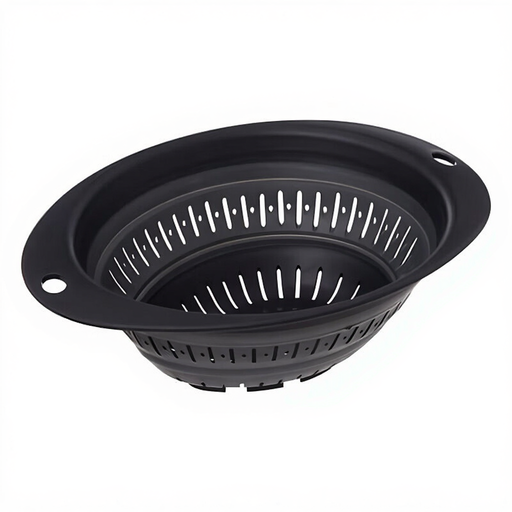
Why this product fits the profile: This foldable kitchen sieve offers 2.5 litres of capacity, a wide rim and a profiled base. When collapsed, it can be stored in drawers or cupboards.
The folding function reduces the space needed, while the shaped base is designed for a more stable position in the sink.
2.5-litre volume, foldable design and fine holes according to the product description.
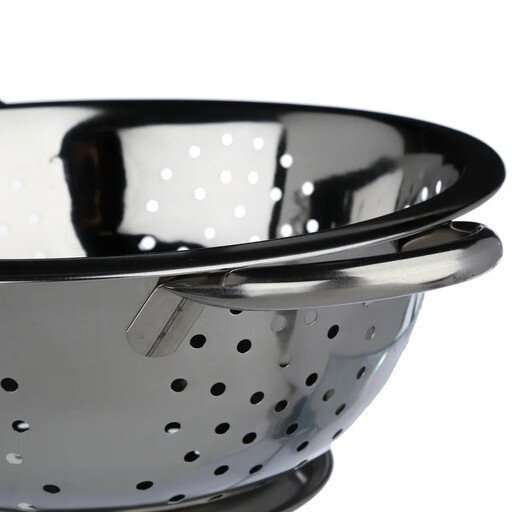
Why this product fits the profile: This 2.2-litre stainless steel sieve is designed for pasta, fruit and vegetables, with a diameter of 24 centimetres and a height of 12 centimetres.
The specific material and size details make selection easier compared to vague labels like “extra sturdy”.
Stainless steel construction, 2.2-litre capacity and 24-centimetre diameter.
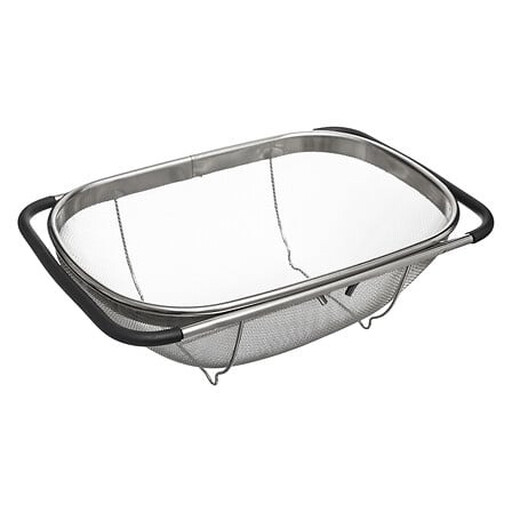
Why this product fits the profile: This expandable drainer basket can be used over sinks of different widths and offers 3.6 litres of capacity for frequent kitchen tasks.
The expandable length accommodates different sink widths and reduces the risk of buying a fixed model that doesn’t fit.
3.6-litre volume, stainless steel material and expandable length according to product specifications.
We’ve put together a full, regularly updated list of products that fully meet these strict selection criteria and the safety regulations in force in the EU.
Before you buy, these questions will help:
For pasta, you need a sufficiently large capacity, a sturdy rim and even perforation. Models with around 2.2 to 2.5 litres work well for everyday portions. For family-sized amounts, a 3.6-litre model gives you more room.
It depends on your use. Stainless steel versions are often chosen for their solid construction and uncoated surface. Plastic models can be lighter and often offer folding or expanding features. What matters most are the specific material, temperature and care details of each product.
Remove food residue immediately after use and rinse the sieve with mild detergent. Foldable or moving models should be dried fully open. A drip tray on a dish drying rack should be emptied and cleaned regularly to prevent standing water from building up.