
Lieferung heute & morgen

Qualitätsgarantie

Willkommens-Angebote freischalten: KOSTENLOSE Lieferung | Bis zu 80 % RABATT | Kostenlose 30-Tage-JoyPlus-Testphase
App herunterladen
A kitchen sieve and colander are essentials in many households, but they're often bought on first impressions alone. Shiny stainless steel, large capacity claims or particularly flexible handles don't tell you much about whether a model will actually suit your sink and daily cooking routine. For private households, home cooks and catering businesses, it's the dimensions, build quality and specific intended use that really matter.
A big pasta strainer can be practical for draining, but it needs enough room in your sink or on your worktop. With an expandable sink colander, you also need to consider the minimum and maximum width. Without these details, your kitchen colander might wobble or fail to sit securely in everyday use.
Not all stainless steel sieves are created equal. Buyers should pay attention to the specific material stated, the wall thickness, and the stability of the handles and resting surfaces. The term "stainless steel finish" can also mean that only the surface has been coated or treated to look like steel. For contact with food, always check the individual product information.
A fine-mesh sink strainer will catch more food scraps but can clog more quickly. A coarse sink sieve lets water drain faster but won't catch smaller particles. The right hole size therefore depends on whether you mainly need to catch rice, vegetables, pasta or larger kitchen scraps.
For regular contact with water and food, corrosion-resistant materials make sense. Stainless steel is generally easy to clean and, when well made, is designed for everyday kitchen use. For plastic models, the product description should include details about intended food contact and temperature resistance.
Also look out for:
A sieve for fruit and vegetables should offer enough volume without becoming awkward to handle when washing. For single portions, compact models may be sufficient. If you regularly wash pasta, larger quantities of vegetables or salad, compare the capacity and dimensions.
For example, a model with 2.2 litres capacity, 24 centimetres diameter and 12 centimetres height. A larger colander with 3.6 litres and dimensions of 53.5 × 24.7 × 10.5 centimetres is instead designed to sit over a sink.
A kitchen sieve should stand securely when draining or rest stably on the rim of your sink. An expandable sink colander is particularly useful if you use multiple sinks or if your sink width isn't standard. Check whether the extendable sections have enough resting surface and whether the handles sit clear of the water stream.
For drain cleaning, a separate sink strainer with the right diameter is often more practical than a large colander. A diameter of 7 centimetres may be intended for small drain openings; measure your own drain before buying to compare.
The following models differ in size, design and area of use. The details are based on the available product information.
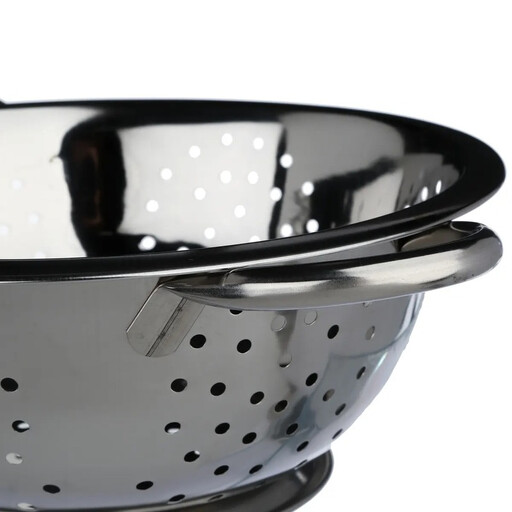
Why this product suits the profile: This compact stainless steel sieve with 2.2 litres capacity is ideal for everyday quantities of fruit, vegetables and pasta in smaller or medium-sized households.
Clear details on diameter, height and volume make comparison easy and reduce the risk of choosing a model that's too small or unsuitable.
24 centimetres diameter, 12 centimetres height and stainless steel construction according to the product description.
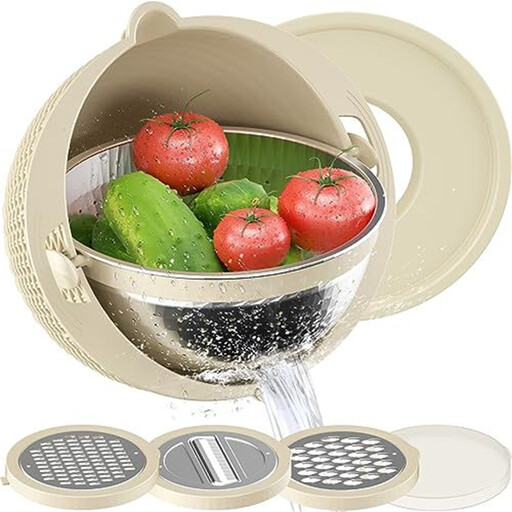
Why this product suits the profile: The double-layer, perforated and rotatable design is specifically intended for washing and draining fruit and vegetables.
The perforated design is described for a defined purpose. This helps buyers better assess whether they need a vegetable washing sieve or a classic pasta strainer.
Stainless steel as per product name, plus a rotatable double-layer construction for washing fruit and vegetables.

Why this product suits the profile: This expandable stainless steel sieve is designed for larger quantities and sinks of varying widths, ideal for draining pasta or washing vegetables.
The stated external dimensions and expandable design mean you can check the required sink width before buying.
3.6 litres capacity, expandable design, stainless steel material and ergonomic handle according to product details.
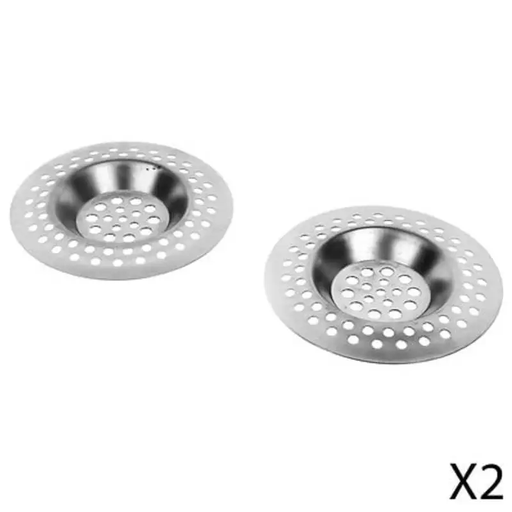
Why this product suits the profile: Two compact sink strainers, each with a 7 centimetre diameter, are designed for small sink drains, catering and kitchen areas with multiple points of use.
The defined diameter prevents buying a strainer that's too large for a small drain. Measure your opening first.
Set of two strainers, 7 centimetre diameter and steel with stainless steel finish according to the product description.
We've put together a full, regularly updated list of products that fully meet these strict selection criteria and the safety regulations in force in the EU.
A kitchen sieve set can be useful if you need different sizes. Small sieves are ideal for berries, rice or single portions. Larger models handle draining pasta or washing large quantities of vegetables. Before buying, check whether the pieces stack inside each other and whether each sieve genuinely covers a different use.
A colander bowl with an integrated sieve structure can reduce the need for transferring. However, for draining hot pasta, it's especially important that the handles, base and material are suitable for the intended use. Always follow the manufacturer's instructions.
For pasta, choose a model with a sufficiently large capacity, sturdy handles and a stable base or resting surface. A 3.6-litre sieve can be suitable for larger quantities, while a 2.2-litre model is better for smaller portions. The size you need depends on your pan volume and typical portion size.
Remove large food scraps regularly and clean the perforations after each heavy use. A very fine-mesh sieve can clog more quickly with starchy residues. When choosing, consider both the hole size and how easy it is to clean.
It's impossible to give a fixed lifespan without details on usage, material thickness, cleaning and storage. Check your sieve regularly for bent rims, loose handles and damaged surfaces. Choosing the right size, cleaning it properly and following the care instructions can all help maintain its usability.