
Lieferung heute & morgen

Qualitätsgarantie

Willkommens-Angebote freischalten: KOSTENLOSE Lieferung | Bis zu 80 % RABATT | Kostenlose 30-Tage-JoyPlus-Testphase
App herunterladen
Kitchen drains often become blocked by food scraps, grease or small particles that make their way into the pipe unnoticed. A suitable kitchen sink strainer can catch this debris at the drain and make everyday cleaning easier. However, not all models are equally suitable: terms such as ‘universal’, very fine mesh or shiny stainless steel don’t tell you much on their own about practical fit or durability.
A universal sink strainer won’t automatically fit every sink. The key factors are the diameter of the drain opening, the surface it rests on and, where relevant, the diameter of the rubber seal. Even a difference of a few millimetres can cause the sink strainer to shift or stop water draining properly.
Before you buy, you should:
A particularly fine-mesh kitchen drain filter will catch smaller particles, but it can also clog more quickly. This slows the water as it drains and means you’ll need to empty the strainer more often. If you do a lot of cooking and washing up, it’s worth finding a good balance between catching debris and allowing water to flow through.
Stainless steel is often presented as a durable option. Even so, the edges should be smoothly finished and the strainer should be cleaned regularly. Dried-on food, grease and harsh cleaning products can damage the surface and seals. So a stainless steel sink strainer isn’t automatically maintenance-free.
A traditional food strainer sits directly in the drain. A model with an integrated plug can also seal the sink. When comparing options, check whether the strainer simply rests loosely in the drain or is held securely in place by a seal or insert.
For example, filter baskets may have an external diameter of 78 millimetres and a stated 55-millimetre rubber seal. Different measurements may apply to a larger drain grille. Always compare the product details with the measurements of your own sink.
For stainless steel models, look out for:
A removable sink strainer is usually more practical for everyday use than a fixed grille, as you can dispose of debris straight away. For plastic or mesh options, flexibility, trimming to size and regular replacement are important considerations.
Empty and rinse a kitchen filter as needed. A bathroom basin needs a different design from a kitchen sink: hair, soap residue and small particles are the main concern in the bathroom, while a kitchen strainer needs to catch larger food scraps.
A sink plug with a strainer is useful if you sometimes want to fill the basin for soaking. A simple drain filter is better suited to households that mainly want to catch debris while keeping the water flowing freely.
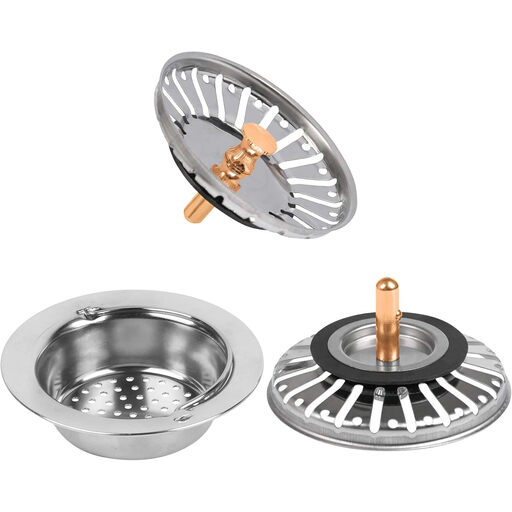
Why it suits this type of shopper: The set includes two 78-millimetre filter baskets and a 90-millimetre drain grille, giving you several sizes to choose from for different needs.
The precise measurements make it easier to check whether the filters will fit your sink opening. A small integrated tab makes the filter easier to remove once debris has collected.
According to the product description, it’s made from rust-resistant stainless steel, the 78-millimetre baskets have a 2-in-1 function, and the set includes three pieces.
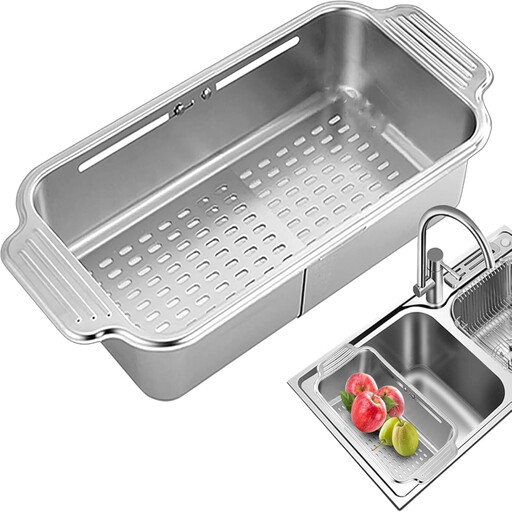
Why it suits this type of shopper: The extendable basket is designed for sinks between 33.5 and 44.5 centimetres wide. It can also be used to rinse fruit and vegetables.
The adjustable width reduces the risk of choosing a fixed size that doesn’t fit. Smooth, burr-free edges are important for everyday handling.
According to the product description, it’s made from 304 stainless steel, extends from 33.5 to 44.5 centimetres and is dishwasher-safe.
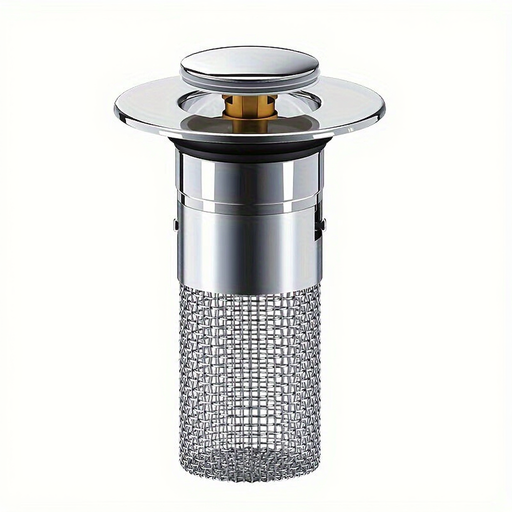
Why it suits this type of shopper: This model is designed for bathroom basins, where you want to catch hair, soap residue and small particles.
Choosing a product made for bathroom use helps you avoid buying a kitchen filter for a differently designed drain. The removable insert makes cleaning easier.
According to the product description, it has a stainless steel design, can be fitted without tools and filters out hair and soap residue.
We’ve put together a complete, regularly updated list of products that meet these strict selection criteria and fully comply with the safety regulations in force in the EU.
Even a durable kitchen sink filter needs regular care:
Chemical drain cleaners shouldn’t be seen as a substitute for a drain strainer. They don’t remove the cause of the build-up and, depending on the material, may not be suitable for seals or surfaces.
It depends on the drain in your sink. Commonly available models are around 78 to 90 millimetres in diameter, for example. These measurements don’t guarantee a universal fit. Measure your existing drain and compare it with the manufacturer’s specifications.
No. A kitchen strainer to prevent blockages can catch solid debris, but it doesn’t replace regular cleaning and won’t stop liquids, grease or very small particles from entering the pipe. To keep the drain clear, avoid putting food scraps and large amounts of grease in the sink.
If you use it every day, check it after each larger washing-up session. How often it needs cleaning depends on the mesh size, the amount of food debris and how the household uses the sink. A removable filter can be emptied and rinsed quickly whenever needed.