
Lieferung heute & morgen

Qualitätsgarantie

Willkommens-Angebote freischalten: KOSTENLOSE Lieferung | Bis zu 80 % RABATT | Kostenlose 30-Tage-JoyPlus-Testphase
App herunterladen
A skimmer is one of those kitchen tools you often only miss when you need to separate stock, oil or cooking water from solid food quickly. Whether you are deep-frying, cooking in a wok, preparing hot pot or draining pasta, the right model can make things much easier. However, shapes, perforations, materials and heat resistance vary considerably.
A wide straining spoon can hold more food, but may be awkward to use in small pans. A larger surface is often useful for deep-fat fryers and hot pots, while a narrower pan is better suited to a more compact straining spoon. Before buying, check the width of the spoon head and the length of the handle.
S silicone and plastic models should state a specific temperature limit. For example, the silicone sieve model in our selection is designed for temperatures of up to 230 °C. This does not mean that the spoon can be placed directly over a flame or left permanently on the hot rim of a frying pan. Stainless steel handles can also become hot when heated for a longer period.
A stainless steel skimmer is sturdy and suitable for hot liquids and oil. However, metal edges can scratch delicate non-stick coatings. For coated frying pans and saucepans, a silicone kitchen sieve spoon or a model with a soft plastic head is usually the better choice. A so-called slotted cooking spoon should only be used on coated surfaces if the material is explicitly designed for this purpose.
The size of the holes affects what remains in the spoon and how quickly liquid drains away. Fine, evenly spaced openings are suitable for small pieces, vegetables or residue from stock. Larger slots are practical for pasta, dumplings and larger fried foods.
A frying spoon used with oil should allow liquid to drain away quickly and have a sufficiently long handle. For pasta or vegetables, a pasta spoon with a wide surface is often more comfortable. A slotted ladle combines lifting solid ingredients with draining stock or oil.
A long handle keeps your hand further away from hot oil and steam, but it is no substitute for careful handling. An integrated hanging hole, a hook for resting on the rim of a pan or a one-piece design without hard-to-reach joins can also be useful.
Depending on the model, stainless steel is best cleaned by hand with a soft sponge and mild washing-up liquid. Steel wool, hard brushes and aggressive cleaning products can damage surfaces. Silicone models may be dishwasher-safe where stated.
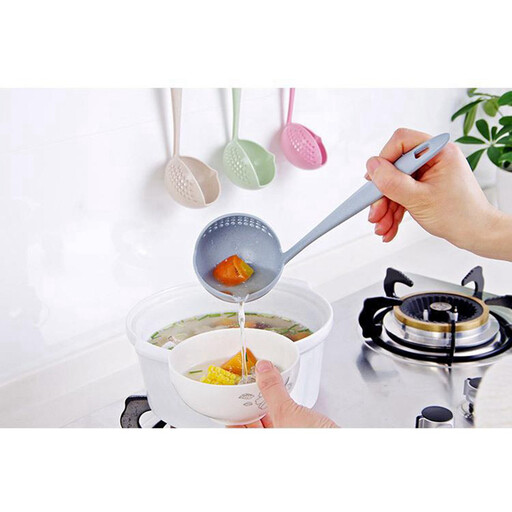
Why this product suits this profile: This model combines a perforated filter side with a solid spoon side, covering everyday serving and straining tasks.
Its two-in-one design reduces the need for two separate kitchen tools. According to the product details, it is not intended for open flames or direct use on a hob.
Two functions in one utensil, dishwasher-safe according to the description, and designed for soups, pasta and straining.
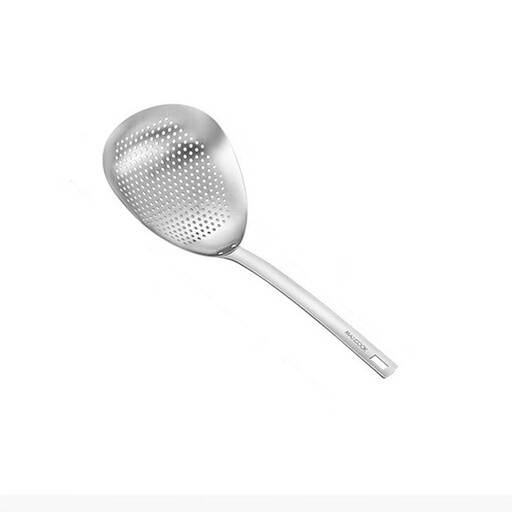
Why this product suits this profile: This 304 stainless steel skimmer is aimed at households looking for a sturdy utensil for soups, stews, oil and larger portions.
The product description mentions a reinforced construction, evenly spaced filter holes and a widened spoon surface. Even so, metal should be used with care on coated surfaces.
304 stainless steel, an extended handle and a smooth surface. Hand washing is recommended.
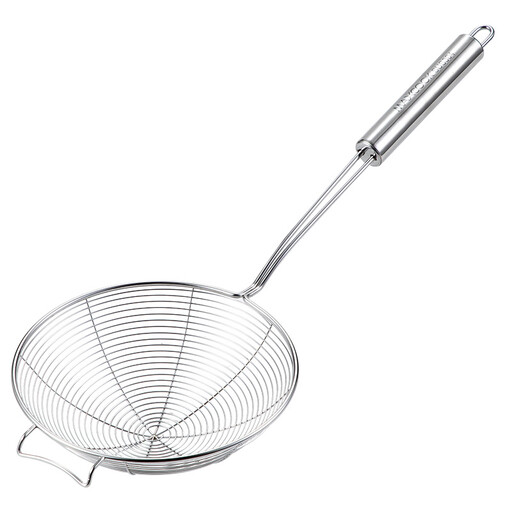
Why this product suits this profile: This design is intended for hot pot, deep-frying, pasta, dumplings and filtering residue from stock or oil.
A pan-rim hook allows you to rest the spoon securely between tasks. The hollow handle reduces heat transfer, but will still become warm when heated for a longer period.
304 stainless steel, rounded edges, a hanging hole and a widened, deep spoon surface.
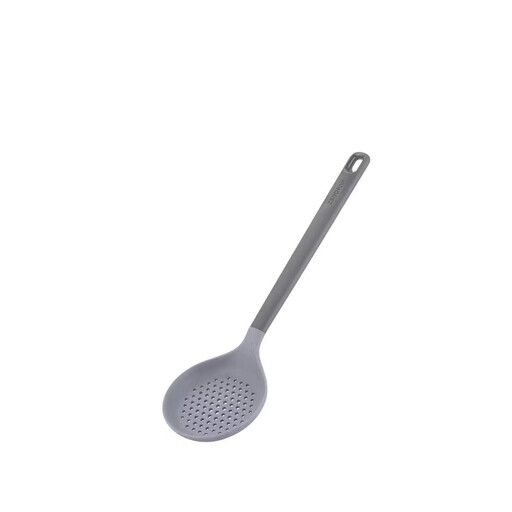
Why this product suits this profile: According to the product description, the flexible silicone head is designed for non-stick and coated cookware and is suitable for straining, serving and lifting food out.
The soft surface reduces the risk of scratches on coated surfaces. Direct flames and leaving the utensil in continuous contact with the hot rim of a frying pan should be avoided.
Temperature range from -40 °C to 230 °C according to the product details, dishwasher-safe and specified as suitable for food contact under Regulation (EC) No 1935/2004.
We have put together a complete, regularly updated list of products that fully meet these strict selection criteria and the safety regulations applicable in the EU.
Before first use, every skimmer should be cleaned with warm water and mild washing-up liquid. Stainless steel models should be rinsed and dried after use, particularly after contact with salt, acid or stock. Silicone should not be cleaned with knives or metal scouring pads, as these can cause cuts and tears.
When using a deep-fat fryer, wok or hot pot, use a splash guard and make sure you have a secure grip. Do not leave the frying spoon unattended in hot oil. If you notice cracks, sharp edges, deformation or loose connections, stop using the utensil.
A skimmer lifts solid food out of liquids or oil, allowing excess liquid to drain through slots or holes. Typical uses include deep-frying, pasta, vegetables, dumplings, stock and hot pot.
Compact models are sufficient for small pans and precise work. With large pans, woks or deep-fat fryers, a longer handle and wider spoon surface provide more distance from the heat. Pan depth and storage space in your kitchen are also important considerations.
That depends on the individual product. Stainless steel is generally easy to care for, but some models recommend hand washing. Check the product description and dry the spoon after cleaning to help reduce water marks and residue.