
Lieferung heute & morgen

Qualitätsgarantie

Willkommens-Angebote freischalten: KOSTENLOSE Lieferung | Bis zu 80 % RABATT | Kostenlose 30-Tage-JoyPlus-Testphase
App herunterladen
If you're looking to buy a kitchen slicer, you'll find manual slicers, graters, egg slicers and electric food slicers in many different designs. The differences aren't just about price. What really matters are the blade material, safety features, slice thickness, ease of cleaning and what you'll actually be using it for.
For home cooks, families, meal-prep enthusiasts and professional kitchens, a long list of functions isn't necessarily the priority. What makes more sense is a device that suits the foods you regularly prepare and fits the storage space you have available.
A multi-functional kitchen helper can chop, slice and grate vegetables. But if the attachments are fiddly to change or aren't stored securely, some of those functions often go unused. So before you buy, you need to be clear about whether you'll mainly be processing cucumbers, potatoes, carrots, cheese, fruit or bread.
A vegetable slicer or mandoline is ideal for even slices and batons. A cheese grater or box grater, on the other hand, is designed for grating and shredding. An egg slicer and an apple slicer each solve a very specific task.
Sharp cutting elements make food preparation easier, but they increase the risk of injury if not handled correctly. A hand guard, a sturdy handle and a non-slip base are therefore important features. With manual devices, you should guide the food as fully as possible using the pusher or finger guard.
With an electric food slicer, you also need a reliable on/off switch, a stable carriage and an easily accessible slice thickness adjustment. Always read the instruction manual before using it for the first time.
Food residue tends to get stuck in fine graters, interchangeable blades and slots. A kitchen slicer that's difficult to access after each use creates extra hassle in daily life. Information about dishwasher suitability is therefore just as important as removable parts and a compact design.
Stainless steel kitchen tools are often a practical choice thanks to their corrosion-resistant surface. The SS HANDLE GRATER SP model, for example, uses INOX 430 stainless steel for its 25.2 cm long grater. Its light weight of 0.100 kg and ergonomic handle make it easy to use by hand. For cheese, vegetables and citrus zest, a single cheese grater is sufficient, provided you don't need different grating sizes.
With combination devices, the housing is often made from ABS plastic, while the blades are made from stainless steel. It's important that the blades fit securely and that the plastic parts don't have unnecessary gaps.
If you're preparing ingredients for salads, stir-fries or meal prep, you'll often need several cutting styles. The BJ Vegetable Chopper 3 Blade comes with three interchangeable blades and is designed for slices, grating, and thick or thin batons. According to the product description, a hand guard is also included.
The 5five Multi-Purpose Mandoline offers functions for slicing, grating and chopping. Its dimensions are 26.5 × 15 × 9.5 cm and it weighs 550 g. For smaller kitchens, check before buying whether the device, including its accessories, will fit in a drawer or kitchen cupboard.
Electric devices are mainly designed for larger quantities or regular slicing of bread, fruit, vegetables and other foods. The ritter serano⁷ Professional Electric Food Slicer features electronic speed control and an adjustable slice thickness of up to approximately 23 mm. According to the description, it comes with a serrated blade and a smooth cutting blade.
The Ritter Sono¹ Multipurpose Electric Food Slicer reportedly has an 18 cm long cutting carriage, an ECO motor and an adjustable slice thickness of up to approximately 20 mm. A removable guide makes cleaning easier. For occasional small portions, a manual kitchen tool for slicing may be more space-saving; for bread and larger quantities, an electric model may fit your workflow better.
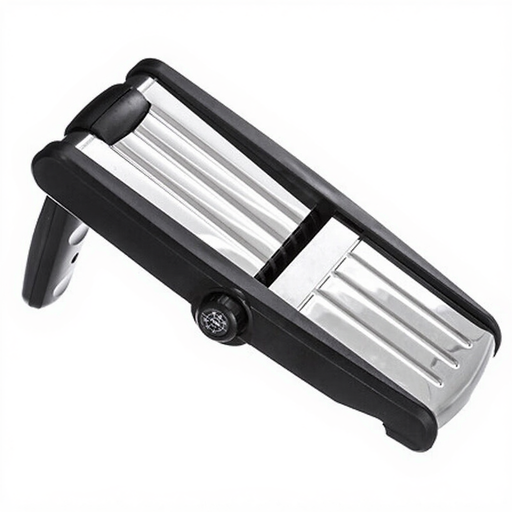
Why this product suits the profile: The manual slicer is compact at 24.5 × 13 × 12.7 cm and is designed for salads, garnishes and various types of fruit and vegetables.
The three blades offer multiple uses without needing an electric motor or a large appliance.
Stainless steel blades, ABS housing, light weight of 0.365 kg and space-saving dimensions.
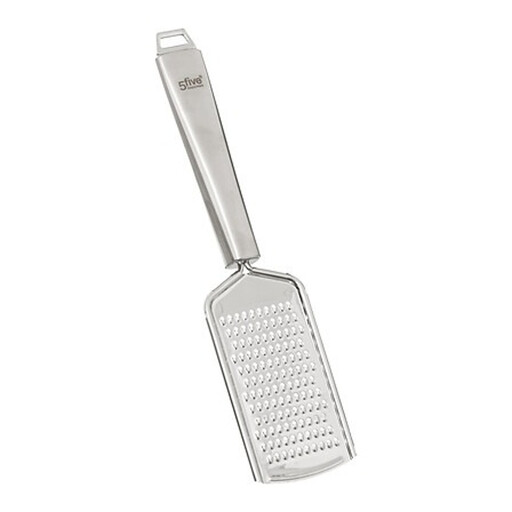
Why this product suits the profile: This compact cheese grater is aimed at households that regularly grate cheese, vegetables or citrus zest directly over bowls or work surfaces.
Its clear specialisation avoids unused extra attachments and reduces cleaning effort compared to many combination devices.
INOX 430 stainless steel, 25.2 cm length, 0.100 kg weight and ergonomic handle according to the product description.

Why this product suits the profile: For frequent slicing of bread, vegetables, fruit or other foods, this electric food slicer offers an adjustable slice thickness of up to approximately 23 mm.
The two described blades and electronic speed control reduce reliance on a single cutting profile.
Metal construction, 24 cm cutting path, collection tray and safety controls according to the product specifications.
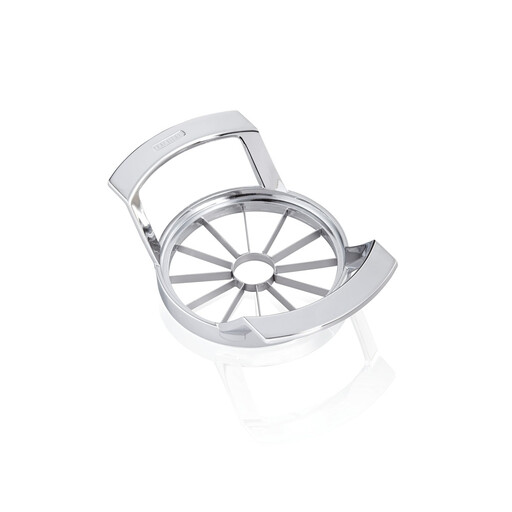
Why this product suits the profile: This fruit slicer divides apples and pears into twelve pieces while removing the core. It's handy for snacks, baking and serving platters.
Its defined purpose prevents you from buying a large vegetable slicer for a simple portioning task.
90 mm diameter, twelve segments, stainless steel or chrome-plated metal and dishwasher suitability according to the product specifications.
We've put together a complete, regularly updated list of products that fully meet these strict selection criteria and the safety regulations in force in the EU.
For meal prep, a mandoline or vegetable slicer with several cutting styles is suitable if you regularly prepare larger quantities of carrots, potatoes, cucumbers or onions. A hand guard and easy cleaning are more important here than a long list of rarely used extra functions.
The lifespan depends on the material, how much it's used, how well it's cared for and how the blades are handled. Stainless steel parts should be dried after cleaning. With electric models, repair options, spare parts and the availability of removable components can support long-term use. It's not possible to give a reliable general lifespan.
Electricity consumption depends on the motor power, running time and how often it's used. With short slicing tasks, consumption is usually lower than with longer operating times. If you only occasionally portion fruit or vegetables, you can manage perfectly well with a manual kitchen slicer that doesn't need mains power.