
Lieferung heute & morgen

Qualitätsgarantie

Willkommens-Angebote freischalten: KOSTENLOSE Lieferung | Bis zu 80 % RABATT | Kostenlose 30-Tage-JoyPlus-Testphase
App herunterladen
A good kitchen slicer can cut bread, cheese, meat, fruit and vegetables far more evenly. However, these devices vary considerably in design, blades, safety features and how easy they are to clean. If you focus only on motor power or a long list of functions, you might end up with a machine that takes up too much space in daily use or is awkward to clean.
A high wattage figure sounds impressive at first. But for practical use, blade quality, cutting guidance, stability and speed control are just as important. An electric knife with sufficient power can be useful for bread and roasts, while an electric slicer with adjustable thickness settings is better for consistently even slices.
With a deli slicer, the usable cutting length should match what you plan to cut most often. If you regularly slice large loaves of bread, joints of ham or blocks of cheese, pay attention to the carriage and cutting surface. A compact design saves space but can limit what you can do with it.
Not every blade is equally easy to remove. Crumbs, grease and food residue can collect in hard-to-reach places. So look for removable blades or carriages, smooth surfaces and clear cleaning instructions. With electric models, a safety switch, a stable base and an easily accessible trigger are also important.
Adjustable slice thickness is especially useful if you want one device to cut both thin slices of bread and thicker slices of meat or cheese. On an electric slicer, serrated blades work well for bread and firm-skinned items. Smooth blades are often used for fine, even cuts on cold meats.
For specific tasks, specialist tools can be a good choice:
Stainless steel is used for blades and many housing parts because it resists corrosion and is easy to maintain. Even with a stainless steel slicer model, check which parts are actually stainless steel and which are made from plastic. ABS plastic can keep the weight down on light manual slicers, while a metal construction offers more stability.
On motorised devices, the start-up should not be triggered accidentally. Look for safety switches, momentary and continuous switches, and a secure blade lock. With electric knives, always unplug the appliance before changing the blade. Never cut bones or frozen foods unless the manufacturer explicitly states the device is designed for that purpose.
The following recommendations are matched to different household and usage situations. Technical details are taken from the respective product descriptions.
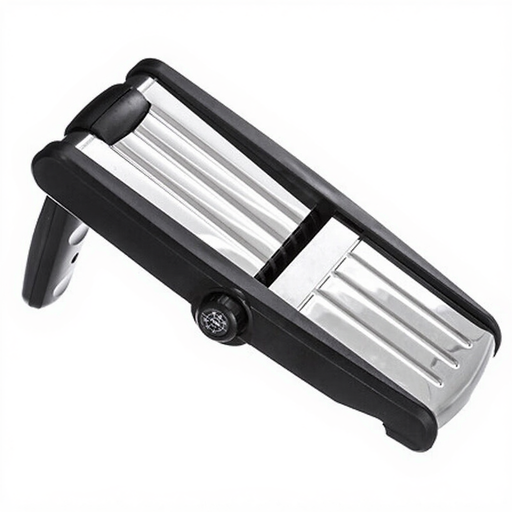
Why this product fits the profile: This compact manual kitchen slicer is ideal for households that want to cut fruit and vegetables into slices or decorative shapes without a motor.
Three blades and compact dimensions of 24.5 × 13 × 12.7 cm make it easy to choose for users who don't want to set up a large electrical appliance.
Three variants for fruit and vegetables; stainless steel blades and ABS material; weight according to product information: 0.365 kg.
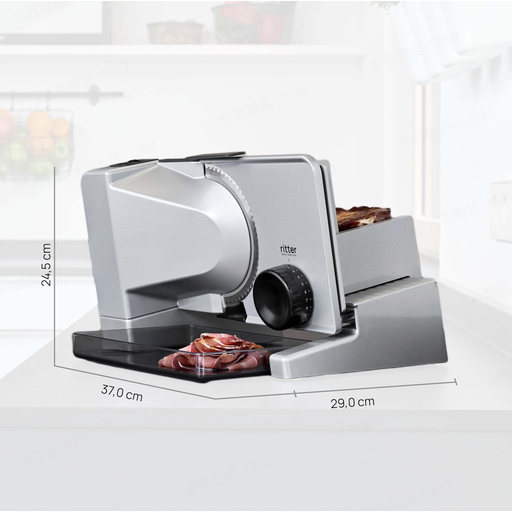
Why this product fits the profile: For households that regularly slice bread, cold meats or cheese, this electric deli slicer offers an adjustable range up to approximately 23 mm.
The electronic speed control and 24 cm cutting length give you more control than a device with only one fixed setting.
Full metal construction; serrated and smooth blade included; removable carriage and drip tray.
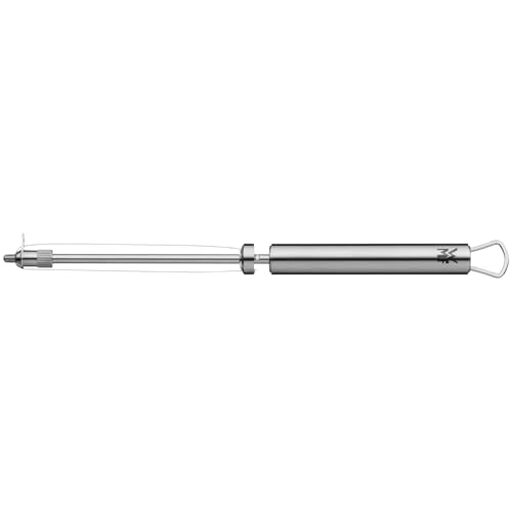
Why this product fits the profile: This manual cheese slicer is designed for semi-hard varieties such as Gouda, Emmental, Pecorino and Parmesan.
Its purpose is clearly defined: the wire blade is not a universal solution for bread, meat or frozen foods.
Cromargan 18/10 stainless steel; 25.5 cm length; according to product information, dishwasher-safe.
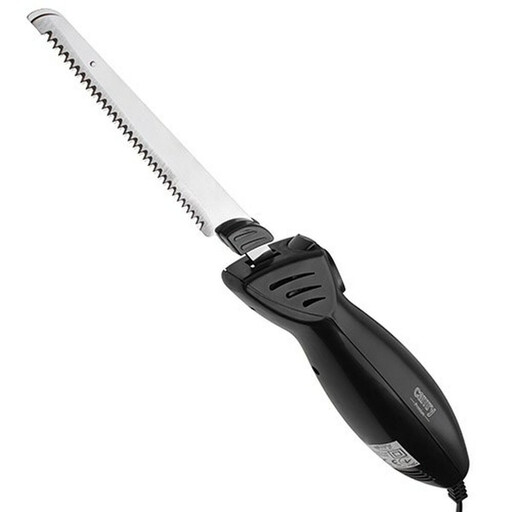
Why this product fits the profile: This electric knife is aimed at users who switch between bread, meat and frozen foods and need different blade sets for each.
Two blade sets plus a safety switch reduce the limitation to just one type of food. The motor housing must not be immersed in water.
Stainless steel blades; two interchangeable blade sets; release button and storage box according to the product description.
We've put together a full, regularly updated list of products that meet these strict selection criteria and the safety regulations in force across the EU.
For regular bread slicing, an electric slicer with a serrated blade, a stable carriage and adjustable slice thickness is the most practical choice. An electric knife can also work if it comes with a suitable bread knife attachment. The product specifications should explicitly list bread as an intended use.
The lifespan depends on the materials, how often you use it, how you clean it and how you store it. Stainless steel blades should be dried thoroughly after cleaning. On motorised models, keep the ventilation openings clear and avoid getting the motor housing wet. Removable parts make regular maintenance much easier.
Power consumption depends on the motor wattage and how long the machine actually runs. Since slicing usually takes only a short time, the running costs are mainly determined by how often you use it. For occasional slicing, a manual vegetable slicer, mandoline or cheese slicer that doesn't need electricity may be perfectly adequate.