
Lieferung heute & morgen

Qualitätsgarantie

Willkommens-Angebote freischalten: KOSTENLOSE Lieferung | Bis zu 80 % RABATT | Kostenlose 30-Tage-JoyPlus-Testphase
App herunterladen
The right kitchen slicer can make preparing fruit, vegetables, eggs, potatoes, bread, cold meats and cheese much easier. However, many models look similar in product images, even though they can differ significantly in terms of cutting options, materials, cleaning and safety features.
Three common buying misconceptions particularly often lead to the wrong purchase:
Before buying, you should therefore consider not only the price, but above all what you intend to use the slicer for.
First, think about which foods you regularly want to slice. A vegetable slicer, mandoline or vegetable plane is suitable for cucumbers, carrots, courgettes or apples. Depending on the attachment, you can create slices, strips, julienne cuts or grated pieces. A slicer for vegetables and fruit is useful when you need evenly sized pieces for salads, side dishes or decoration.
Specialist appliances generally make preparing particular foods easier:
For cutting attachments, stainless steel blades or rust-resistant cutting wires are clear and useful material specifications. Stainless steel is more resistant to corrosion than uncoated metals, but it must still be dried thoroughly after cleaning.
Plastic parts made from PP (polypropylene) or ABS can reduce the weight. This is convenient for a manual food slicer, but on its own it says nothing about the stability of the appliance as a whole. Also look for:
A slicer that is difficult to access after every use is often used less frequently in everyday life. Check whether the attachments can be removed and whether the manufacturer recommends hand washing or dishwasher cleaning. For the egg slicers and potato cutter presented here, hand washing is specified.
The dimensions also matter. Compact models can be stored in a drawer. Electric appliances, on the other hand, need a permanent place on the worktop and sufficient room for the carriage, collection tray and power cable. For occasional small quantities, a manual kitchen aid for slicing is often sufficient. If you regularly slice bread, cold meats or cheese, an electric bread slicer or food slicer may be more practical.
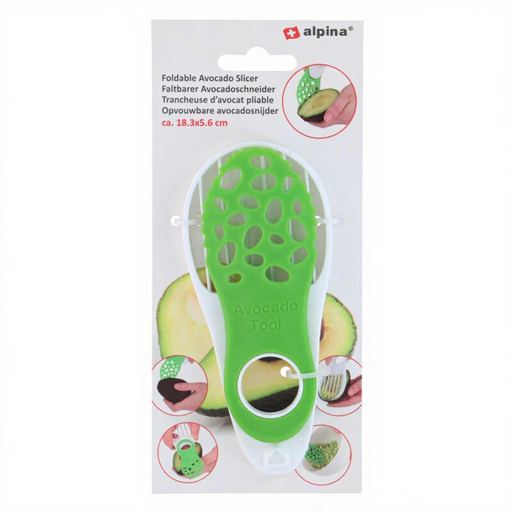
Why this product suits this profile: This compact specialist tool is designed for households that regularly prepare avocados for salads, sandwiches or guacamole and do not need a large vegetable slicer.
It focuses on three clearly described functions: slicing, removing the stone and peeling. This means there are no unused additional attachments to store.
Food-grade PP plastic, 12.5 × 5.6 × 1 cm and a weight of 22 g. Its compact design makes it easy to store.
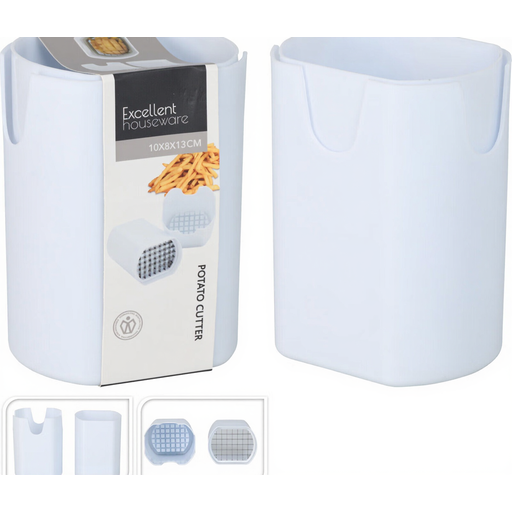
Why this product suits this profile: Anyone who regularly prepares chips or potato sticks at home gets an appliance with a clearly defined purpose and manual operation.
The description explicitly states that it is made from PP plastic and has stainless steel blades, as well as specifying that it is “not dishwasher-safe”. Buyers can plan for the cleaning effort in advance.
Manual potato cutter for evenly shaped sticks; cleaning with warm soapy water is recommended.

Why this product suits this profile: For households that frequently slice bread, cold meats, cheese or vegetables, an electric food slicer offers more features than a simple manual food slicer.
The cutting thickness can be adjusted electronically, and the model is described as including both a serrated blade and a smooth cutting blade. A safety switch and removable carriage are also specified.
All-metal construction, angled design, 24 cm cutting path and an adjustable cutting range of up to 23 mm, according to the product description.
A manual vegetable slicer, mandoline or egg slicer does not require electricity, can usually be stored quickly and incurs no additional running costs. However, the result depends more heavily on applying even pressure and using the appliance correctly. With sharp blades or wires, the finger guard should always be used.
An electric bread slicer or food slicer is more convenient when preparing larger quantities. You should consider the power connection, space required, noise levels, cleaning and the safe guidance of the food being sliced. Models with a removable carriage can make cleaning easier. Buying one is particularly worthwhile if you regularly prepare several types of food at a similar cutting thickness.
For a specialist requirement, a small kitchen aid may be more economical and save space. If you need several cutting options, you can also browse the vegetable slicer range.
An electric food slicer is designed for bread, cold meats and cheese, and may be able to process other foods depending on the blade and instructions. For fruit and vegetables, a mandoline or vegetable slicer with suitable attachments is often more appropriate. Always check the foods and cutting thicknesses specified by the manufacturer.
Its lifespan depends on the materials, load, cleaning and storage. Stainless steel blades and rust-resistant wires should be dried after washing. Plastic parts may be damaged by incorrect use, excessive force or contact with foods they are not designed for. Details such as spare-part availability or repair services may be relevant when choosing a model for frequent use.
Actual consumption depends on the motor power and how long the appliance is used. For short slicing tasks, the ongoing energy cost is generally easier to estimate than the purchase price. For everyday use, the correct cutting thickness, safe operation and straightforward cleaning are often more important.