
Lieferung heute & morgen

Qualitätsgarantie

Willkommens-Angebote freischalten: KOSTENLOSE Lieferung | Bis zu 80 % RABATT | Kostenlose 30-Tage-JoyPlus-Testphase
App herunterladen
A kitchen slicer can save you plenty of time when preparing meals, making salads or cooking homemade chips. There’s a wide choice, from manual vegetable choppers and mandoline slicers to electric food slicers. But not every appliance is right for every household. Vague material descriptions, hard-to-clean parts and missing safety features can all lead to a disappointing purchase.
A vegetable chopper with several attachments may look practical at first. What matters, though, is whether the blades are actually suitable for the foods you want to prepare. A device for chopping onions won’t necessarily produce even slices of cucumber or potato. So check whether the manufacturer distinguishes between slicing, shaving, julienne cutting and chopping.
“Stainless steel” doesn’t always describe the entire construction, and on its own it tells you little about the quality of the workmanship. When buying a stainless steel kitchen appliance, check whether the blade, body or holder is made from stainless steel. The label 304 stainless steel refers to the grade of steel used for a particular component, not necessarily every part.
Fine blades, wire frames and narrow gaps can make cleaning more difficult. A mandoline slicer with a collecting container is handy when the container and attachments are easy to access. For exposed blades, a hand guard is an important safety feature. Care instructions matter too: some products are dishwasher-safe, while others need to be washed by hand.
First, think about which foods you prepare regularly:
For manual appliances, blade material, cutting width and holding mechanism are key considerations. A collecting container can help keep your work area tidy, but it needs enough capacity for the quantity you plan to prepare. If you’re cooking for a family or regularly preparing meals in advance, check the size of the feed or cutting area.
Electric models should have a clearly specified slice thickness adjustment. The stated range for the Ritter serano⁷ runs from very thin slices to around 23 mm. According to the product description, the removable carriage has a cutting length of 24 cm. The Ritter Sono¹ is specified as cutting slices up to around 20 mm thick, with a cutting length of 18 cm.
Look for:
Never leave sharp blades loose in a cutlery drawer. When using a manual kitchen slicer, use the supplied holder if there is one. Children should not use these appliances.
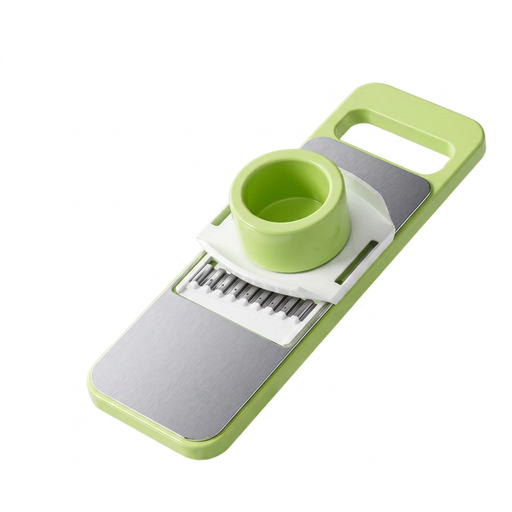
Why this product suits this profile: This manual kitchen slicer is designed for households that want to cut onions, potatoes and cucumbers into slices, strips or chunks without using a motor.
The supplied hand guard helps keep your fingers away from the blade. Even so, check which attachments are included before buying.
Three blade options according to the product description, manual operation and a stainless steel blade design.

Why this product suits this profile: This electric model is designed for slicing bread, cold meats, fruit and vegetables regularly. It comes with two blades for different types of food.
The specifications list an adjustable slice thickness of up to around 23 mm, a removable carriage and a collecting tray. This makes it easier to assess ease of use and cleaning before you buy.
All-metal construction according to the product description, electronically adjustable speed, and a smooth blade and a serrated blade.
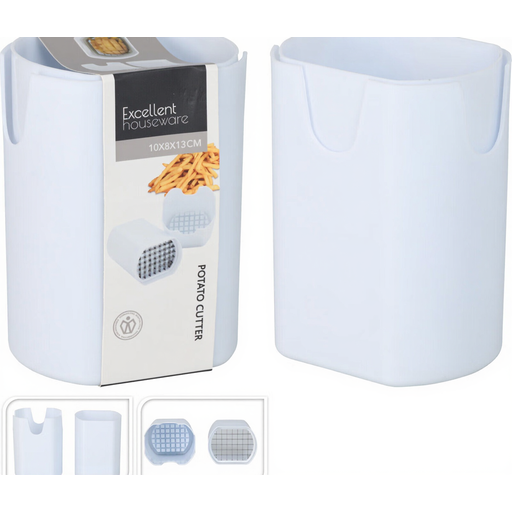
Why this product suits this profile: If you love homemade chips, this potato cutter is designed to produce evenly shaped strips.
The care instructions are clear: this model isn’t dishwasher-safe and should be cleaned with warm, soapy water.
PP plastic body, stainless steel blades and manual operation for cutting potatoes into strips.
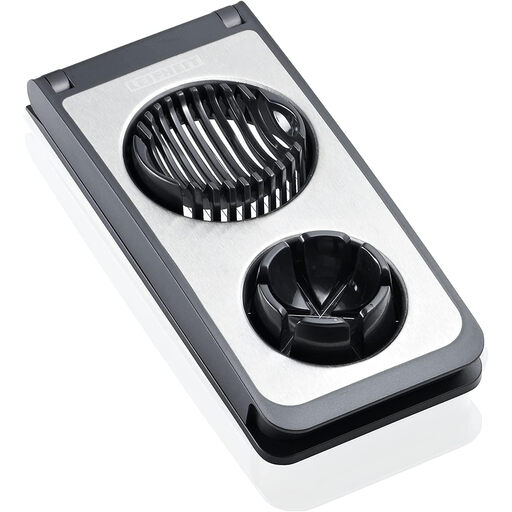
Why this product suits this profile: This egg slicer is designed for boiled eggs, kiwi fruit and cooked potatoes, and takes up little storage space.
The product information specifically says to wash it by hand. This helps you factor cleaning into your decision before you buy.
Three functions for round and oval slices and wedges, plus rust-resistant stainless steel wires according to the product description.
We’ve put together a complete, regularly updated list of products that meet these strict selection criteria and fully comply with the safety regulations in force in the EU.
For larger quantities, consider a vegetable chopper with a collecting container or an electric food slicer. The key factors are the size of the work surface, ease of cleaning and the cutting style you need. If you regularly slice bread, cold meats or larger quantities of food, an electric model may be a better choice than a manual kitchen helper.
Its lifespan depends on the materials, how heavily it’s used, how it’s cleaned and how it’s stored. Don’t use blades for purposes they weren’t designed for, and avoid putting hard or frozen foods through wire frames. For electric appliances, the motor, carriage and availability of spare parts are also worth checking.
As well as the purchase price, you’ll need to factor in electricity and, where applicable, the cost of cleaning products or replacement parts. If you only use it occasionally, electricity costs are usually a small part of the overall cost. Even so, compare the power consumption, how long you’ll use it for and the maintenance instructions for the model you’re considering.