
Lieferung heute & morgen

Qualitätsgarantie

Willkommens-Angebote freischalten: KOSTENLOSE Lieferung | Bis zu 80 % RABATT | Kostenlose 30-Tage-JoyPlus-Testphase
App herunterladen
A kitchen slicer can make meal preparation easier – provided its design matches how you intend to use it. Many disappointing purchases are not caused by one specific shortcoming, but by misplaced expectations: a compact vegetable slicer cannot replace an electric food slicer, and a device designed for soft foods is not automatically suitable for potatoes or hard ingredients.
Names such as “multifunction slicer” or “all-in-one” sound practical. However, what matters is which foods the device can actually process. An avocado slicer is designed to split, stone and fan out soft avocado. It is not intended for carrots, potatoes or bread.
A multi-function egg slicer is still a specialist device. It may be suitable for hard-boiled eggs, kiwi and cooked potatoes, for example, but not for frozen foods or hard stones.
“Stainless steel” may refer to the blades or wires, while the body is made of plastic. This is not necessarily a disadvantage, but it should suit the way you plan to use the product. Important points include:
A device that the manufacturer says should only be cleaned by hand should not be put in the dishwasher regularly. Heat, detergents and mechanical stress can affect the material and cutting performance.
Slicing devices need a secure, stable surface. Non-slip feet, a sturdy handle, a secure closing mechanism or a removable carriage may be more important in everyday use than an especially large number of cutting attachments.
An electric food slicer also requires safety switches, a protected carriage and straightforward controls. Before buying, you should also check whether the device can remain permanently on the worktop or needs to be put away after every use.
A potato cutter is designed to produce even sticks or chips. Depending on how it is used, a vegetable slicer or mandoline vegetable slicer can create slices, julienne cuts or grated pieces. For bread, fruit, vegetables and sausage, an electric food slicer with adjustable cutting thickness is more versatile.
You should therefore check:
For electric devices, the adjustable cutting range is a key technical specification. According to the product description, the Ritter Sono¹ offers a range from wafer-thin slices up to around 20 mm and has a removable carriage with 18 cm cutting travel. According to the manufacturer’s specifications, the Ritter serano⁷ can be adjusted up to around 23 mm and has a carriage with 24 cm cutting travel.
These figures help you assess whether larger pieces of bread, fruit or vegetables can be processed. However, they do not by themselves determine whether a device is suitable for every household. Weight, footprint and cleaning requirements should also be taken into account.
A manual food slicer is usually quick to use and does not require electricity. However, its blades, wires or cutting attachments may need careful hand washing. The Potato Cutter PP White has a PP plastic housing and handle; the cutting parts are specified as stainless steel blades. According to the product description, this model is not suitable for the dishwasher.
The avocado slicer is compact at 12.5 × 5.6 × 1 cm and weighs 22 g, according to the product specifications. This makes it easy to store without taking up much space. For households with limited storage, a specialist device like this may be more practical than a large combination appliance, provided avocado is a regular feature on the menu.
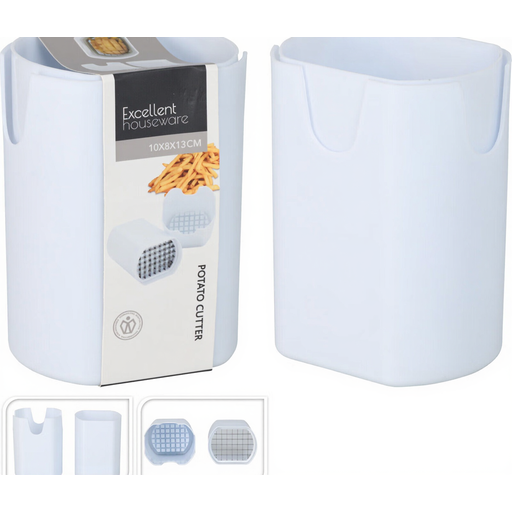
Why this product suits the profile: If you occasionally want to cut potatoes into even sticks, this manual device offers straightforward operation without needing a power connection.
The product description specifies its intended use, PP plastic, stainless steel blades and hand washing as the required care method.
Manual operation, stainless steel blades and a design geared towards cutting potato sticks.

Why this product suits the profile: For households that regularly slice bread, fruit and vegetables and prefer electric assistance with adjustable cutting thickness.
The specifications state a variable cutting range of up to around 23 mm, two blades, a removable carriage and safety switches.
Full-metal construction, angled design, electronic speed control and two cutting blades according to the product description.
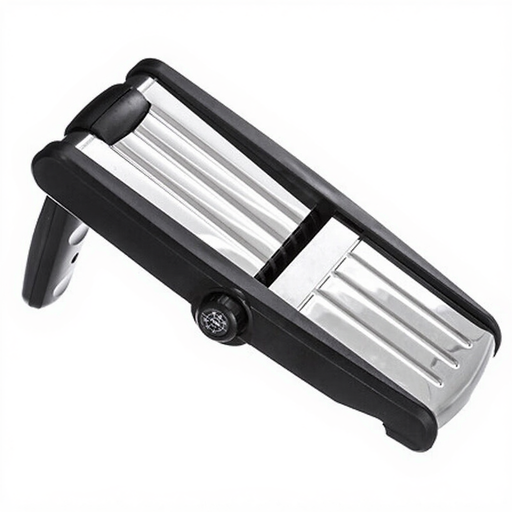
Why this product suits the profile: If you regularly want to slice, julienne or grate fruit and vegetables, you can use the three interchangeable cutting attachments.
The functions are clearly described through three stainless steel blades for slicing, julienning and grating, rather than being marketed merely as multifunctional.
Three interchangeable stainless steel blades, compact dimensions of 24.5 × 13 × 12.7 cm and a weight of 0.365 kg according to the product specifications.
For eggs, kiwi and cooked potatoes, the Leifheit Egg Slicer Combi ProLine is designed with three functions: round slices, oval slices and wedges. The rust-resistant stainless steel wires and stainless steel housing are objectively stated features; according to the care instructions, hand washing is required. An alternative with a non-slip base is the Leifheit Egg Slicer Combi ComfortLine.
For limited storage space, compact manual devices such as an avocado slicer, egg slicer or small vegetable slicer are suitable. Before buying, check the dimensions, storage options and cleaning instructions. An electric food slicer, on the other hand, requires a permanent position and a power connection.
Blades, wires and cutting attachments should be cleared of food residue after every use. Whether the dishwasher is permitted depends on the individual product. The Potato Cutter and Leifheit egg slicer models mentioned here are specified as requiring hand washing. Dry metal parts thoroughly afterwards and store them in a dry place.
Its lifespan depends on the materials, level of use, care and correct operation. Stainless steel slicer components should not be used with hard stones or frozen foods unless they are specifically designed for this purpose. With electric devices, the motor, carriage guide and availability of replacement parts may also be relevant. Always check the manufacturer’s specific information and use the device only with the foods for which it is intended.