
Lieferung heute & morgen

Qualitätsgarantie

Willkommens-Angebote freischalten: KOSTENLOSE Lieferung | Bis zu 80 % RABATT | Kostenlose 30-Tage-JoyPlus-Testphase
App herunterladen
A kitchen slicer can make preparing vegetables, fruit, cheese, bread or meat much easier. However, models can vary considerably in cutting thickness, cleaning requirements, safety features and space requirements. A low price or a long list of functions alone therefore says little about how practical a device will be in everyday use.
A multifunctional slicer with several attachments may initially sound versatile. In practice, however, confusing accessories, complicated changes or hard-to-reach gaps can make it more difficult to use. Before buying, you should therefore decide whether you are mainly looking for a vegetable slicer, a vegetable mandoline, a vegetable grater or a manual food chopper.
Terms such as “high quality” or “durable” are difficult to assess without specific material details. Specifications such as stainless steel, rust-resistant stainless-steel blades or INOX 430 are more meaningful. Plastic parts should be robustly made and allow for thorough cleaning after use. With cutting wires, graters and blades, it is also important to know whether they are permanently integrated or removable.
Sharp blades and wires make cutting easier, but incorrect handling increases the risk of injury. A non-slip base, finger guard or secure carriage are therefore practical buying criteria. Cleaning is equally important: some devices are suitable for hand washing only. A statement such as “dishwasher-safe” should only be taken into account if it is expressly included in the product information.
An egg slicer is designed for boiled eggs, kiwi fruit or boiled potatoes, while a cheese grater processes hard foods such as cheese, nuts or chocolate. Depending on the blade and setting, an electric food slicer can also be suitable for bread, fruit, vegetables or certain meat products.
Look out for the following details:
For direct contact with food, clearly specified, suitable materials are preferable. Stainless-steel blades or rust-resistant wires are practical for frequent use, although they may require specific care depending on the model. A stainless-steel housing may appear sturdy, but it does not automatically indicate anything about the quality of the blades or the stability of the base.
When comparing models, it is worth checking:
Manual devices do not require electricity and can usually be stored away quickly. However, the result depends more heavily on pressure, pulling movements and consistent guidance. An electric food slicer makes processing larger quantities easier, but requires clear worktop space and incurs ongoing electricity costs. For a device used frequently, you should also consider cable management, noise levels and cleaning after every use.
The following selection categorises different kitchen slicers according to typical usage scenarios. The details are based on the respective product information; where technical details are missing, the information on the product page should be checked before buying.
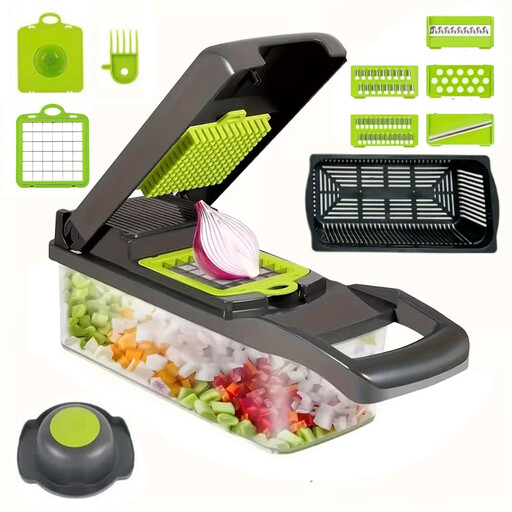
Why this product suits this profile: Combining a vegetable slicer and grater, this model is aimed at households that want to cover several food-preparation tasks with one compact kitchen tool.
The selection focuses on a clearly identifiable multifunctional design rather than a long, unexplained list of accessories. Before buying, you should check the contents of the package and the cleaning instructions.
Multifunctional design for vegetables; suitable as an addition for everyday slicing and grating tasks.

Why this product suits this profile: According to the product description, this model features a metal construction, a DC motor, electronic speed control and two blades for different types of food.
According to the supplier, the cutting thickness can be adjusted to approximately 23 mm. Nevertheless, safety and cleaning features should be checked against the current product page before ordering.
Electric drive; 24 cm cutting travel; smooth and serrated blades included, according to the product description.
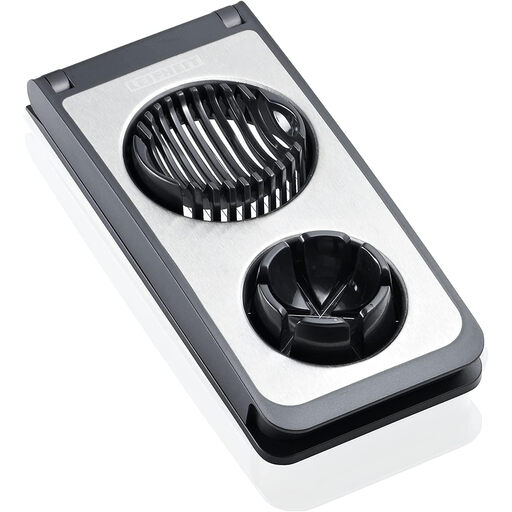
Why this product suits this profile: For breakfast, salads, meal prep and garnishes, this egg slicer offers three cutting options: round slices, oval slices and wedges.
Its intended use is clearly defined. The product information advises hand washing, caution when handling the wires, and avoiding frozen food and hard stones.
Three functions; rust-resistant stainless-steel wires; folding design and sturdy construction according to the product description.
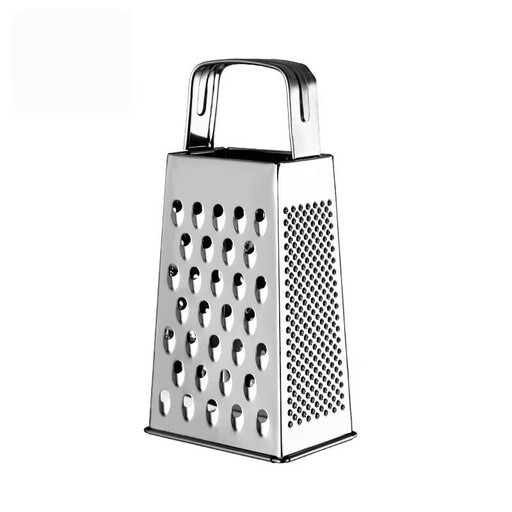
Why this product suits this profile: A four-sided cheese grater is suitable for users who prefer a range of grating and cutting surfaces in one stainless-steel kitchen tool.
The four sides make the available grating and cutting surfaces easy to identify. Before buying, you should check the stability, handle position and ease of cleaning the inside surfaces.
Four-sided design; stainless-steel material according to the product name; intended for various grating and slicing tasks.
We have put together a complete, regularly updated list of products that fully meet these strict selection criteria and the safety regulations applicable in the EU.
For small quantities of garlic, onions, herbs or nuts, a manual food chopper with a container and pull mechanism is often sufficient. It does not require a power socket and is suitable for individual portions. If you regularly want to cut bread, sausage, cheese or meat into even slices, you should compare the cutting-thickness adjustment, carriage and safety controls of an electric model instead.
A meat slicer or manual meat-slicing machine should not be used for frozen goods, bones or unsuitable foods if the manufacturer’s instructions prohibit this. After use, the blade, collection surface and contact areas should be cleaned thoroughly and dried completely.
For meal prep, devices that produce even cuts and are quick to clean are practical. A vegetable slicer with several attachments is suitable for slices, strips or shreds. For boiled eggs and potatoes, an egg slicer with several cutting options may be sufficient. The key point is that the food must be suitable for the device according to the instructions for use.
Its service life depends on the materials, workload, care and storage conditions. Stainless-steel blades and wires can remain usable for a long time when cleaned correctly. Avoid foods that are not approved for the device, excessive lateral pressure and damp storage. With electric models, the motor, switch and availability of spare parts are also relevant.
Electricity costs depend on the motor power, usage time and electricity tariff. For short slicing tasks, consumption is generally lower than during longer periods of operation. For occasional small portions, a manual device may be more economical and take up less space; for larger quantities, an electric model offers a more convenient way to work.