
Lieferung heute & morgen

Qualitätsgarantie

Willkommens-Angebote freischalten: KOSTENLOSE Lieferung | Bis zu 80 % RABATT | Kostenlose 30-Tage-JoyPlus-Testphase
App herunterladen
A kitchen slicer can make preparing fruit, vegetables, bread and other foods much simpler. At the same time, these devices and sets differ considerably in terms of cutting styles, materials, operation and cleaning. If you only focus on a long list of accessories or marketing promises, you might end up buying a product that rarely gets used in everyday life.
A multifunction kitchen slicer with numerous attachments may seem versatile at first. However, what really matters is whether the included blades match your own habits. If you mainly chop potatoes, cucumbers and carrots, you probably don’t need an extensive julienne slicer or several specialist blades.
So, before you buy, check the following:
A sharp blade can cut precisely, but it also increases the risk of injury if handled incorrectly. A vegetable slicer or mandoline vegetable cutter in particular should therefore have a suitable food holder or finger guard. Non-slip bases and a secure grip are also relevant features.
With electric appliances, a safe on/off switch and a stable construction are additional essentials. Safety devices do not replace careful operation. Cutting tools should be kept out of the reach of children.
Some products are described as dishwasher-safe. However, heat, detergents and contact with other items can put more strain on the cutting edge over time. For high-quality blades, hand washing with a soft sponge can be a better choice. After cleaning, all components should be thoroughly dried before being stored away.
A vegetable slicer for even slices is ideal for salads, side dishes and gratins. A julienne slicer produces fine strips, while a spiraliser can turn vegetables into long spirals or noodle-like shapes. For apples and pears, an apple slicer with an integrated corer is more practical than a general kitchen tool.
A fruit slicer should also match the size of the fruit you use. With the Leifheit ProLine Apple Slicer, the stated diameter is 90 mm; according to the product description, it cuts apples or pears into twelve pieces and removes the core at the same time.
Look for specific material details rather than vague terms like “premium” or “extra robust”. Stainless steel blades are commonly used. The PURECOOK set, for example, specifies 304 stainless steel. This material is relevant for kitchen use because, according to the product description, the surface has corrosion-resistant and wear-resistant properties.
With knife sets, blade length, handle construction and care instructions are also important. The ZWILLING Twin Pollux set includes a paring knife with a 10 cm blade, a slicing knife with a 16 cm blade and a chef’s knife with a 20 cm blade. The product details also mention FRIODUR ice-hardened special steel and recommend hand washing.
A kitchen slicer should be easy to clean without hard-to-reach gaps after use. Sets with a collection container can keep your work surface cleaner, while individual tools are often quicker to rinse and put away.
Practical features include:
With an electric all-purpose slicer, you should also compare slice thickness, cutting length, motor power and the type of switch. The Ritter Sono¹, according to the product description, has an 18 cm food carriage, an ECO motor and both a pulse and continuous switch. The slice thickness, according to the manufacturer, ranges from paper-thin to approximately 20 mm.
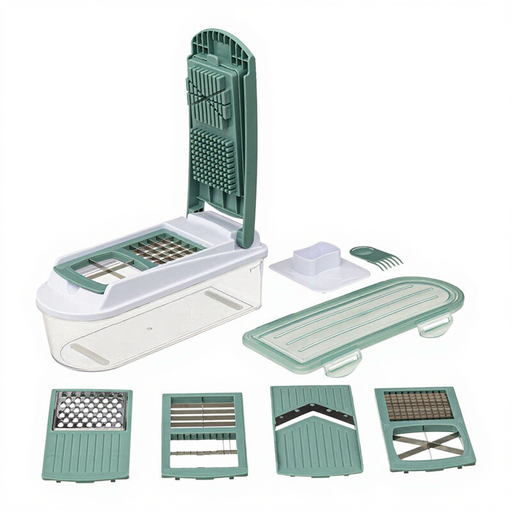
Why this product fits the profile: This set combines several cutting functions for households that want to try out different cutting styles without buying multiple individual tools.
An included food holder supports safe guidance. However, before buying, you should still check which of the ten components you will actually use regularly.
Stainless steel blade, collection container with lid, plus functions for slicing, julienne cutting, dicing and grating.

Why this product fits the profile: If you regularly slice bread, fruit and vegetables to an even thickness, this electric all-purpose slicer offers a defined cutting length and variable slice thickness.
The removable food carriage makes cleaning easier, according to the product description. Safety pulse and continuous switches reduce the risk of unintentional continuous operation.
Slice thickness up to approximately 20 mm, 18 cm cutting length, safety glass base plate and, according to the supplier, manufactured in Germany.
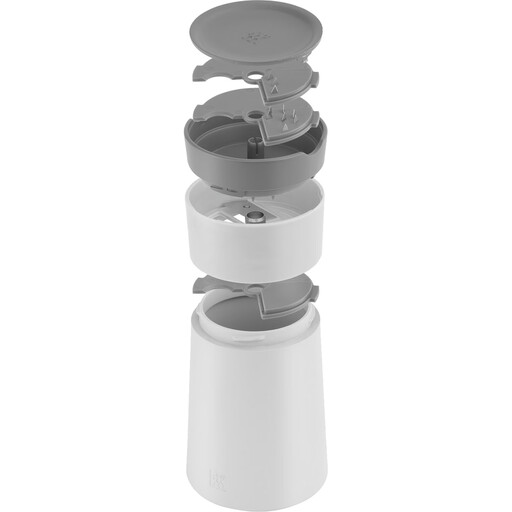
Why this product fits the profile: For users who regularly prepare vegetables in decorative or spiral shapes, this compact tool offers three interchangeable inserts.
The inserts can be stored in the handle, according to the product description. This keeps the blades together and reduces the chance of losing them.
Three interchangeable stainless steel blades, 4-in-1 design, dimensions of 8 × 8 × 15 cm and, according to the supplier, dishwasher-safe.
We have put together a complete, regularly updated list of products that fully meet these strict selection criteria and the safety regulations in force in the EU.
Not every household needs a large multifunction slicer. A vegetable peeler with a straight and a serrated blade can be enough for potatoes, carrots, tomatoes or mangoes. The PURECOOK set contains three double-ended peelers made from 304 stainless steel. According to the product description, the straight blade is intended for harder skins, while the serrated blade is for softer surfaces.
For families, an apple slicer can save time with snacks, baking ingredients or fruit platters. A stable base, the right fruit size and a safe distance from the cutting edges are all important. With larger knife sets, you should check whether storage and hand washing fit into your daily routine.
For families with different preparation habits, a set with a collection container and several inserts can be practical. If you often slice bread, fruit and vegetables to a uniform thickness, an electric all-purpose slicer is a good alternative. What matters most is actual usage, cleaning and the available storage space.
The lifespan depends on the material, build quality, usage and care. Stainless steel blades should be dried after cleaning and not used for unsuitable foods such as frozen products, bones or hard objects. With electric appliances, repair options and the availability of spare parts can be additional selection criteria.
The ongoing electricity costs depend on the power consumption and the duration of use. With short cutting tasks, the consumption is usually lower than with longer operating times. Compare the motor or power consumption stated on the product and switch the appliance off completely after slicing.