
Lieferung heute & morgen

Qualitätsgarantie

Willkommens-Angebote freischalten: KOSTENLOSE Lieferung | Bis zu 80 % RABATT | Kostenlose 30-Tage-JoyPlus-Testphase
App herunterladen
Kitchen storage and serving sets should save space in everyday use, keep food fresh and safe, and be practical for serving. However, terms such as “airtight”, “stackable” and “dishwasher-safe” don’t always mean quite what you might expect from the product description. What matters is the specific information provided about materials, sizes and how to use each item.
A lid can fit snugly without being suitable for carrying liquids. Look for specific details about the seal, locking mechanism and leak resistance. If a container has a silicone seal, check whether it can be removed for cleaning. Otherwise, residue in the seal groove can lead to odours and hygiene issues.
Microwave-safe bowls and containers aren’t automatically suitable for use in the oven. With plastic containers, you’ll often need to remove or loosen the lid. Stainless steel containers should never go in the microwave. Ceramic can also be damaged by sudden temperature changes. Always check the manufacturer’s instructions and the maximum permitted temperature.
When filled, stackable storage containers will usually still take up a lot of space. For empty containers, a nesting design is more practical. The shape of bowls matters too: uneven rims can make stacking difficult, while a coordinated range of sizes makes better use of cupboard space.
For BPA-free kitchen containers, the product description should explicitly state BPA-free. Polypropylene is often suitable for the fridge and freezer and, depending on the model, for reheating in the microwave. Stainless steel is durable and less likely to retain odours, but it must not be used in the microwave. With ceramic and stoneware bowls, consider the glaze, how easily they might break and any guidance on sudden temperature changes.
The label “suitable for food contact” refers to the relevant EU regulations for materials that come into contact with food. It doesn’t replace the need to follow the individual care and usage instructions.
A food storage container set with a range of capacities is more flexible for meal prep and storing leftovers than several identical containers. Smaller sizes are handy for dips, fruit and snacks, while 1 to 2 litres is useful for prepared meals and larger portions.
For a cereal bowl set, make sure the bowls’ diameter, capacity and number suit your household. Four bowls are an obvious choice for four people; families or those who regularly host may prefer a set of six. For serving bowl sets, check whether a tray is included and how much space each bowl actually offers.
“Dishwasher-safe” can come with restrictions. Some products should only go in the top rack, while others are best washed by hand to protect the glaze, decoration or wood. Removable silicone seals make it easier to clean food storage containers thoroughly. Wooden trays should be cared for according to the instructions and allowed to dry completely.
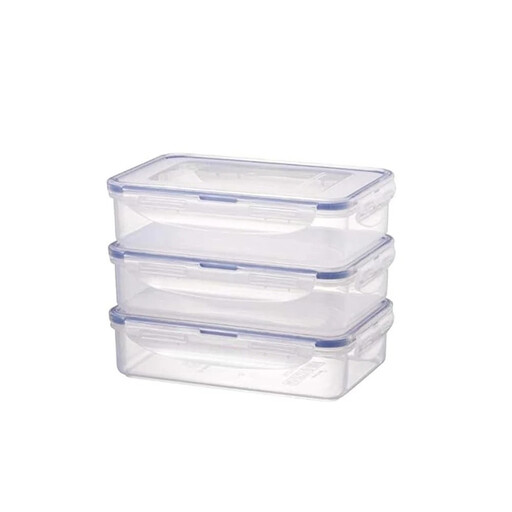
Why this product suits your needs: Three transparent containers of the same size make it easy to see what’s inside. They’re ideal for leftovers, snacks or prepped ingredients in the fridge.
The consistent 800 ml capacity makes it easy to plan how much each container will hold. The product details describe the containers as stackable and the lids as airtight. Microwave suitability isn’t confirmed in the information provided.
Three matching sizes, transparent containers and a stackable design.
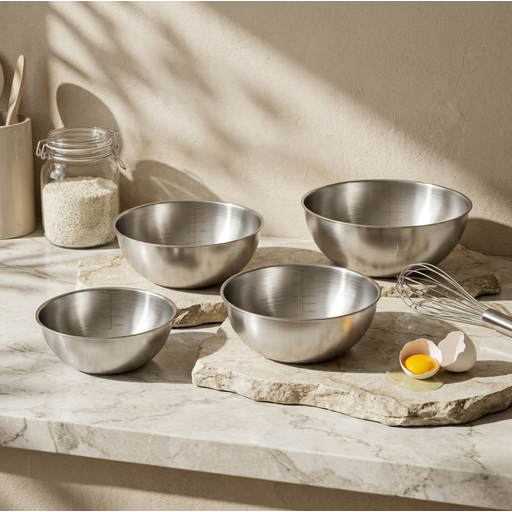
Why this product suits your needs: Four sizes, from 19 to 28 cm, cover everything from preparing and washing to portioning and serving. The bowls nest inside one another.
The specification of 304 stainless steel is more precise than a general term such as “metal”. The product information explicitly states that the bowls aren’t suitable for microwave use.
Four graduated sizes, uncoated stainless steel and a dishwasher-safe design, according to the product details.
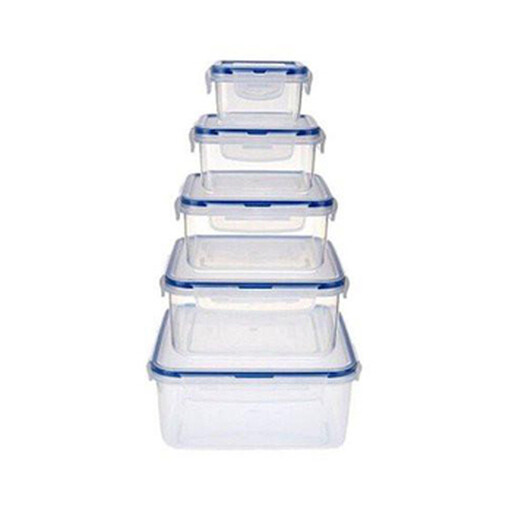
Why this product suits your needs: With five sizes ranging from 180 ml to 2.1 l, this set is ideal for households organising meal prep, leftovers and store-cupboard ingredients in different portions.
According to the product details, the containers nest inside one another. For microwave use, open all four clips and loosen the lid; the containers aren’t suitable for oven use.
Five graduated capacities, BPA-free polypropylene, and suitability for the fridge, freezer and top rack of the dishwasher, according to the product details.
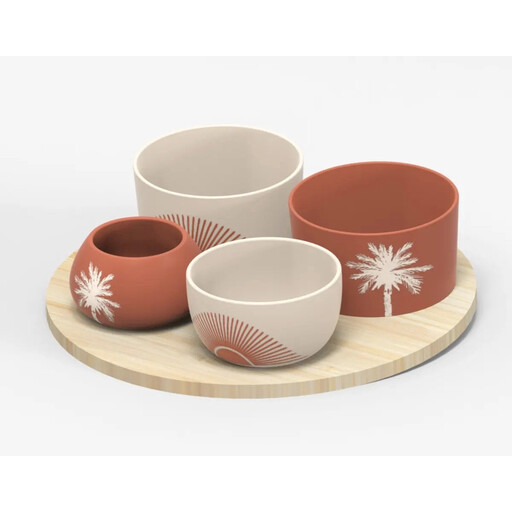
Why this product suits your needs: The 26 cm tray with four ceramic bowls is ideal for dips, tapas, snacks and small sides to share over a meal.
The contents are clearly listed as one tray and four bowls. As the bowls are made from stoneware, handle the set with care when transporting it and check for breakages.
A compact serving set with four bowls and a 26 cm tray, which is described as dishwasher-safe in the product details.
We’ve put together a complete, regularly updated list of products that meet these strict selection criteria and fully comply with the safety regulations in force in the EU.
Only if the lid, seal and clips are specifically described as leakproof or liquid-tight. Containers should also be kept upright when being transported. Carbonated or fermenting foods can create pressure, so they aren’t suitable for every type of locking system.
Ceramic and plastic bowls are only suitable for microwave use if this is stated in the product description. Stainless steel mixing bowls must not go in the microwave. Depending on the model, lids should be removed or loosened to prevent pressure from building up.
How long they last depends on the material, care and how they’re used. Plastic can be damaged by high temperatures, sharp objects or abrasive cleaners. Ceramic and stoneware can break if dropped or exposed to sudden temperature changes. Check seals regularly and replace them if they show visible signs of damage.