
Lieferung heute & morgen

Qualitätsgarantie

Willkommens-Angebote freischalten: KOSTENLOSE Lieferung | Bis zu 80 % RABATT | Kostenlose 30-Tage-JoyPlus-Testphase
App herunterladen
A functional kitchen strainer is an indispensable tool, whether for draining pasta, washing salad, or straining sauces. However, the selection is vast, and not every model lives up to its promise. Many buyers are frustrated by rust spots appearing after just a few washes, handles that bend under pressure, or fine mesh that stubbornly traps food particles. These defects are not only annoying but can also compromise kitchen hygiene.
To help you make the right choice, we will highlight the crucial quality features and show you which pitfalls to avoid when buying. This will help you find a durable and practical model that reliably serves its purpose.
Before you make a decision, you should consider three central aspects. These determine the durability, functionality, and hygiene of your new kitchen helper.
The material is the most important factor for the durability of a kitchen strainer. While plastic models are lightweight and inexpensive, they tend to warp when exposed to hot liquids and can absorb odours and stains.
A stainless steel strainer is often the more robust choice. However, pay close attention to the material specification. High-quality strainers are often made of 18/10 stainless steel. This alloy contains 18% chromium and 10% nickel, making it particularly resistant to rust and food acids. Cheaper stainless steel variants can be more susceptible to corrosion, leading to the dreaded rust spots. A good stainless steel strainer is an investment in the hygiene and longevity of your kitchen equipment.
The functionality of a strainer depends significantly on its mesh size and the stability of its construction.
Ensure that the mesh is firmly attached to the frame. On low-quality models, the mesh can detach at the rim, which not only compromises stability but also creates a hard-to-clean dirt trap.
Practical design features make daily kitchen tasks significantly easier:
To make your decision easier, we have put together a selection of products for different user profiles and applications.
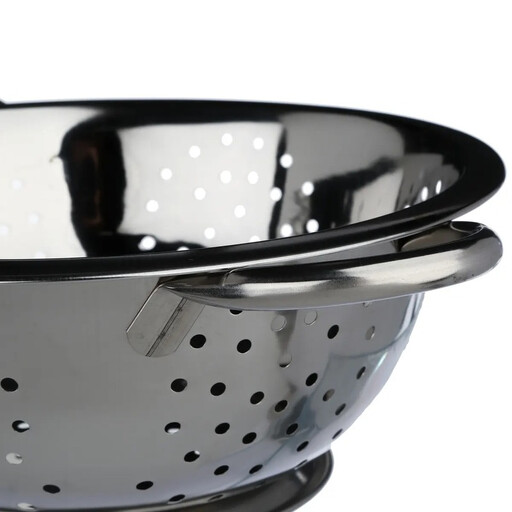
Why it's a great fit: Ideal for anyone looking for a solid, basic piece of equipment. This colander reliably handles everyday tasks like draining pasta or washing vegetables without breaking the bank.
Unlike flimsy plastic models, its alloy steel construction offers good durability for daily use and is less prone to warping from heat.
Generous 2.2-litre capacity and a durable, easy-to-clean stainless steel construction.
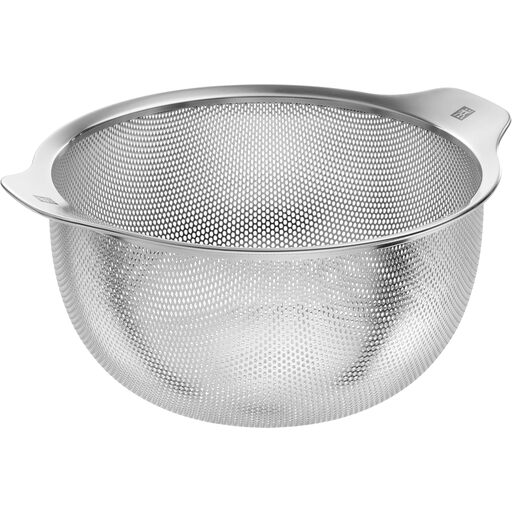
Why it's a great fit: For cooks who value premium materials, thoughtful design, and maximum durability. This strainer is both a functional tool and an aesthetic object.
Made from 18/10 stainless steel, it offers high resistance to rust and food acids—a common weakness in cheaper metal strainers.
The elevated base ensures hygienic draining in the sink, and the integrated handles allow for secure handling. Dishwasher-safe and odour-neutral.

Why it's a great fit: Perfect for kitchens with different-sized sinks or for anyone who needs a hands-free and stable solution for draining large quantities.
The expandable design solves the problem of strainers that don't fit in the sink or sit unstably. This prevents tipping and ensures safe working.
Flexibly adjustable to different sink sizes, large 3.6-litre capacity, and a robust stainless steel construction.
We've compiled a complete, up-to-date list of products that fully meet these strict selection criteria and German safety regulations.
For durability, hygiene, and heat resistance, stainless steel, especially the 18/10 alloy, is an excellent choice. It is rust-resistant, does not absorb odours, and is easy to clean. Plastic is a lighter and often cheaper alternative, but it can warp with heat and is more prone to staining.
Rinse a fine-mesh sieve under running water immediately after use to prevent food from drying on it. For stubborn residues, a dish brush with a little washing-up liquid will help. Many stainless steel strainers are dishwasher-safe, but always check the manufacturer's instructions. Soaking in warm water with a bit of baking soda can also help loosen stuck particles.
Although the terms are often used interchangeably, there is a functional difference. A colander (also called a pasta strainer) typically has larger, punched holes and is used for draining large items like pasta or potatoes. A sieve, in the stricter sense, has a fine wire mesh and is suitable for filtering liquids, straining sauces, or sifting dry ingredients like flour.