
Lieferung heute & morgen

Qualitätsgarantie

Willkommens-Angebote freischalten: KOSTENLOSE Lieferung | Bis zu 80 % RABATT | Kostenlose 30-Tage-JoyPlus-Testphase
App herunterladen
A kitchen strainer needs to do more than drain liquid. Different foods call for different levels of filtration, whether you’re straining pasta, vegetables, flour, tea, coffee, matcha or oil. If you focus only on the price or shiny finish, you could easily end up with one that doesn’t suit your needs.
Three common buying mistakes are:
Before you buy, it’s worth checking the design, dimensions and intended use.
A stainless steel strainer is a durable option for many kitchens. Stainless steel holds its shape and resists rust, provided the product is suitable for the intended food contact and is dried thoroughly after cleaning. Look for:
For non-stick pans, a slotted spoon made from food-grade silicone may be a better choice than a metal skimmer, as it’s less likely to scratch the surface. According to the product details, the ZEROPAN slotted spoon is designed for non-stick and ceramic surfaces and is dishwasher-safe.
Choose a size that suits the portions you usually prepare. A kitchen strainer with a handle can be held over a pan or bowl and is ideal for smaller quantities. For pasta, salad or larger amounts of vegetables, a colander with a base or an expandable sink strainer offers more support.
As a general guide:
Always check all the dimensions. For example, the 2.2-litre strainer from 5five is listed as having a diameter of 24 cm and a height of 12 cm. According to the product details, the expandable 3.6-litre stainless steel model is 53.5 cm long and 24.7 cm wide.
Mesh size determines which particles are caught. A classic colander usually has larger openings to let water drain quickly. A fine-mesh strainer, by contrast, is suited to flour, tea, coffee or matcha.
Here are some examples of which type to choose:
A specification such as “200 Mesh” or “800 Mesh” shouldn’t automatically be taken as a sign of quality. It describes the fineness of the filter mesh and needs to suit the food you’re preparing. According to the product details, the BJ soy milk filter set is rated at 200 Mesh, while the pour-over coffee filter is listed at 800 Mesh.
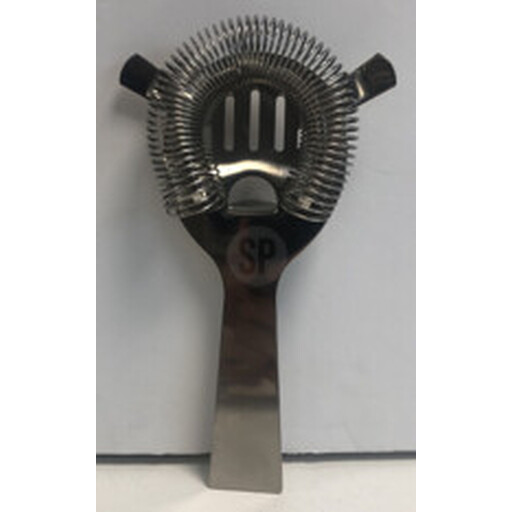
Why it suits this buyer: At 17 × 10 cm, it’s a compact choice for everyday tasks such as rinsing fruit, vegetables or tinned food, as well as sifting dry ingredients.
The dimensions are clearly stated, making it easier to check whether its capacity suits your needs before you buy.
Stainless steel construction, a handled design and, according to the product description, dishwasher-safe.
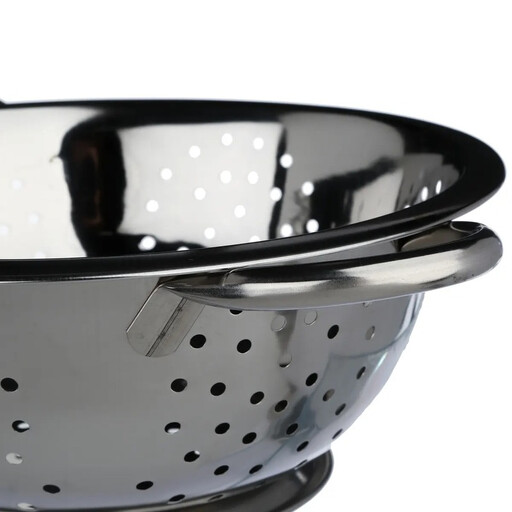
Why it suits this buyer: With a capacity of 2.2 litres and a diameter of 24 cm, it’s a good fit for households that regularly drain or wash larger quantities.
The listed dimensions make it easier to check whether the strainer will fit in your bowl, sink or kitchen cupboard.
Listed with a 2.2-litre capacity, a 24 cm diameter and stainless steel or alloy steel construction.

Why it suits this buyer: Its expandable design is made to fit sinks of different sizes. With a 3.6-litre capacity, it offers plenty of room for pasta, salad and vegetables.
The adjustable length reduces the risk of buying a fixed-size strainer that won’t rest securely across your sink.
A 3.6-litre capacity, expandable dimensions of 53.5 × 24.7 × 10.5 cm and stainless steel construction, according to the product details.
We’ve put together a complete, regularly updated list of products that meet these strict selection criteria and the safety requirements in force in the EU.
For hot liquids, choose a colander or slotted spoon with a long handle. According to the product description, the Skimmer PBT With Handle is designed for lifting vegetables, pasta and dumplings out of hot water or oil. It shouldn’t be left in a hot pan for long, and should be kept away from naked flames.
Drinks and fine powders call for different features. The TEANAGOO Matcha Set includes a stainless steel strainer for sifting matcha. For coffee, the BJ 800-Mesh-304 Stainless Steel Pour-over Filter has a clearly stated mesh rating. Before ordering, check that it’s compatible with your coffee maker.
Pet owners shouldn’t confuse filter inserts with standard kitchen strainers. According to the product details, the FURBULOUS sponge filter is designed for the Furbulous Cube. The listing specifies a pack of 6 and recommends replacing the filter every 14 days. Here, compatibility with the appliance model matters more than the mesh size of a regular strainer.
Compact models with a capacity of around 0.5 to 1 litre are fine for single portions. For pasta, salad or family-sized portions, around 2 to 3.6 litres is more practical. Also check the diameter and height to make sure the strainer fits your pan, bowl or sink.
It depends on the product. Some models are listed as dishwasher-safe, while others are recommended for hand-washing with a mild detergent. Let the strainer dry completely after washing, especially around handle joints and folds.
Matcha needs a fine-mesh strainer that catches powder lumps. For coffee, the right filter structure depends on your brewing method. Ratings such as 200 or 800 Mesh can serve as a technical guide, but you should still check that the filter is compatible with the accessories you use.