
Lieferung heute & morgen

Qualitätsgarantie

Willkommens-Angebote freischalten: KOSTENLOSE Lieferung | Bis zu 80 % RABATT | Kostenlose 30-Tage-JoyPlus-Testphase
App herunterladen
A good kitchen strainer is an unsung hero that gets used daily for everything from draining pasta to washing salad. But buying one can be surprisingly complicated. Many models quickly turn out to be a poor investment that brings more frustration than utility. As your Joybuy Product Recommendation Officer, I'm here to help you spot the common pitfalls and make an informed decision.
The most common problems with low-quality strainers are often the same:
To avoid these frustrations, it all comes down to the right materials and design features.
Before you make a decision, you should check three crucial parameters. These determine the durability, functionality, and safety of the strainer in your kitchen.
The material is the foundation of a strainer's longevity. The two most common options are stainless steel and plastic.
A strainer's functionality is defined by the size and type of its openings.
A strainer must be safe to handle. Sturdy handles that are firmly attached to the body are essential. A base ring on the bottom ensures the colander stands securely in the sink and prevents drained water from flowing back in. Some models offer extra hooks to hang them on the rim of a pot, or are extendable to fit over different-sized sinks.
Here are some recommendations tailored to specific needs and use cases.
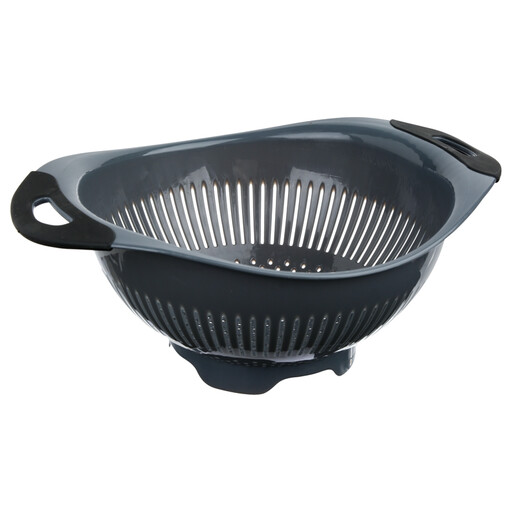
Why it's a good fit: Ideal for families and home cooks who need a straightforward, large colander for daily tasks like draining pasta or washing salad. Lightweight, durable, and easy to clean.
The PP plastic material is naturally rust-proof. The ergonomic TPR (thermoplastic rubber) handle is soft and provides a secure grip even when wet, minimizing the risk of slipping.
Large 2.5-litre capacity for family-sized portions. Low weight (162 g) for easy handling.
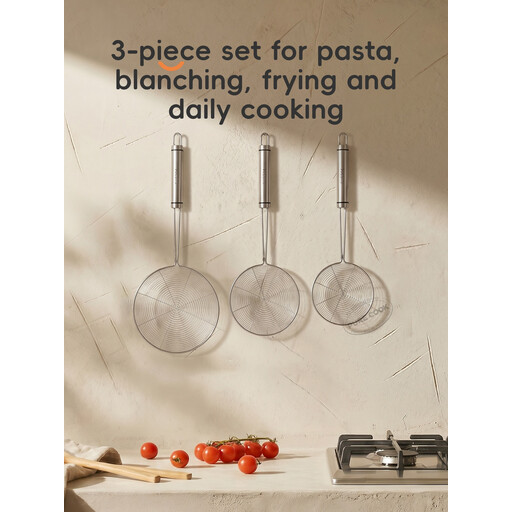
Why it's a good fit: This strainer set is designed for cooks who value material quality and versatility. It's suitable for straining, blanching, frying, and skimming—a true multi-functional tool.
Made from food-grade 304 stainless steel, it resists corrosion and high temperatures. The one-piece forged construction with no sharp edges or loose parts ensures maximum stability and hygiene.
Three different sizes (12 cm, 13.2 cm, 15.5 cm) for various tasks. The dense, woven mesh drains quickly without ingredients sticking to it.
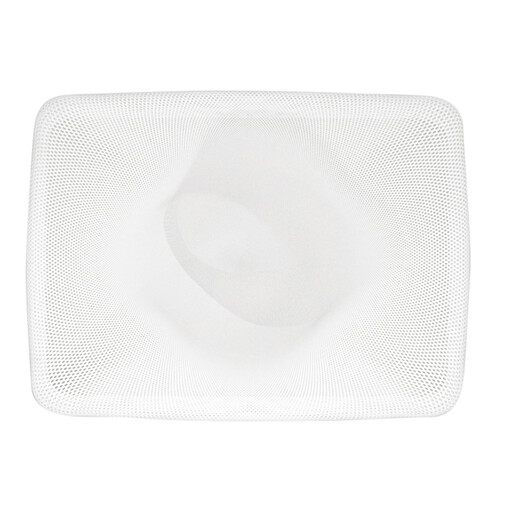
Why it's a good fit: This isn't a classic cooking strainer, but a practical sink drain filter system. It's the perfect solution for anyone wanting to prevent clogs from food scraps and simplify sink cleaning.
These disposable nets solve the problem of clogged strainers and drains at the source. Instead of having to clean a permanent strainer, the net is simply thrown away after use. The fine mesh catches even the smallest particles.
Hygienic, disposable solution that minimises odour build-up. Effectively catches food scraps, grease, and hair while allowing water to drain freely. Pack of 100 filters for long-term use.
We have compiled a complete, up-to-date list of products that fully meet these strict selection criteria and regulations for food contact materials.
Rinse a fine-mesh sieve immediately after use under running water, from the outside (the convex side) inwards. This pushes particles out of the mesh instead of pressing them in. For stubborn residue, a soft dish brush can help. Many stainless steel strainers are dishwasher-safe, but always check the manufacturer's instructions.
For kitchen utensils that come into contact with food, 304 stainless steel is an excellent choice. It is also known as 18/8 or 18/10 stainless steel, which refers to the proportions of chromium and nickel in the alloy. This composition offers high resistance to rust and acids from food.
In everyday language, the terms strainer and colander are often used interchangeably. Both refer to a bowl-shaped kitchen utensil with holes for draining liquids. Technically, there isn't a strictly defined difference. More important than the name is the size of the holes, which determines its purpose: large holes for pasta and vegetables, small holes or a fine mesh for flour and small grains.