
Lieferung heute & morgen

Qualitätsgarantie

Willkommens-Angebote freischalten: KOSTENLOSE Lieferung | Bis zu 80 % RABATT | Kostenlose 30-Tage-JoyPlus-Testphase
App herunterladen
A good kitchen strainer is a fundamental tool for countless tasks—from draining pasta and washing salad to sifting flour. Yet, the market is flooded with models that promise more than they deliver. Many home cooks know the disappointment: a supposed bargain turns out to be a rusty, warped, or hard-to-clean kitchen gadget after just a few weeks.
Before you make a purchasing decision, it's important to understand the typical weaknesses that can render a once-useful tool unusable. The most common problems are:
These defects are not only frustrating but can also pose a hygiene risk. An informed choice that focuses on material and construction is therefore crucial.
To avoid a bad purchase, you should focus on a few, but decisive, technical features. These determine durability, functionality, and safety.
The choice of material is the most important decision. It affects heat resistance, stability, and hygiene.
The type of openings determines the intended use.
Good design is revealed in the details. Sturdy, securely attached handles are essential for safe handling. A stand or a wide bottom rim ensures the colander stands securely in the sink and prevents the drained water from flowing back onto the food. Space-saving versions like collapsible or expandable strainers are ideal for kitchens with limited storage space.
Instead of making a one-size-fits-all recommendation, we have selected models tailored to specific needs and kitchen profiles.
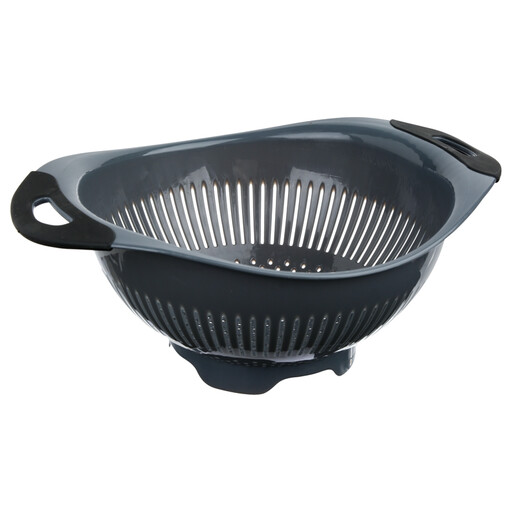
Why This Fits Their Persona: Ideal for basic kitchen tasks like washing salad or draining pasta without breaking the bank. The large volume is practical for family-sized portions.
The ergonomic handle with a soft TPR coating provides a secure grip, even with wet hands, counteracting the typical weakness of unstable handles on budget models.
Large 2.5-litre capacity; lightweight and easy-to-clean PP material; secure grip.
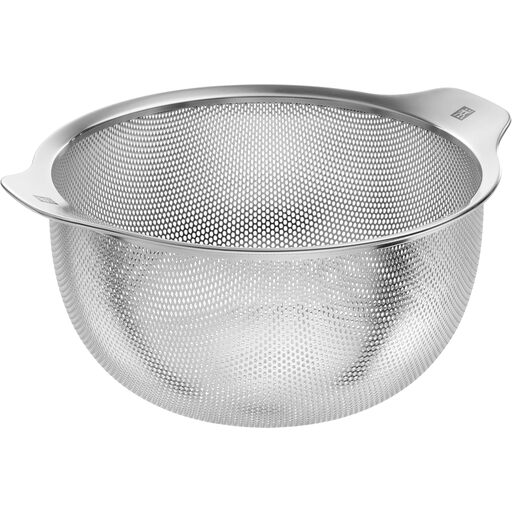
Why This Fits Their Persona: For anyone who values top quality, durability, and functionality. Perfect for preparing large family meals and for use as an elegant fruit bowl.
Crafted from 18/10 stainless steel, this model is extremely resistant to rust and warping. The elevated, stable base prevents food from touching the sink water—a common flaw in unstable strainers.
Outstanding material quality and stability; hygienic and dishwasher-safe; versatile for use as a colander and a bowl.
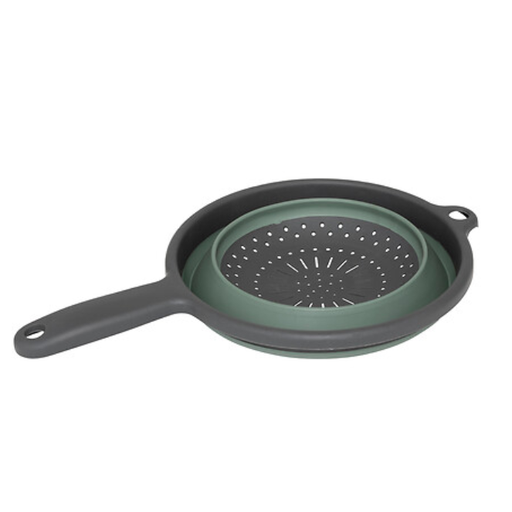
Why This Fits Their Persona: The perfect solution for small kitchens, RVs, or anyone looking to avoid bulky kitchen utensils. It folds flat and fits into any drawer.
This model solves the problem of limited space. The material combination of TPE, TPR, and PP is flexible enough for folding but robust enough in use to prevent the cracks that occur in cheap collapsible designs.
Extremely space-saving thanks to its collapsible design; lightweight and easy to handle; ideal for on-the-go use or small kitchens.
We've compiled a complete, up-to-date list of products that fully meet these strict selection criteria and safety standards.
1. Which material is better for a kitchen strainer: stainless steel or plastic? It depends on the intended use. For hot foods like pasta or for deep-frying, a stainless steel kitchen strainer is the safer and more durable choice due to its heat resistance and stability. For cold applications like washing salad, a lightweight plastic colander is a practical and cost-effective alternative.
2. How do I clean a fine-mesh sieve effectively? Rinse the sieve immediately after use with cold water. Cold water prevents starches (from pasta, rice) or proteins from coagulating and sticking. Then, clean with warm water, dish soap, and a soft brush. For stubborn residue, the sieve can be soaked in soapy water. Always check the manufacturer's instructions for dishwasher suitability.
3. What is the difference between a colander and a sieve? Although the terms are often used interchangeably, there is a functional difference. A colander typically has larger, stamped holes and is designed for quickly draining large volumes of liquid. A sieve has a finer wire mesh (fine-mesh sieve) and is used for filtering fine particles, straining sauces, or dusting with powdered sugar.