
Lieferung heute & morgen

Qualitätsgarantie

Willkommens-Angebote freischalten: KOSTENLOSE Lieferung | Bis zu 80 % RABATT | Kostenlose 30-Tage-JoyPlus-Testphase
App herunterladen
Whether you are cooking, barbecuing, drying laundry or carrying out DIY tasks, tongs and clamps for the home and kitchen may seem simple at first glance. However, their materials, mechanisms, sizes and intended uses can vary considerably. If you buy based solely on colour, pack size or a marketing promise, you may end up with a product that is not suitable for your needs.
“Heat-resistant”, “robust” or “rust-proof” are of limited value without specific information about the material or care requirements. For kitchen tongs, it should be clear whether the gripping area is made from stainless steel, silicone or wood. Smooth, easy-to-clean surfaces are preferable for contact with food. With stainless steel tongs, the exact alloy is also relevant: 304 stainless steel, for example, is specifically stated as the material, whereas a general description such as “metal” says little about the product’s properties.
It is also worth checking the material used for clothes pegs. Plastic is lightweight and does not rust, while wood feels different in the hand and can be used as a photo peg. However, the spring or hinge remains a potential wear point.
Short kitchen tongs can be practical when serving, but may not be long enough for deep frying pans or a barbecue grill. Wooden toaster tongs measuring 30.7 cm provide more distance from the heat than a shorter model. Even so, bread should only be removed from a switched-off, cooled toaster. The tongs must not come into contact with electrical heating elements.
With trigger clamps, screw clamps and quick-release clamps, clamping width and throat depth are key considerations. A clamp with a 150 mm clamping width is suitable for smaller workpieces, while 300 mm provides more room for larger woodworking joints. A high stated clamping force does not automatically mean that every workpiece can withstand that level of pressure.
A large number of clips or pegs in a pack does not automatically make it the right solution. Small bread clips or bag sealing clips are sufficient for bread bags. For hanging heavy textiles, however, spring strength, gripping surface and weather resistance are crucial. For workshop clamps, you should also check whether protective caps, quick adjustment or a spreading function are included.
For kitchen and barbecue applications, smooth, food-safe surfaces are practical. Many stainless steel models can be cleaned with warm water and mild detergent. Whether kitchen tongs are dishwasher-safe must be stated in the product information. Temperature limits are particularly important for silicone or plastic components.
Wood can be suitable for toaster tongs, but should not be stored permanently in damp conditions. Thorough drying after cleaning is recommended. Wooden products should not be treated as heatproof kitchen utensils suitable for any temperature.
A serrated or wave-shaped gripping surface can improve hold, but is not always suitable for delicate foods. Smooth, rounded contact surfaces are often gentler when handling pastries or salad. With barbecue tongs, length, handle insulation and safe return to the closed position are more important than striking looks.
When choosing clothes pegs, users should look for consistent clamping force. Windproof clothes pegs are particularly useful for balconies, gardens or portable washing lines. For photos, cards and lightweight decorations, a smaller peg with a smooth surface is usually sufficient.
For DIY clamps and woodworking accessories, the following values are crucial:
Protective pads should always be used on painted or soft surfaces. Safety glasses and a stable work surface are essential for safe working with high-strength clamps.
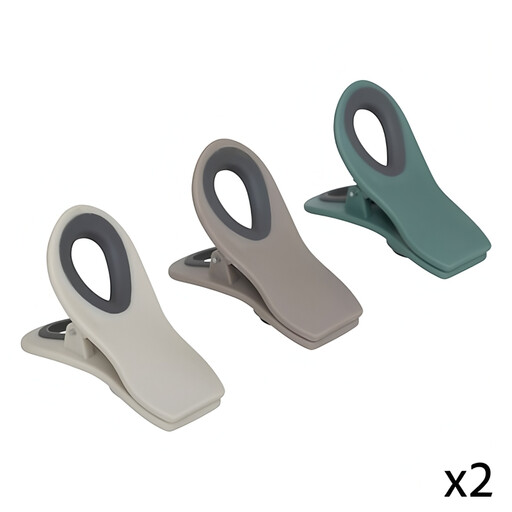
Why this product suits this profile: Six PP sealing clips, each measuring 5.5 cm, are suitable for opened food bags and small storage solutions around the home.
The product information specifies the material, dimensions and quantity. It also warns against extreme temperatures, making the limits of use clearer.
PP, magnetite and TPE/TPR components; six clips in three colours for bags and packaging.
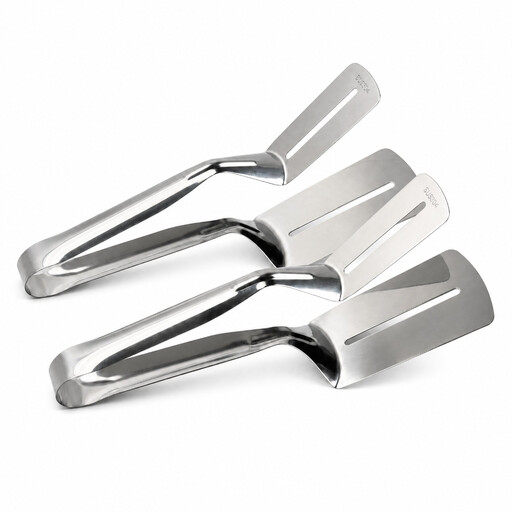
Why this product suits this profile: The two-piece set combines 25.5 cm stainless steel tongs with a spatula, making it suitable for shoppers who need several functions when frying, barbecuing and serving.
The specifications state that it is made from 304 stainless steel and features a one-piece forged construction, smooth edges and dishwasher suitability.
304 stainless steel, two pieces, a mirror-polished surface and stated dishwasher suitability. The handles may become hot over an open flame.
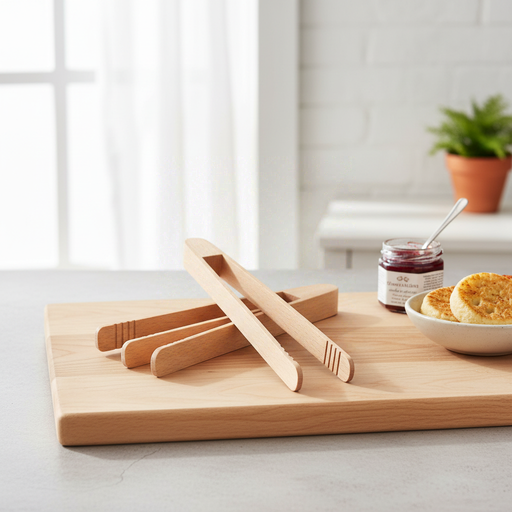
Why this product suits this profile: Measuring 30.7 cm long and 1.9 cm wide, these wooden tongs are designed for toast, bagels, pastries and serving tasks where greater distance from the heat is useful.
The stated length helps you assess the reach. The smooth wooden surface is intended for delicate toaster slots; the toaster must still be switched off.
Natural wood, 30.7 cm length and versatile use for toast, pastries, salad or hot snacks.
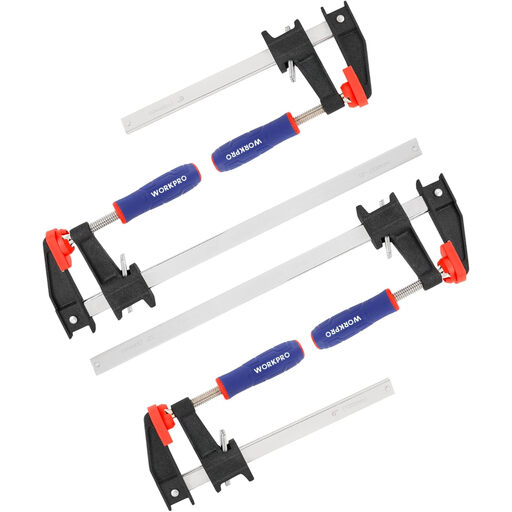
Why this product suits this profile: The four-piece set, comprising two 150 mm and two 300 mm clamps, is designed for gluing, repairs and DIY projects involving workpieces of different sizes.
The clamping widths, 80 mm throat depth and stated clamping force of 272 kg are clearly specified. Protective caps are designed to reduce pressure marks on the workpiece.
Four alloy steel clamps, quick adjustment, plastic protective caps and two sizes for woodworking accessories.
We have put together a complete, regularly updated list of products that fully meet these strict selection criteria and the safety regulations applicable in the EU.
For barbecuing and frying, sufficient length, a secure gripping surface and heat-suitable handle areas are important. Stainless steel models are often easy to clean. Handles can become hot over an open flame, even when insulated, so always follow the relevant safety instructions.
Their service life depends on UV exposure, moisture, temperature, spring strength and daily use. Plastic pegs can become brittle when exposed to prolonged sunlight, while wood can swell when wet. Replace clips as soon as they no longer close securely, develop cracks or lose their clamping force.
For small craft and repair jobs, clamps with a 150 mm clamping width are often sufficient. Larger panels or frames require a greater clamping width and, in some cases, several clamps. Soft protective caps are useful when you want to prevent pressure marks on the workpiece surface.