
Lieferung heute & morgen

Qualitätsgarantie

Willkommens-Angebote freischalten: KOSTENLOSE Lieferung | Bis zu 80 % RABATT | Kostenlose 30-Tage-JoyPlus-Testphase
App herunterladen
The right kitchen tools can transform meal prep from a chore into a pleasure. But the market is flooded with products whose marketing promises often outweigh their real-world performance. As your Joybuy Product Recommendation Officer, I'll help you spot the common pitfalls and make an informed choice based on clear, objective criteria.
Before you invest, it's helpful to understand the most common issues that lead to disappointment and wasted money.
To avoid a bad purchase, you should focus on a few crucial technical features. These will help you objectively assess a product's quality.
If you want to buy sharp knives, the blade material is crucial. Look for terms like hardened blade steel. This treatment increases the steel's hardness, which leads to better edge retention—meaning the knife stays sharper for longer. Manufacturers like WMF knives or Victorinox often provide precise details about the steel types and hardening processes they use. A good kitchen knife should strike a balance between hardness (for sharpness) and flexibility (to prevent chipping or breaking).
The handle is your direct connection to the tool. The choice of material directly impacts handling, hygiene, and durability.
Instead of looking for a jack-of-all-trades, consider which tasks you perform most often in your kitchen. A sturdy pair of kitchen shears for breaking down poultry has different requirements than fine scissors for herbs. A wide Chinese chef's knife is excellent for chopping vegetables, while a flexible filleting knife is designed for fish. A good knife set covers the most important basic functions but can be usefully supplemented by specialists like a quality vegetable peeler.
Here are some recommendations tailored to specific user profiles and the quality criteria mentioned above.
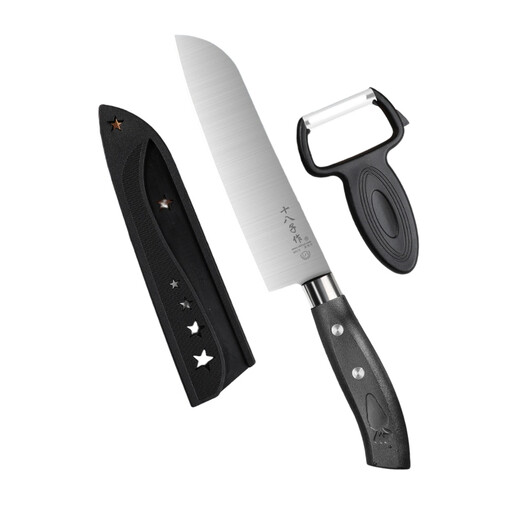
Why This Fits Their Persona: This set is a practical starter solution for a first kitchen or for households looking for functional basics without a high cost. It combines two of the most frequently used tools.
It bypasses the "all-in-one" myth by offering two separate, specialised tools instead of an inadequate, compromised solution.
Offers a cost-effective combination of an all-purpose knife for vegetables and a peeler. Includes a knife sheath for safe storage.
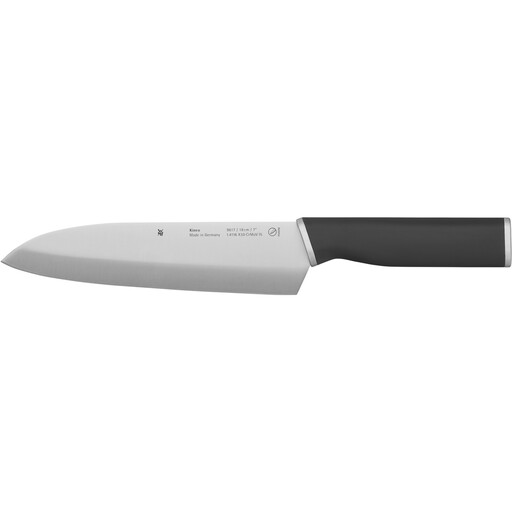
Why This Fits Their Persona: For ambitious home cooks who value precision, durability, and trusted brand quality. Ideal for the daily preparation of vegetables and fish.
It counters the trap of false material promises. WMF states that its "specially hardened blade steel" and "Performance Cut Technology" ensure long-lasting sharpness.
Made in Germany (according to the manufacturer). The kinetic handle design ensures comfortable and balanced handling.
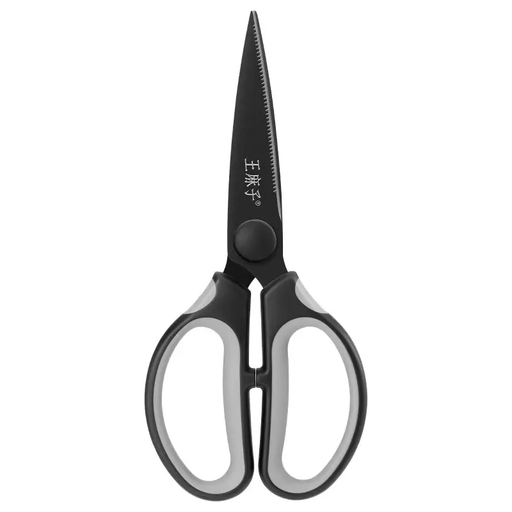
Why This Fits Their Persona: Perfect for cooks who regularly break down poultry or perform other heavy-duty cutting tasks in the kitchen. Standard household scissors would be overwhelmed.
This is a highly specialised tool that doesn't try to be everything. It debunks the jack-of-all-trades myth with its focused, robust design for heavy-duty tasks.
Made from durable stainless steel, explicitly designed for cutting chicken bones, meat, and packaging. Ergonomic handles for low-effort use.
We've compiled a complete, up-to-date list of products that meet these strict selection criteria and current standards.
1. How do you properly care for sharp knives to extend their lifespan? For maximum longevity, high-quality kitchen knives should be hand-washed with a mild detergent and dried immediately. Use wooden or plastic cutting boards to protect the blade. For storage, use knife blocks, magnetic strips, or the provided sheaths to avoid contact with other metal objects. Regular sharpening with a suitable tool will maintain cutting performance.
2. Are all stainless steel kitchen utensils dishwasher-safe? Although many products are advertised as dishwasher-safe, caution is advised. Harsh detergents and high temperatures in the dishwasher can dull knife blades over time and damage handles, especially those made of wood or glued materials. Always check the manufacturer's instructions. When in doubt, gentle hand-washing is the better choice for long-lasting stainless steel kitchen utensils.
3. What is the difference between a chef's knife and a Santoku knife? The main difference lies in the blade shape and intended use. The classic European chef's knife has a curved blade, which is well-suited for a rocking motion (rocking the blade over the food). The Japanese Santoku knife is typically a bit shorter and wider with a straighter edge. Its name means "three virtues" (slicing, dicing, and mincing), highlighting its versatility for fish, meat, and vegetables.