
Lieferung heute & morgen

Qualitätsgarantie

Willkommens-Angebote freischalten: KOSTENLOSE Lieferung | Bis zu 80 % RABATT | Kostenlose 30-Tage-JoyPlus-Testphase
App herunterladen
Whether you are mashing potatoes, slicing eggs evenly or finely chopping herbs, the right kitchen tools can make food preparation easier and save space in your kitchen cupboard. At the same time, manual kitchen tools and electric appliances can differ considerably in terms of materials, cleaning, safety and intended use.
To avoid disappointment after only a short time, it is worth looking at the actual product specifications rather than relying on general marketing claims.
A kitchen tool with lots of functions sounds practical. In use, however, it can become cumbersome if attachments are difficult to change or individual functions are suitable for only a few ingredients. A potato cutter, for example, is designed to produce evenly sized sticks, while a vegetable cutter or manual chopper allows for different types of cuts.
Before buying, you should therefore be clear about the following:
“Stainless steel” is useful information, but it is not complete. Different types of steel and plastic may be used depending on the product. 304 stainless steel is frequently used for kitchen utensils that come into contact with food. 430 stainless steel is also rust-resistant, but its composition and properties may differ.
The type of plastic should also be specified, such as PP (polypropylene). It is also important to check whether the manufacturer allows the product to be cleaned in the dishwasher. Some products are explicitly intended for hand washing only.
An egg slicer, mandoline or potato cutter requires cutting elements to divide ingredients cleanly. For this reason, finger protection, a secure base and controlled handling are important selection criteria.
When using tools with wire frames or blades, you should:
For frequently used stainless-steel kitchen utensils, rust-resistant materials, smooth surfaces and neatly finished edges are important. A potato masher with a sturdy mashing plate is suitable for soft, boiled potatoes and root vegetables. A potato ricer, on the other hand, works with fine pressing holes and can produce a more even consistency.
With a kitchen grater or box grater, the grating surface should be firmly attached to the body. An ergonomic handle supports control, but it does not replace careful handling.
Compact kitchen tools are easier to store in drawers, cupboard compartments or on a utensil rail. However, the size should not compromise ease of use. A manual chopper with a small container is suitable for onions, garlic, herbs or smaller portions. For families, a larger container or a stick blender with an additional beaker may be more practical.
Care instructions have a direct impact on everyday use. Some potato mashers and graters can be rinsed clean but are not dishwasher-safe. Other products made from 304 stainless steel are described as dishwasher-safe. Before buying, you should therefore check the instructions for cleaning, drying and storage.
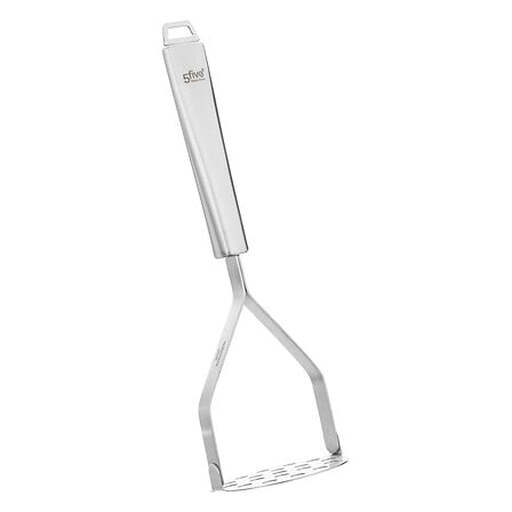
Why this product suits this profile: This manual potato masher is designed for a specific kitchen task and requires neither electricity nor an additional attachment. At 26 cm high, it can be stored without taking up much space.
The product specifications state that it is made from stainless steel and PPC and is intended for hand washing only. This makes it clear that the tool should not be put in the dishwasher.
Rust-resistant stainless-steel components, an ergonomic handle and a low product weight of 0.136 kg.
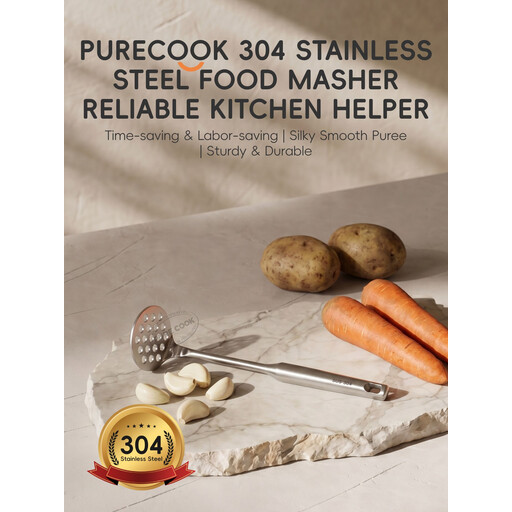
Why this product suits this profile: According to the product details, this potato ricer is made from 304 stainless steel and has evenly distributed fine pressing holes. This makes it a good choice for households where consistency and material specifications matter.
The construction is described as thick-walled and forged in one piece. This means there are fewer joins where food residue can collect.
304 stainless steel, rounded edges and dishwasher-safe according to the product description. The product measures 6.5 × 10.5 cm.
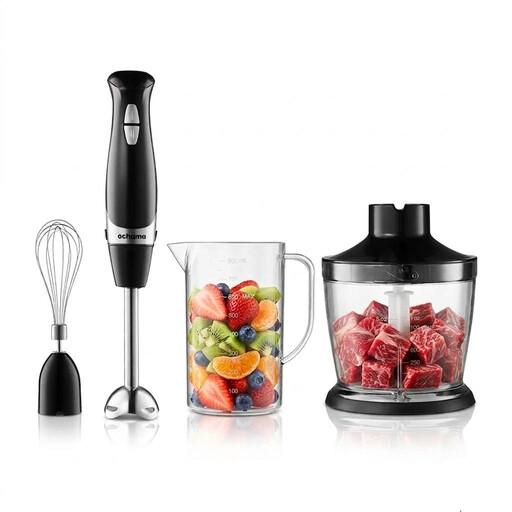
Why this product suits this profile: For families and frequent users, this stick blender combines several tasks: puréeing, whisking and chopping. The set includes a 500 ml chopper and an 800 ml mixing beaker.
The product description lists specific performance details: a 600 W motor, two speed settings and removable parts. This makes it easier for buyers to compare the range of functions with their needs.
Four functions, two speed settings and removable components for cleaning.
We have put together a complete, regularly updated list of products that fully meet these strict selection criteria and the safety regulations applicable in the EU.
For everyday basics, a vegetable peeler, kitchen grater, potato masher, egg slicer and manual chopper are often enough. If you regularly prepare soups or sauces, you can add a stick blender. Your choice should be based on your actual cooking habits.
Their lifespan depends on the material, level of use, care and storage. Rust-resistant stainless-steel parts can remain usable for a long time when used properly. Blades and wires should be checked regularly for deformation or damage. It is equally important to follow the relevant instructions for ingredients and cleaning.
Manual kitchen tools do not consume electricity during use. Ongoing costs mainly result from cleaning, the possible replacement of worn parts and, where necessary, replacing damaged blades or wire frames. Electric appliances such as stick blenders do require electricity, but depending on the model they offer additional functions.