
Lieferung heute & morgen

Qualitätsgarantie

Willkommens-Angebote freischalten: KOSTENLOSE Lieferung | Bis zu 80 % RABATT | Kostenlose 30-Tage-JoyPlus-Testphase
App herunterladen
From a spilled morning coffee and grease splatters by the stove to sticky children's hands, a reliable paper towel is an everyday essential. However, the selection of household towels is vast, and the differences in quality and function are often not apparent at first glance. The search for the right product can quickly become overwhelming.
This guide serves as a helpful resource. It highlights the key features of modern kitchen paper and presents a selection of products that stand out for their specific properties. Our goal is to provide an informed basis for your purchasing decision, helping you find a paper towel that perfectly matches your household's needs.
To make the right choice, it's helpful to understand a few basic product features. Qualities like absorbency, tear-resistance, and sustainability are crucial for the functionality and efficiency of household towels.
The performance of a paper towel depends heavily on its material properties. A key criterion is the number of plies. A 3-ply paper towel can typically absorb more liquid than a 2-ply version. The layers create small air pockets that contribute to absorbency.
The surface texture is equally important. Many manufacturers use special embossing, such as a honeycomb texture, to increase the surface area and speed up liquid absorption. High wet strength ensures that the towel remains tear-resistant even when damp and doesn't fall apart during wiping or wringing.
Modern paper towels often feature perforations for half sheets. This function allows for customised usage and can help reduce paper consumption. For small mishaps, dabbing food, or as a napkin, a half sheet is often sufficient, while a full sheet is available for larger messes. This promotes more mindful and economical use of the product.
For environmentally conscious consumers, sustainability is a key factor when buying kitchen paper. Look for products with recognised certifications. The FSC (Forest Stewardship Council) seal, for example, identifies paper products sourced from responsibly managed forests. Some household towels are also made partially or entirely from recycled fibres, which helps conserve resources.
Based on the criteria mentioned, we have compiled a selection of products that cater to different needs—from high efficiency to excellent value for money.
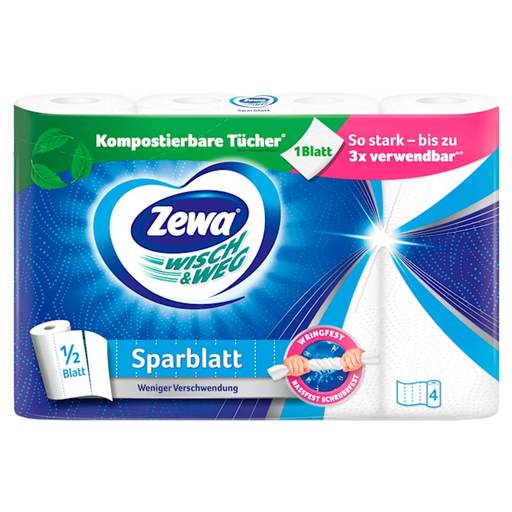
Why It's a Top Pick: This paper towel from Zewa stands out for its smart design. The "Tear-Control" perforation allows you to choose between a half and a full sheet, which can reduce paper consumption by up to 40%. According to the manufacturer, the Power-X absorption technology with its 3D honeycomb structure ensures 30% faster liquid absorption. Thanks to the "Wet-Strength" technology, the towel remains stable even under heavy use and when wet. It is made in Germany from FSC-certified cellulose fibres.
Advantages:
Best For: Ideal for households that value efficiency and reduced paper consumption. Its high tear-resistance makes it a reliable tool for demanding cleaning tasks.
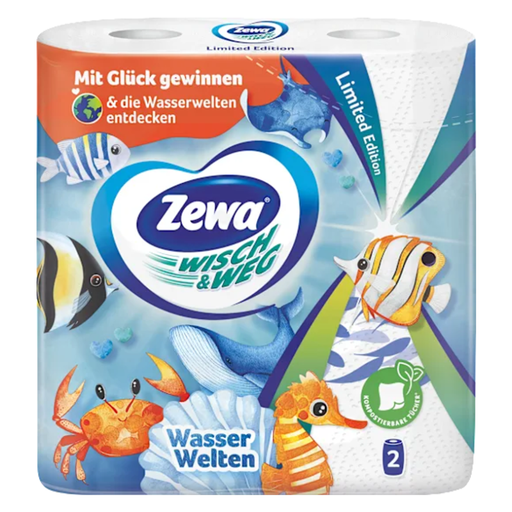
Why It's a Top Pick: The Zewa "Wipe & Away" kitchen paper was specifically developed for high durability. The innovative honeycomb structure gives the sheets remarkable strength. The "Quick-Sorb" core is designed to absorb liquids instantly. Its reinforced wet strength ensures the paper won't tear, even when scrubbing or wringing. It is suitable for a variety of surfaces, including countertops, windows, and appliances.
Advantages:
Best For: This kitchen paper is the right choice for anyone needing an extremely robust solution for stubborn messes and intensive cleaning jobs.
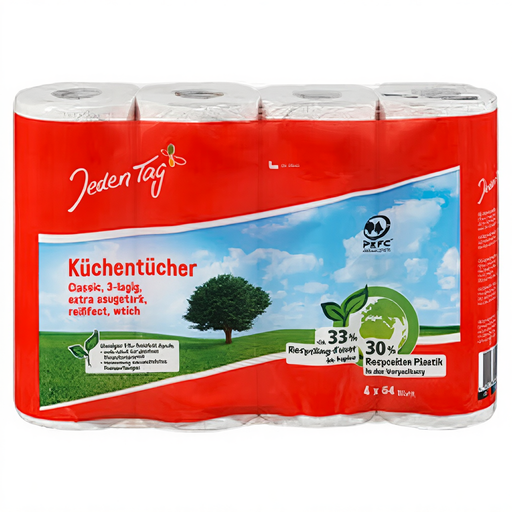
Why It's a Top Pick: The "Jeden Tag" brand paper towel offers a solid combination of performance and resource consciousness. As a 3-ply towel, it is reliably absorbent and tear-resistant for everyday kitchen tasks. A special feature is its material composition: the towels consist of approximately 33% recycled fibres and 67% cellulose, reducing the ecological footprint without compromising functionality.
Advantages:
Best For: An excellent option for budget-conscious households looking for a dependable everyday paper towel while also valuing more sustainable product alternatives.
The products featured already cover a broad spectrum of needs. If you haven't found the perfect solution for your specific requirements, there are numerous other alternatives to explore. Each product has its own strengths, whether in its sheet texture, material, or package size.
Discover our entire range of kitchen cleaning towels and find the right solution for your household.
Absorbency is determined by several factors. A higher number of plies (e.g., 3-ply) creates more volume for liquid absorption. The material used, usually cellulose, and its processing also play a role. Additionally, special surface embossing (like honeycomb or diamond patterns) increases the contact area and helps to bind liquids more quickly.
Look for recognised seals on the packaging. The FSC seal guarantees that the cellulose comes from responsibly managed forests. Products made from recycled paper are often marked with the "Blue Angel" eco-label or other indicators of their recycled content. These products help conserve wood resources.
A higher number of plies generally contributes to greater tear-resistance. However, the manufacturing technology is also crucial. Modern household towels often use special processes to bond the fibres together and increase wet strength. As a result, even a 2-ply towel with advanced technology can be very tear-resistant. It is the combination of ply count and processing that determines the final stability.