
Lieferung heute & morgen

Qualitätsgarantie

Willkommens-Angebote freischalten: KOSTENLOSE Lieferung | Bis zu 80 % RABATT | Kostenlose 30-Tage-JoyPlus-Testphase
App herunterladen
Space is a premium in many kitchens. A lack of counter space or insufficient storage can make daily kitchen tasks a chore. A kitchen trolley with a worktop promises a flexible and practical solution. However, not every model lives up to its promise. Before you make a decision, it's important to know the common weaknesses that can severely limit its everyday usefulness.
Common pitfalls when buying:
To make an informed decision, you should carefully examine three core parameters. These are crucial in determining the functionality and longevity of your new kitchen assistant.
The worktop endures the most use, making the choice of material critical.
A kitchen cart on wheels thrives on its flexibility. The quality of the castors is non-negotiable.
A good kitchen trolley is more than just a mobile work surface; it's a mobile kitchen cabinet. Consider what you want to store.
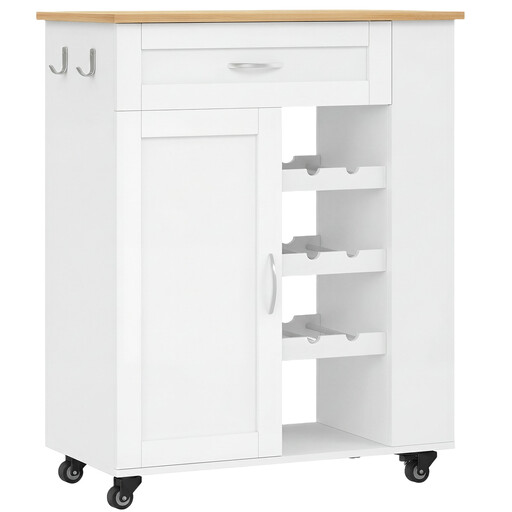
Why it's a good fit: Ideal for renters and owners of smaller kitchens who need a mobile work surface and a thoughtful mix of open and closed storage. The combination of a drawer, cabinet, and wine rack meets a variety of needs.
The reinforced steel frame and 360° castors with locking brakes counteract the problem of instability. The worktop surface, described as water and stain-resistant, addresses the material weakness.
Combines a work surface, concealed storage (drawer, cabinet), and open display areas (shelves, wine rack) in one compact, mobile piece of furniture.
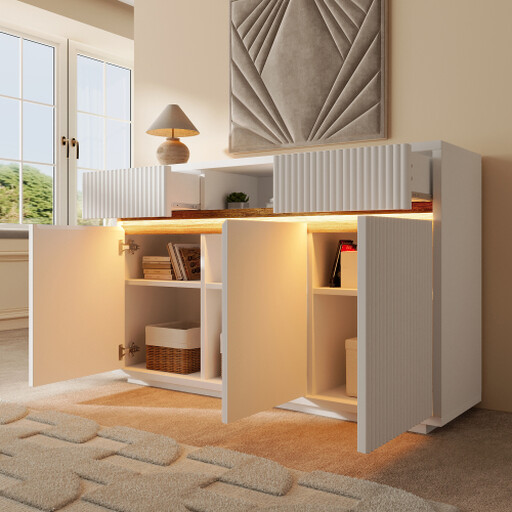
Why it's a good fit: A stationary yet very modern alternative to a bar cart. Perfect for the dining or living room to stylishly store drinks and dinnerware, creating a special atmosphere for guests with its LED lighting.
Although not mobile, the stability issue is solved by a robust construction and an included anti-tip device. The large, continuous surface offers plenty of storage space without the compromises of a small worktop.
Integrated, controllable LED strip for atmospheric lighting. Flexible interior layout thanks to adjustable shelves behind three doors, plus additional drawers.
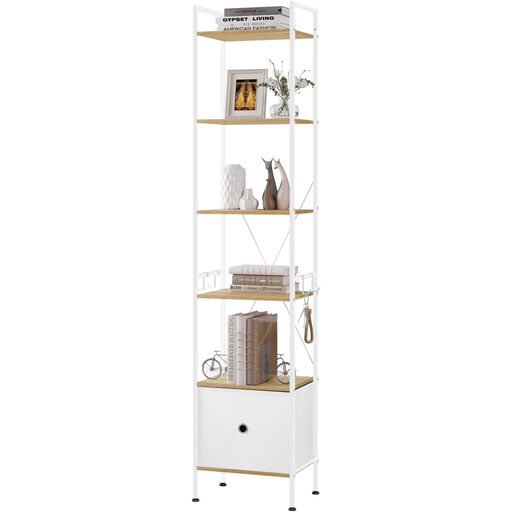
Why it's a good fit: For anyone whose priority is pure storage space. This shelf makes optimal use of the room's height and is ideal for pantries, alcoves, or as a kitchen supplement when no additional work surface is needed.
Stability is ensured here by X-shaped metal bracing, adjustable feet to compensate for uneven floors, and an anti-tip device for wall mounting. The robust metal frame is designed for durability.
Maximum storage on a minimal footprint thanks to the tall, narrow design. Offers a combination of open shelves, a closed drawer, and practical hooks.
If these specific solutions don't exactly match what you're looking for, you can find more furniture pieces in our main category that bring additional storage and functionality to your home.
1. How high should the worktop of a kitchen trolley be? The ideal height depends on your own height and the height of your existing kitchen countertop. Standard countertops in Europe are typically between 90 and 92 cm high. A kitchen side cart intended to extend your work surface should have a similar height to create a seamless transition. Measure your countertop height before buying.
2. Can you use a wooden serving trolley directly as a cutting board? It is generally not recommended. Most worktops, including those made of solid wood, are surface-treated (lacquered or oiled) and not designed for direct contact with sharp knives. Knife cuts can damage the seal, allowing moisture and bacteria to penetrate. Always use a separate cutting board.
3. How much weight can a typical kitchen trolley hold? The load capacity varies greatly depending on the model and construction. Compact models often support a total of 30 to 50 kg, while more robust versions with steel frames and high-quality tops can hold 75 kg or more. The maximum load capacity is specified by the manufacturer and should not be exceeded, especially on the top work surface, to ensure stability.