
Lieferung heute & morgen

Qualitätsgarantie
App herunterladen
Kategorien
Selecting the right kitchen utensil set depends on an analysis of material properties, compatibility with your existing cookware, and functional requirements. Your choice of material—whether stainless steel, silicone, or bamboo—directly impacts the durability of your utensils and the protection of your pan surfaces. This guide breaks down the technical specifications of the most popular materials to help you make an informed decision.
The choice of material is the key factor when selecting a functional kitchen utensil set. Each material offers specific advantages and disadvantages regarding heat resistance, ease of care, and suitability for different types of cookware.
Silicone is a synthetic polymer distinguished by its high flexibility and temperature resistance.
Stainless steel, particularly alloys like 304 (also known as 18/8 steel), is a standard material in both professional and home kitchens.
Wood and bamboo are natural materials that offer both functional and aesthetic advantages.
The following selection is based on an analysis of the products' material specifications and intended applications.
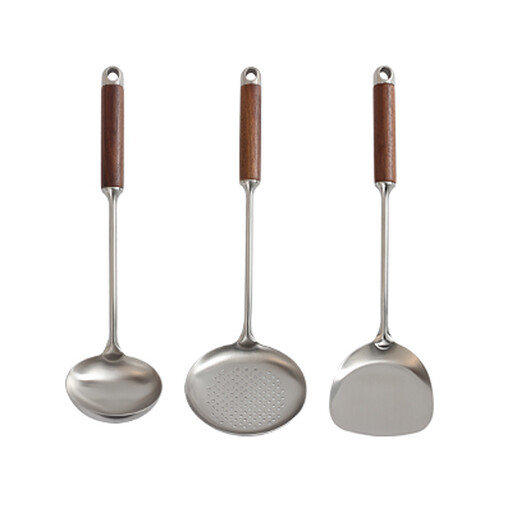
Why We Recommend It: This set combines the robustness of 304 stainless steel with the ergonomic and heat-insulating properties of wooden handles. This material combination is aimed at users who prioritise both durability and comfort in handling. The reinforced thickness of the stainless steel ensures stability.
Advantages:
Who It's For: Users who work with various types of cookware (especially stainless steel and cast iron) and are looking for a durable, sturdy utensil set with wooden handles.
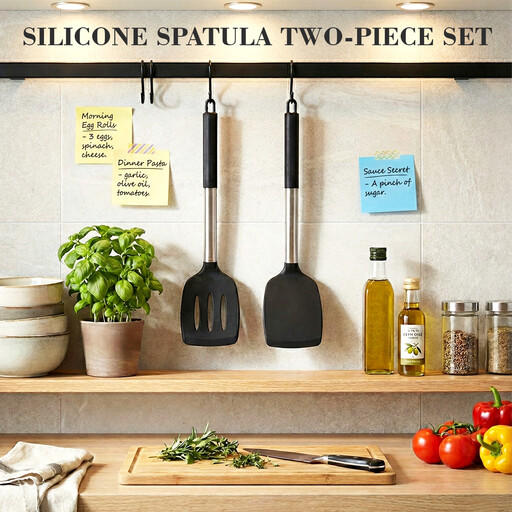
Why We Recommend It: This set is specifically designed to protect non-stick cookware. The heads, made of 100% scratch-proof silicone, prevent damage to delicate surfaces. The seamless design between the head and handle facilitates easy cleaning.
Advantages:
Who It's For: Owners of non-stick pots and pans looking for a solution that is gentle on materials and easy to care for. Ideal as a starter set or a supplement to an existing collection.
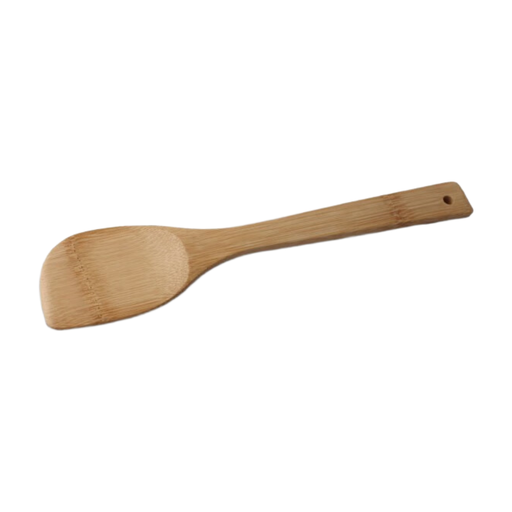
Why We Recommend It: The bamboo spatula is a minimalist and eco-conscious option. Bamboo is a rapidly renewable resource that is both robust and gentle on cookware surfaces. Its flat design is particularly well-suited for stirring and turning food in woks and pans.
Advantages:
Who It's For: Users looking for a single, versatile, and sustainable tool for daily use who prefer natural materials.
If the sets presented here do not exactly meet your requirements, or if you are looking for specialised individual items such as tongs, whisks, or specific spoons, you can find a wider selection in our main category for Schaufel and related kitchen utensils.
1. What is the best material for non-stick pans? For non-stick pans, materials with a soft surface are optimal to avoid scratches. Silicone kitchen utensils, as well as utensils made of wood or bamboo, are the ideal choice. They glide over the surface without damaging the coating.
2. Are silicone kitchen utensils heat-resistant? Yes, food-grade certified silicone is typically heat-resistant up to temperatures of approx. 230 °C. This covers most applications, including cooking, frying, and baking. However, it is recommended not to leave the utensils unattended in hot cookware for extended periods.
3. How do you care for kitchen utensils with wooden handles? Utensils with wooden handles should be cleaned by hand with mild detergent and warm water, then dried thoroughly immediately afterwards. Soaking in water should be avoided, as the wood can swell and crack. To keep the wood supple and protected, the handle can be periodically treated with a food-grade mineral oil.