
Lieferung heute & morgen

Qualitätsgarantie

Willkommens-Angebote freischalten: KOSTENLOSE Lieferung | Bis zu 80 % RABATT | Kostenlose 30-Tage-JoyPlus-Testphase
App herunterladen
When buying kitchen utensils and bakeware, people often focus first on design, price or eye-catching marketing claims. In everyday use, however, the real differences show up elsewhere: Does the shape fit in the oven? Is the material suitable for the intended temperature? Can the dish be cleaned easily and stored safely without hassle?
For home cooks, baking enthusiasts, families and quality-conscious households, it is therefore worth taking a closer look at the technical specifications. The following selection criteria will help you spot unsuitable cookware and bakeware early on.
The term oven-safe dishware alone tells you very little. With glass baking dishes, ceramic bowls or coated aluminium, what matters is the maximum temperature the product can withstand according to the manufacturer. It is equally important to check whether lids, handles or coatings can tolerate the same temperature as the main body.
For example, a glass container may be suitable for the oven, while its plastic lid is intended only for the fridge or microwave. Before buying, you should therefore check temperature limits and usage instructions separately for each component.
Baking trays and frying pans often boast easy cleaning as a key selling point. However, this does not automatically mean that every wash in the dishwasher is a good idea. Harsh detergents, high temperatures and stiff brushes can damage delicate surfaces over time.
With coated cookware, you should also check whether metal utensils can be used. The manufacturer's care instructions are far more important than general marketing claims such as "particularly durable" or "scratch-resistant".
A dish with a generous surface area may take up too much space in a small domestic oven. With baking dishes, the usable depth is also relevant for lasagne, gratins or braised dishes. For ramekins and ceramic bowls, on the other hand, the capacity determines whether they are suitable for individual portions, side dishes or desserts.
Not just the external dimensions, but also length, width, height and volume should be checked against your existing oven, hob and storage space before ordering.
For frying pans, compatibility with gas, induction, ceramic and halogen hobs is a key criterion. A pan suitable for all hob types needs an appropriately designed base. However, this does not tell you whether it is also suitable for the oven or microwave.
With a pan that has a glass lid, you must also consider the lid material, handle construction and seal. The stated oven temperature does not automatically apply to every accessory.
Dishwasher-safe cookware saves time, but you need to put this into perspective. A manufacturer's statement about dishwasher suitability does not replace the need to let items cool down before washing. Particularly with glass and ceramic, avoiding extreme temperature changes reduces stress on the material.
Also practical are:
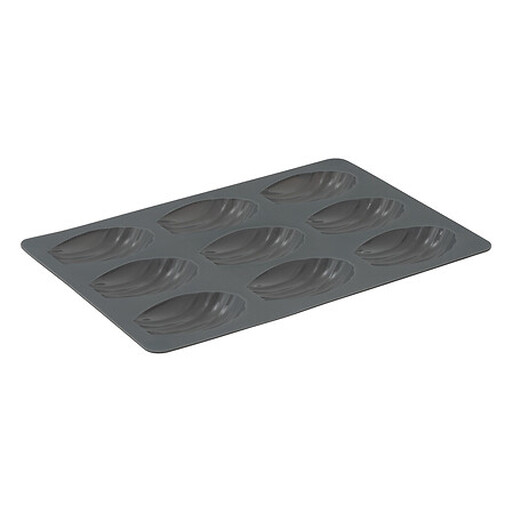
Why this product fits the profile: The compact baking mould measuring 36 × 21.5 × 2 cm is designed for madeleines and takes up little storage space. The flexible silicone can make it easier to release the small baked goods.
The clearly stated mould size helps you check it against your oven. Before use, you should check the permitted temperature limits and care instructions.
Food-grade silicone; flat mould with classic shell pattern.
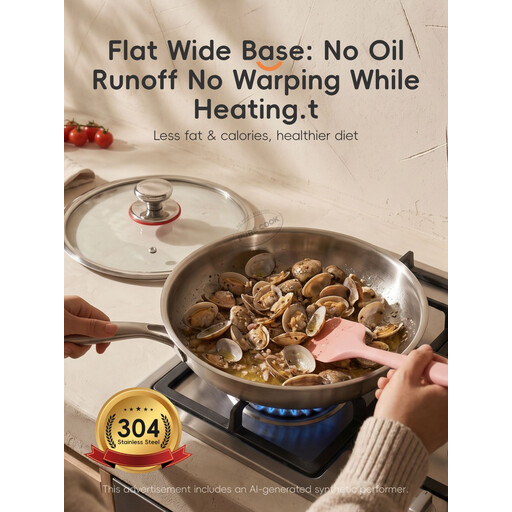
Why this product fits the profile: The 28 cm pan uses a three-layer construction of stainless steel with an aluminium core and is stated to be suitable for gas, induction, ceramic and halogen hobs.
The details on material construction and hob compatibility are more specific than a general claim about heat distribution. The pan is not intended for microwave use.
304 stainless steel in a three-layer construction; glass lid for monitoring the cooking process.
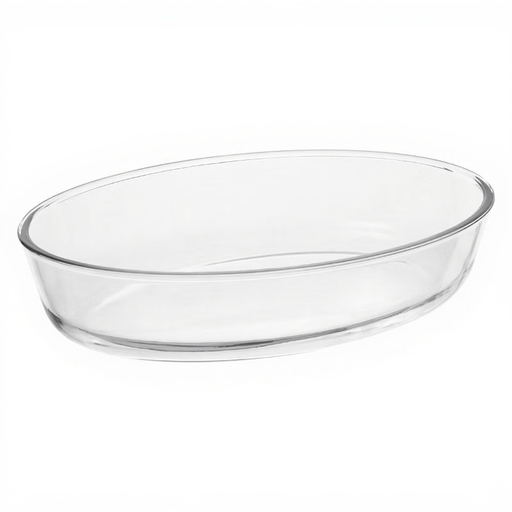
Why this product fits the profile: With a stated usable capacity of 3.8 l, the oval glass dish is ideal for larger bakes and storing food. The product data indicates it is suitable for the oven, microwave and dishwasher.
The details on volume and material make it easier to plan how you will use it. The polypropylene lid should be removed before baking and the temperature limit checked.
Borosilicate glass; lid for storage; 3.8 l usable capacity.
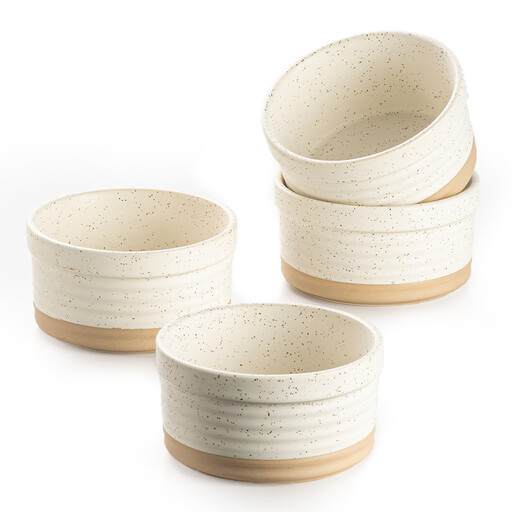
Why this product fits the profile: Four ceramic pots, each holding 8 fl oz, are ideal for crème brûlée, soufflés, dips, quiches and small desserts. According to the product information, they are suitable for the oven, freezer and dishwasher.
The stated individual capacity prevents the common miscalculation with portion dishes. Even so, ceramic should not be subjected to extreme temperature changes.
Four matching portion pots; versatile use for baking, serving and storing.
For households that cook a variety of recipes, a set made from different materials can be a good idea. The Secret de Gourmet Oval Glass Baking Dishes are available in two sizes: 26 × 18 cm and 35 × 25 cm with a height of 6.5 cm. According to the product description, the dishes are oven-safe up to 300 °C and suitable for the microwave, freezer and dishwasher. Before use, you should check the specific temperature instructions on the packaging.
If you are looking for a coated dish with handles, the Tefal J1605902 Success Professional Oven Dish is a model made from recycled aluminium, measuring 37 × 27 × 4.5 cm with a stated capacity of approximately 4.5 l. According to the data, the dish is suitable for the oven, freezer and dishwasher. To protect the ProBaking coating, we recommend cleaning with a soft sponge and avoiding metal utensils.
For smaller meals and side dishes, ceramic bowls round out the range. The YumiPLUS set of two bowls is designed for rice, porridge, cereal, soup and fruit. The product information indicates that the bowls are not suitable for the hob or oven. Statements about dishwasher and microwave suitability should be checked against the current product page before purchasing.
We have put together a complete, regularly updated list of products that fully meet these strict selection criteria and the safety regulations in force in the EU.
Check the stated maximum temperature, the dimensions and all removable parts. Plastic lids, silicone handles or coatings may have different temperature limits than the dish itself. Also, with glass and ceramic, avoid moving them directly from the freezer to a hot oven, unless this is explicitly permitted.
This depends on the individual product. Glass baking dishes are often marked as dishwasher-safe, whereas with ceramic, the glaze can be more sensitive. A specific manufacturer's statement is what counts. Damaged or cracked dishes should not be used any further.
For bakes and larger portions, dishes with a usable capacity of around 3 to 4 l are often practical. However, what matters most is the size of your household, the recipe and the internal dimensions of your oven. For desserts, side dishes and individual portions, ramekins or smaller ceramic bowls are more suitable.