
Lieferung heute & morgen

Qualitätsgarantie

Willkommens-Angebote freischalten: KOSTENLOSE Lieferung | Bis zu 80 % RABATT | Kostenlose 30-Tage-JoyPlus-Testphase
App herunterladen
A well-designed waste separation system is the heart of an organised and hygienic kitchen. However, the search for the right model can quickly become overwhelming. Many products promise durability and convenience but fail to deliver on their promises in daily use. As your Joybuy Product Recommendation Officer, I'll help you avoid common purchasing pitfalls and find a solution that truly fits your household.
Before you make a decision, you should be aware of the three most common flaws that often appear in cheap or poorly constructed models after just a few months:
To make a choice that you'll be happy with long-term, you should focus on objective criteria. These three parameters are crucial for the functionality and longevity of your new waste separation system.
A stainless steel bin is often a good choice, as the material is robust, hygienic, and easy to clean. However, pay attention to the quality of the stainless steel and whether it has an anti-fingerprint coating. This prevents unsightly marks and makes cleaning much easier. The stability of the body and the quality of the hinges are also indicators of a long lifespan.
The right size and division depend on your household size and local waste separation regulations.
Modern waste separation bins offer features that make daily life noticeably easier. A kitchen pedal bin allows for hygienic, hands-free opening—a clear advantage when cooking. A soft-close mechanism ensures that the lid closes gently and silently. This not only prevents noise but also protects the material and hinges.
Here are some models that are suitable for different needs and household sizes, based on their objective features.
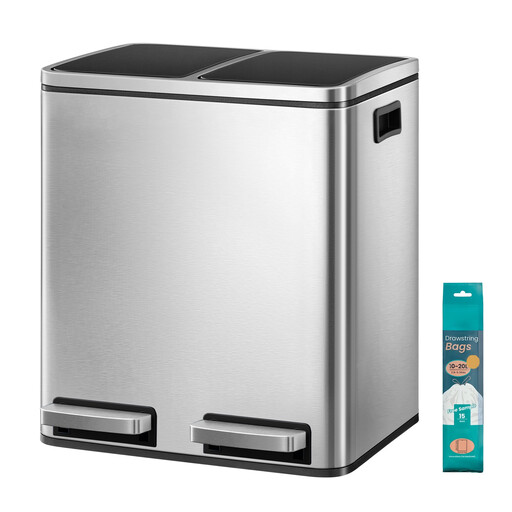
Why This Fits Their Persona: With its compact dimensions and two 15-litre compartments, this model is ideal for 1- to 2-person households or kitchens with limited space. It allows for efficient separation of residual waste and recyclables without taking up much room.
The separate pedals for each compartment are robustly designed. The removable inner bins, made of PP plastic, are sturdy and easy to handle thanks to their grips.
The soft-close function ensures the lids close quietly. The steel body is easy to clean, and the side handles make it easy to move.
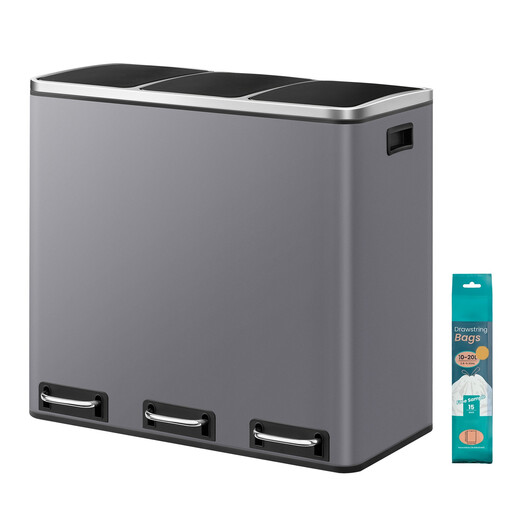
Why This Fits Their Persona: With three 18-litre compartments, this system offers an all-in-one solution for families who value detailed waste separation (e.g., residual waste, recyclables, organic waste). The total volume of 54 litres is well-sized for the daily output of a multi-person household.
The rust-resistant steel body and solid foot pedals are designed for durability. Each inner bin can be removed individually, which simplifies handling and prevents spills.
The three separate lids with a soft-close function minimise odours and noise. Its slim design blends unobtrusively into modern kitchens.
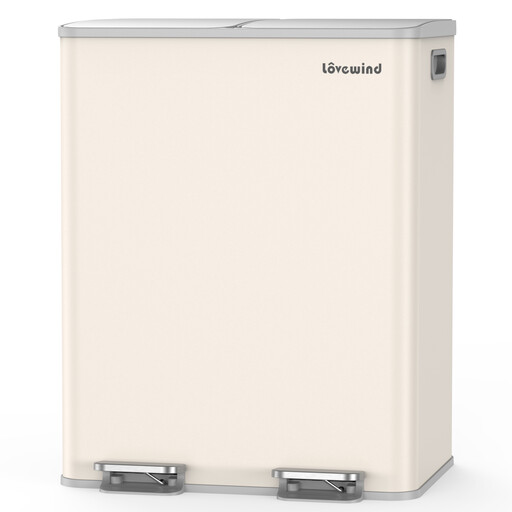
Why This Fits Their Persona: With a generous total volume of 60 litres, divided into two 30-litre bins, this model is perfect for large families or households with a high volume of waste. The large containers need to be emptied less frequently and offer ample space for residual waste and recyclables.
The high-density stainless steel pedals are designed for long-term use. The stainless steel surface is described as fingerprint-resistant and easy to clean, which minimises maintenance.
The inner bins feature bag-retaining rings to prevent slipping. The lids have a soft-close function and a 90° stay-open feature, which is very practical when filling the bin.
We have compiled a complete, up-to-date list of products that fully meet these strict selection criteria and safety standards.
1. What is the best way to clean a stainless steel waste separation system? For daily cleaning, a soft, damp cloth is usually sufficient. For tougher dirt, a mild cleaner can be used. Avoid aggressive scouring agents or steel wool, as these can damage the surface, especially an anti-fingerprint coating. The plastic inner bins can be easily washed out with water and washing-up liquid.
2. What capacity is suitable for a 4-person household? For a 4-person household, a total capacity of 50 to 60 litres has proven to be practical. A division into 2 x 30 litres for residual waste and recyclables, or 3 x 18 litres for an additional fraction like organic waste, covers the needs of most families well without the bins needing to be emptied daily.
3. What does "soft-close" mean, and is this feature necessary? "Soft-close" refers to a damping mechanism that allows the bin lid to close slowly and silently. The feature is not essential, but it significantly increases comfort by preventing loud slamming. This is particularly beneficial in open-plan kitchens or for noise-sensitive individuals, and it also protects the material in the long run.