A wireless repeater could be a good option if it can still pick up a usable Wi-Fi signal somewhere between your router and the kitchen. If the wireless connection is too weak even there because of the walls, a LAN-connected access point is a better solution – provided an Ethernet cable can reach the desired location. You’ll also need to consider the signal strength at the installation point and whether the device is compatible with your existing router.
Which solution is right for you?
Cooking-class viewers with a Wi-Fi dead zone
If you want to watch a video in the kitchen, a repeater could help, provided it can still get a good signal from the router where you place it. FRITZ! explains that a repeater extends an existing Wi-Fi signal.
Homes with an Ethernet connection to the kitchen
If an Ethernet cable or network socket reaches the kitchen, you can avoid sending the wireless signal through thick walls and use an access point at the other end. devolo describes this as an alternative to connecting over Wi-Fi.
Homes with an existing mesh router
If you want to add the kitchen to your existing mesh network, check that your router and repeater support the same mesh solution. TP-Link and Telekom each specify certain router requirements.
What to look for when buying
Wireless repeater
A good fit if: you can find a plug socket between the router and kitchen with a usable signal.
The trade-off: The wireless connection to the repeater still depends on its location and the walls.
LAN-connected access point
A good fit if: an Ethernet cable reaches the kitchen or the other side of the thick walls.
The trade-off: You’ll need the right cabling and a device with access point mode.
Repeater on your existing mesh network
A good fit if: adding the kitchen to your existing mesh network is important and your router and repeater work together.
The trade-off: Mesh functionality depends on the specific router and, in some cases, the hardware version.
| Buying priority |
What to look for when buying |
Who it matters to |
| Usable wireless connection |
Check the signal at potential plug socket locations between the router and kitchen; after setup, test the course video in the kitchen. |
If I want to watch the course in the kitchen, I need a usable connection to the router where I place the repeater. Around 36% of consumers put signal reception first. |
| LAN instead of Wi-Fi through walls |
Check whether an Ethernet cable reaches the location and whether the device has an access point mode. |
If the wireless connection is poor even at possible locations in between, I’d rather bypass the walls with a cable. Around 29% of consumers give priority to a LAN connection. |
| Mesh compatibility |
Check the router model, supported mesh standard and, if applicable, hardware version. |
If I want to add the kitchen to my existing mesh network, the specific router and repeater combination needs to be compatible. Around 21% of consumers put mesh compatibility first. |
| Setup and effort |
Check the setup method and cabling required for the specific device. |
If I’m setting up a repeater for a single screen used to watch a course, I want to keep the extra installation work to a minimum. Around 14% of consumers prioritise an easy setup. |
Common buying misconceptions
-
Plugging the repeater straight into the Wi-Fi dead zone
A repeater needs a usable connection to the router itself. Placing it somewhere with an inadequate signal won’t fix the wireless connection.
First, try an intermediate location where the router’s Wi-Fi signal is still available. If the connection is still weak there, consider a LAN-connected access point.
-
Assuming the advertised maximum Wi-Fi speed is your video speed
Manufacturers’ maximum Wi-Fi data rates don’t tell you how the signal will perform with the walls and router position in your home.
Check the connection where you’ll actually place the repeater, then test it on the device you’ll use to watch the cooking class.
-
Confusing general router compatibility with mesh compatibility
A repeater can extend a Wi-Fi network without providing the intended mesh features in combination with your router. TP-Link requires a compatible router for EasyMesh on the RE700X; Telekom lists compatible Speedport routers.
Before buying, check the router model, mesh standard and, if applicable, hardware version.
Relevant brands at a glance
FRITZ!
The FRITZ!Repeater 1200 AX is a compact Wi-Fi 6 option with Gigabit LAN, particularly for homes that already use a FRITZ!Box.
- FRITZ! lists a LAN port and a wired connection to a FRITZ!Box as possible uses.
- The maximum Wi-Fi performance doesn’t tell you what signal will reach your kitchen through the walls.
TP-Link
The RE700X is a Wi-Fi 6 repeater with access point mode, for homes weighing up wireless and LAN connections.
- TP-Link lists Gigabit Ethernet, WPS or app setup, and EasyMesh when used with a compatible router.
- Don’t assume mesh compatibility just because a device is generally compatible with your router. Check the router and the hardware version of the specific device.
devolo
The WiFi 6 Repeater 3000 is described as extending an existing Wi-Fi network or working as an access point.
- devolo lists Gigabit LAN and an access point mode.
- For a LAN setup, you’ll need a network connection from the router to the access point. The advertised maximum speed isn’t a measurement of performance in your kitchen.
Telekom
Speed Home WLAN could suit homes using a compatible Speedport router.
- Telekom lists Wi-Fi 6, Ethernet and integration with its own mesh system.
- Check compatibility with the specific Speedport model and device generation; this doesn’t mean the device will work with other routers in general.
Joybuy products for Wi-Fi in the kitchen
These product suggestions include wireless repeaters and devices that, according to their product information, can also be used as LAN-connected access points. For wireless use, the router’s Wi-Fi signal must still reach the installation point; for a LAN setup, a wired connection must be available.
 No image available
MERCUSYS ME80X Wi-Fi 6 Range Extender
Could work as a repeater if the router’s Wi-Fi signal still reaches the installation point; the product name also mentions an access point mode for a wired setup.
Dual-band; stated data rates: 574 Mbit/s at 2.4 GHz and 2402 Mbit/s at 5 GHz; Gigabit port.
Joybuy
 No image available
TP-LINK RE235BE BE3600 Dual-Band Wi-Fi 7 Range Extender
A wireless extension could work if the router’s signal still reaches the chosen location. For the stated EasyMesh feature, check whether your router is compatible.
Dual-band; 2.5 Gigabit Ethernet; the product name mentions MLO and EasyMesh compatibility.
Joybuy
 No image available
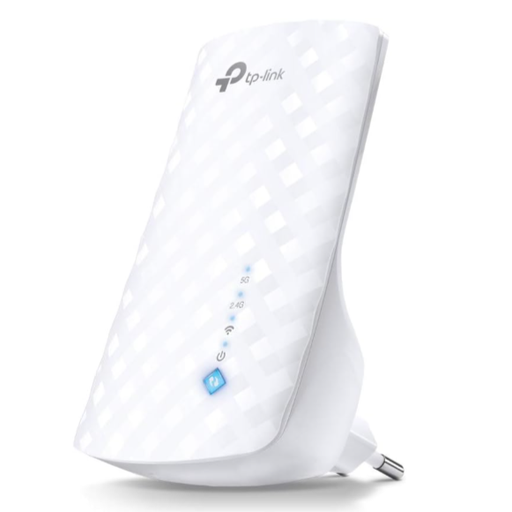
TP-Link RE190 AC750 Wireless Repeater
Could work as a wireless repeater if the router’s Wi-Fi signal still reaches the chosen intermediate location.
The product name lists AC750 and 433 Mbit/s.
Joybuy
 No image available
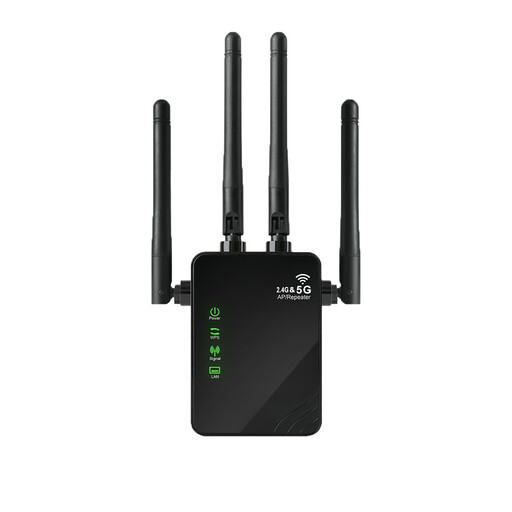
1200 MBit/s 5 GHz Wi-Fi Repeater
The product description lists an access point mode for a wired connection and a repeater mode for wireless use.
The product name lists 1200 MBit/s and 5 GHz. Access point mode requires a LAN connection.
Joybuy
 No image available
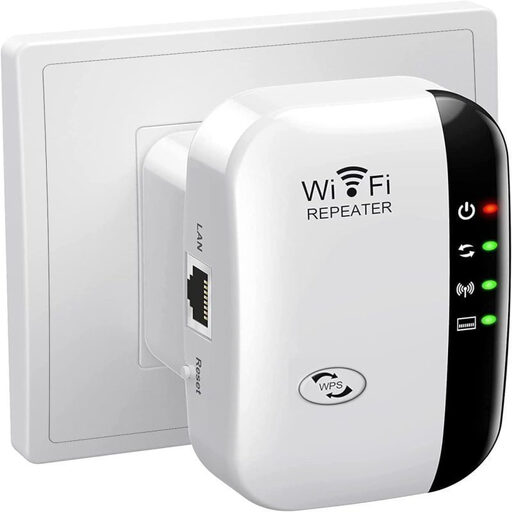
Compact Wi-Fi Booster
The product description presents this device as a way to extend an existing Wi-Fi network. For wireless repeater use, a usable router signal at the installation point is important.
Joybuy
Frequently asked questions
Will a repeater help if there’s hardly any Wi-Fi at the planned installation point?
Not reliably: a repeater extends an existing Wi-Fi signal. Try a location with better router reception; if a LAN connection can reach the other side of the wall, an access point could be a better option.
How do I set up the connection for a cooking class?
Set up the repeater using the method specified for that model, choose its location based on the router signal, then test the course video in the kitchen. Check the guidance for your specific router and repeater combination too; setup doesn’t replace a signal test.
Could a LAN connection involve extra costs?
Yes, if you first need to install a suitable cable or network connection. Whether this involves extra work or cost depends on the cabling already in place.
What should I check to make sure a Wi-Fi device complies with German regulations?
Devices covered by the relevant EU harmonisation legislation and placed on the EU market must carry the CE marking. For Wi-Fi devices, the German Federal Network Agency lists marking, identifiability, German-language operating instructions and the declaration of conformity among the points to check. Check these documents for the specific device; a general product description does not confirm that every unit supplied is compliant.


