
Lieferung heute & morgen

Qualitätsgarantie

Willkommens-Angebote freischalten: KOSTENLOSE Lieferung | Bis zu 80 % RABATT | Kostenlose 30-Tage-JoyPlus-Testphase
App herunterladen
A high-performance stand mixer can make baking and cooking significantly easier, from preparing heavy bread doughs to whipping cream. But the market is crowded and full of marketing promises that often confuse more than they help. Many buyers invest in an appliance that loses performance after a short time or is unsuitable for their needs. As your Joybuy Product Recommendation Officer, I'll help you identify the crucial features and avoid common purchasing traps.
Before you make a decision, you should be aware of two common marketing tactics that often lead to disappointment.
To make the right choice, focus on these three objective criteria instead of being swayed by advertising slogans.
Instead of just looking at the wattage, find out about the design of the motor and gearbox. Appliances with a direct drive or an all-metal gearbox transfer power more efficiently to the mixing attachments. This is especially important if you regularly need a dough mixer for bread or pizza. For lighter tasks like whipping cream or mixing cake batter, a good electric hand mixer with 300 to 500 watts is often perfectly sufficient and more space-saving.
For a dough mixer or a stand mixer with a mixing bowl, a planetary mixing action is the standard for good results. This means the mixing tool not only rotates on its own axis but also moves along the edge of the bowl. This ensures all ingredients at the bottom and sides of the bowl are incorporated and mixed evenly. Make sure the shape of the mixing bowl and the size of the tools are coordinated so that even small quantities can be processed efficiently.
The size of the mixing bowl should suit your household. For a single or two-person household that bakes occasionally, 3.5 to 4.5 litres is sufficient. Families or ambitious home bakers who process larger quantities of bread dough should choose a bowl with a volume of at least 5 litres. A mixing bowl made of stainless steel is hygienic, durable, odourless, flavour-neutral, and easy to clean.
Here are some models that are suitable for different needs based on their technical specifications and construction.
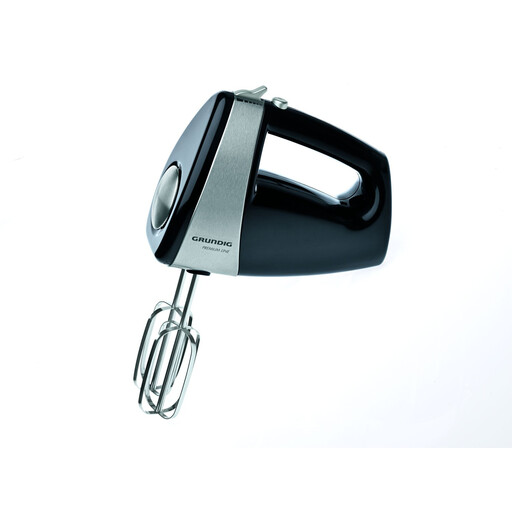
Why this model is a good fit: Ideal for anyone who occasionally bakes a cake or whips cream. As a classic hand mixer, it's space-saving, quick to set up, and designed for all basic mixing tasks.
This appliance avoids the wattage trap by not trying to be a high-performance dough machine with its 300 watts. It focuses on what it was built for: efficiently mixing and whipping light to medium batters.
The included beaters and dough hooks are made of stainless steel and are dishwasher-safe, avoiding the trap of inferior accessories. The device is also quiet and ergonomically designed.
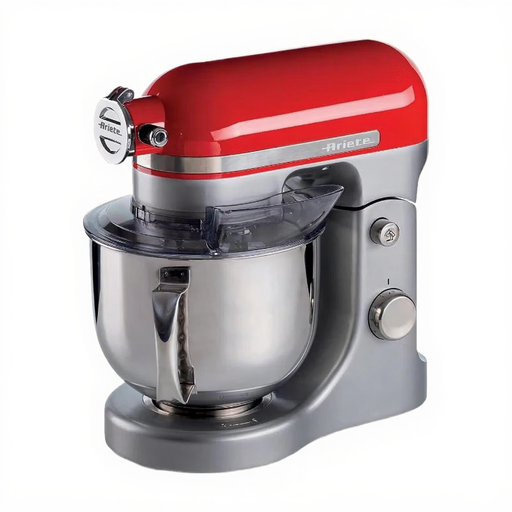
Why this model is a good fit: Those who regularly prepare heavy doughs for bread or pizza need a sturdy, powerful dough mixer. This model is equipped with a planetary mixing action and a large 5.5-litre stainless steel bowl.
The high power of 1600 watts is combined here with a planetary mixing system that effectively uses the force for heavy kneading tasks. The machine is specifically designed as a dough mixer and not just a simple mixer.
The 11 speed settings allow for precise control for different types of dough. The included accessories (dough hook, flat beater, whisk) are designed for processing large quantities.

Why this model is a good fit: For users who demand precision, versatility, and high-quality construction. This appliance is more than a mixer for baking; it's a complete workstation with an integrated scale and two bowls (7L and 5L).
This model justifies its price with genuine functionality rather than just wattage figures. The 1200-watt motor is integrated into a robust metal housing with a high-quality gearbox. The integrated scale is a practical value-add, not a marketing gimmick.
The EasyWeigh scale allows for direct weighing in the bowl, saving time and washing up. The DuoBowl system with two bowl sizes offers maximum flexibility for small and large projects.
We have compiled a complete, up-to-date list of products that fully meet these strict selection criteria and German safety regulations.
Wattage alone is not a meaningful indicator. For a hand mixer used for cake batter and cream, 300–500 watts is sufficient. For a dough mixer for heavy doughs, the combination of motor, gearbox, and torque is crucial. Models with 1000 watts and a high-quality metal gearbox can often perform better here than devices with 1500 watts and plastic components.
A normal mixing system, as found in most hand mixers, only rotates the beaters on their own axis. A planetary mixing action in a stand mixer ensures that the mixing tool also moves along the edge of the bowl. This leads to a more thorough and even mixing of ingredients, as no "dead spots" are left in the bowl.
For most brand-name manufacturers, it is possible to purchase replacement standard accessories like dough hooks, whisks, or even mixing bowls. For very cheap, no-name products, the availability of spare parts can be difficult. It is advisable to check this before buying, especially if you plan to use the device long-term and intensively.