
Lieferung heute & morgen

Qualitätsgarantie

Willkommens-Angebote freischalten: KOSTENLOSE Lieferung | Bis zu 80 % RABATT | Kostenlose 30-Tage-JoyPlus-Testphase
App herunterladen
For many ambitious home bakers and cooking enthusiasts, a high-quality stand mixer is the heart of the kitchen. In particular, a stand mixer with an integrated scale promises to streamline workflows and ensure more precise results. However, the market is filled with tempting offers whose marketing promises don't always hold up to reality. Before you make an investment, it's important to know the common pitfalls that can lead to a bad purchase.
This guide will help you identify the crucial features and find an appliance that will meet your needs for the long term.
Manufacturers often advertise with impressive numbers and features. Not all of them, however, are useful in practice. Pay special attention to these three points to avoid disappointment:
To make an informed decision, you should focus on the technical fundamentals that define a good stand mixer.
Instead of raw wattage, the combination of motor type and gearbox is crucial. A motor with direct drive or a robust all-metal gearbox ensures that the power gets where it's needed: to the mixing attachment. This is especially important for a dough mixer for baking that must regularly handle heavy yeast or bread doughs. Models from established brands like the Kenwood stand mixer often rely on proven motor concepts designed for longevity and consistent power delivery.
A planetary mixing action is standard on high-end models today. This means the mixing attachment not only rotates on its own axis but also moves along the edge of the bowl. This ensures that all ingredients are evenly incorporated, from the bottom to the sides.
The size of the mixing bowl should match your habits. A stand mixer with a 7-litre capacity, such as the Titanium Chef Baker XL model, is excellent for large families or if you regularly bake for guests. For smaller households or occasional baking projects, a bowl with a 4 to 5-litre volume may be sufficient.
A die-cast metal housing offers significantly greater stability and durability compared to plastic. Also, look for mixing bowls and accessories made of high-quality stainless steel. These are not only food-safe and robust but are also typically dishwasher-safe and easy to clean.
Choosing the right stand mixer depends heavily on individual needs and intended use. Here are some models tailored to different user profiles.
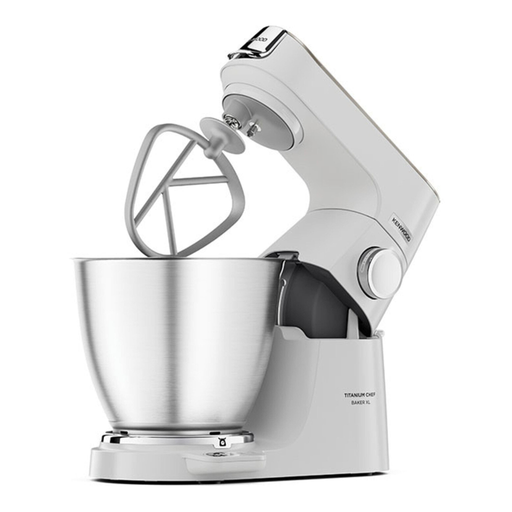
Why This Fits Their Persona: Ideal for users who bake large quantities regularly and value precision and efficiency. The combination of a powerful motor, large bowl, and integrated scale makes it a high-performance hub for any home bakery.
The robust metal housing ensures stability, the proven 1200W ChefMotor delivers consistent power, and the EasyWeigh scale allows for precise weighing directly in the bowl.
The integrated scale and the large 7-litre stainless steel bowl save time and reduce cleanup. The appliance is expandable with over 25 optional accessories.
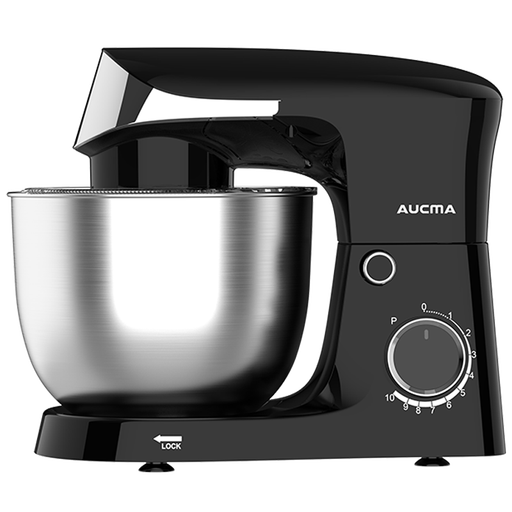
Why This Fits Their Persona: A solid choice for anyone looking to enter the world of machine-assisted mixing and kneading without a large investment. Well-suited for cake batters, cream, and lighter yeast doughs.
Instead of focusing on high wattage, this model, according to the manufacturer, features a 400W copper AC motor and a stable gear structure. Strong suction cups on the base prevent it from slipping.
Offers essential functions for a variety of recipes at an accessible price point. The 5-litre bowl is sufficient for most everyday tasks. The machine operates at a relatively low noise level.
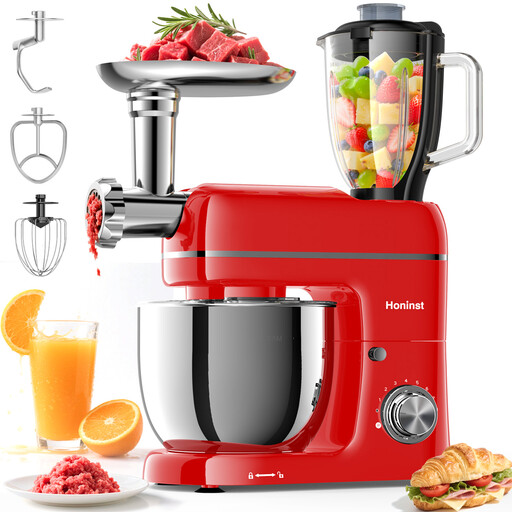
Why This Fits Their Persona: Perfect for cooks seeking a versatile appliance that goes beyond just baking. With meat grinder and blender attachments, this model saves counter space and replaces several individual appliances.
Despite its multifunctional approach, the appliance features a powerful 1300W motor and a large 6-QT bowl (approx. 5.7 litres), ensuring solid baseline performance for kneading and mixing tasks.
High versatility thanks to the included meat grinder and blender attachments. The tilt-head design with a safety lock simplifies handling and enhances operational safety.
We've compiled a complete, up-to-date list of products that fully meet these strict selection criteria and relevant safety standards.
1. How many watts does a good stand mixer for baking need? Wattage alone is not the deciding factor. More important are the quality of the motor and a robust metal gearbox that transfers power efficiently. For regularly processing heavy bread doughs, a rated power of 1000 watts or more is a good benchmark. However, a machine with a high-quality 800-watt motor and a metal gearbox can be more powerful than a 1200-watt model with plastic parts.
2. What is the advantage of a planetary mixing action? A planetary mixing action ensures an exceptionally thorough mixing of ingredients. The mixing attachment (e.g., the dough hook or whisk) rotates on its own axis while simultaneously moving in a circular path along the edge of the bowl. This allows it to reach all areas of the bowl, leaving no unmixed ingredients at the bottom or on the sides.
3. Is a stand mixer with an integrated scale really worth it? For those who value efficiency and precision, this feature is a significant convenience. Weighing flour, sugar, and other ingredients directly in the mixing bowl saves time, reduces the number of utensils needed, and minimises subsequent cleanup. However, this is only true if the scale works accurately and has a tare (add-and-weigh) function. For occasional bakers, a separate, high-quality digital scale can be an equally good alternative.