
Lieferung heute & morgen

Qualitätsgarantie

Willkommens-Angebote freischalten: KOSTENLOSE Lieferung | Bis zu 80 % RABATT | Kostenlose 30-Tage-JoyPlus-Testphase
App herunterladen
A kitchen cutting board needs to do more than provide a flat surface. It should remain stable while cutting, be as gentle as possible on knives, clean easily and, depending on your needs, also serve as a serving board. The choice ranges from classic wooden cutting boards and bamboo cutting boards to models made from stainless steel, wheat straw fibre or composite materials.
Marketing terms such as “antibacterial cutting board,” “indestructible” or “especially hygienic” should not be accepted without scrutiny. What matters are verifiable details about the material, dimensions, care requirements and construction.
A kitchen board with compact dimensions is sufficient for fruit or a few herbs. When preparing several carrots, a pumpkin or a loaf of bread, however, space quickly becomes limited. Ingredients falling off the board and an overcrowded work surface make preparation more difficult. For families and keen home cooks, formats from around 36 × 26 cm are often more practical. A large cutting board measuring around 40 to 45 cm in length offers more room, but also requires sufficient storage space.
A cutting board with a juice groove can collect liquid when carving or cutting particularly juicy foods. This feature is not essential for dry vegetables or bread. It is important that the groove is sufficiently wide and easy to access. Narrow recesses that are difficult to clean can collect residue and increase maintenance requirements.
Many wooden and bamboo models are not dishwasher-safe. Prolonged soaking, high heat and incomplete drying can contribute to warping, cracks or unpleasant odours. A product marketed as an “antibacterial cutting board” does not replace thorough cleaning either. After contact with raw meat or fish, the board should be cleaned with warm water and a suitable dishwashing detergent, then dried completely.
A wooden cutting board made from beech, walnut or acacia offers a firm surface that is comparatively gentle on knives. However, wood requires more care and should be treated regularly with food-safe conditioning oil if recommended by the manufacturer.
A bamboo cutting board is lightweight, dimensionally stable and available in a wide range of sizes. Bamboo is often marketed as a more sustainable material option. Its actual environmental impact, however, depends on factors including cultivation, processing, transport and service life. Reliable statements should be limited to the specific product information available.
Depending on their construction, models made from wheat straw fibre, rice husks, plastic or stainless steel can be wiped clean with ease. Their suitability for knives, heat and dishwashers varies considerably. For combination models, follow the care instructions for each side.
For everyday household use, dimensions between 30 × 20 cm and 45 × 30 cm are common. A thin kitchen board is easier to store and carry. A thickness of around 19 to 22 mm, on the other hand, can provide greater stability and a more solid feel when chopping. A classic chopping board should sit securely without slipping and must not shift under pressure or rhythmic cutting movements.
A cutting board with a handle is easier to move from the worktop to the dining table and can be hung up to save space. A multifunctional cutting board with a collecting tray or draining function can hold ingredients during preparation. Additional components do, however, create more surfaces and edges that need to be cleaned.
A cutting board set with several sizes makes it easier to keep different foods separate. Alternatively, one board can be reserved exclusively for bread and vegetables, with a second used for raw animal products. The specific colour or side-coding system should be clearly defined within the household.
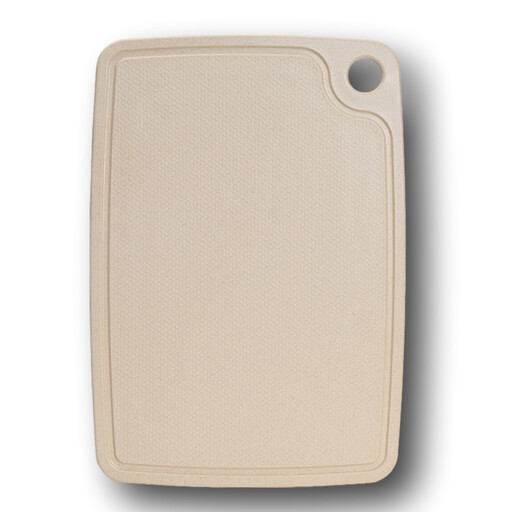
Why it suits this profile: Measuring 360 × 260 × 8.5 mm, it provides a practical work surface for everyday cutting tasks. The integrated handle makes it easier to carry and hang up.
The precise dimensions make it easier to assess the usable surface before buying, rather than relying solely on general size descriptions.
Wheat straw fibre construction, integrated handle and the option of hanging storage; care according to the manufacturer's instructions.

Why it suits this profile: Measuring 45 × 30 × 1.9 cm, it is suitable for larger preparation tasks and, according to the product description, can also be used as a serving surface.
The product information specifies the material, thickness, reversibility and juice groove. This makes it easier to compare intended use and care requirements before buying.
Bamboo surface, reversible design and integrated juice groove; hand-washing is specified.

Why it suits this profile: Three sizes ranging from 13 × 9.5 to 16 × 11.5 inches make it possible to organise boards by ingredient, preparation volume or serving task.
The set eliminates the need to use a single board for every type of food. The juice grooves and handles are clearly identified as functional features.
Three sizes, integrated juice grooves and carry handles; according to the product information, hand-washing is required.
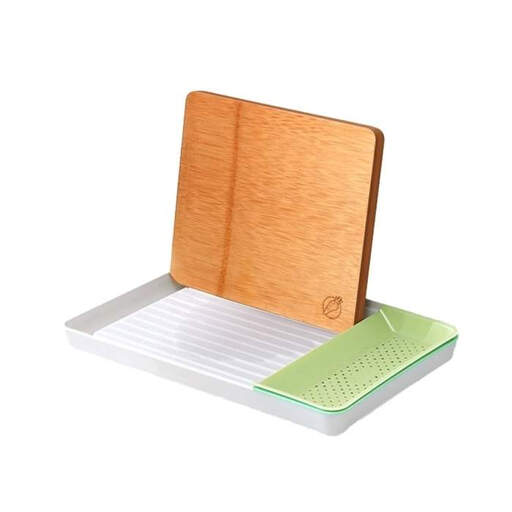
Why it suits this profile: This multifunctional cutting board combines a bamboo board with two removable bowls and a draining tray. It is well suited to structured mise en place workflows.
The additional functions are described specifically. At the same time, the care instructions explicitly call for hand-washing and complete drying.
Dimensions of 392 × 254 × 37 mm, two removable storage bowls and a separate draining tray.
Explore the full selection of cutting and chopping boards in a range of materials, dimensions and kitchen-friendly features.
Service life depends on material thickness, frequency of use, pressure applied by the knife and ongoing care. A blanket lifespan stated in years is therefore not meaningful. For a serving board, it should also be confirmed that the product is explicitly intended for direct contact with food; decorative boards are not automatically suitable for cutting tasks.
Bamboo and various types of wood are widely used options with comparable core functions, provided the surface, thickness and workmanship are suitable. Composite materials, plastic and stainless steel can offer advantages when it comes to cleaning. The right choice ultimately depends on the type of knife, the foods being prepared and the care instructions.
For regular meals, approximately 36 × 26 cm to 45 × 30 cm are practical reference dimensions. Those with limited worktop or storage space can choose a smaller board or opt for a cutting board set with several formats.
No. Such a product designation describes a material property or feature, but it does not replace cleaning, drying or separate use. When choosing a board, verifiable information about the material, care requirements and suitability for food contact should carry more weight.