
Lieferung heute & morgen

Qualitätsgarantie

Willkommens-Angebote freischalten: KOSTENLOSE Lieferung | Bis zu 80 % RABATT | Kostenlose 30-Tage-JoyPlus-Testphase
App herunterladen
The arrival of a kitten brings great joy, but also great responsibility. One of the most important decisions you'll make is about their nutrition, as it lays the foundation for a long and healthy life. However, the market for kitten food is confusing and full of marketing promises. As a Joybuy Product Recommendation Officer, I'm here to help you separate fact from fiction and make an informed choice.
Many new cat owners fall into well-intentioned but costly traps. Here are the three most common pitfalls you should be aware of:
To avoid falling into these traps, you should base your purchasing decision on objective criteria. Look for these three crucial parameters before you buy.
The list of ingredients on the label is the most important indicator of quality. A distinction is made between an open and a closed declaration:
Look for products that clearly name the meat content and the types of meat used.
Food for young cats must meet their special requirements. Compared to adult cats, kittens need more energy, protein, and specific nutrients to build muscle, bones, and organs.
A good junior cat food will provide these nutrients in a ratio tailored for growth.
Both types of food have their place. A combination is often a good solution.
For cat food from 2 months, wet food with a soft texture or very small dry food kibbles that are easy to chew are particularly suitable.
Based on the criteria above, we have compiled a selection of products suitable for different requirements and budgets.
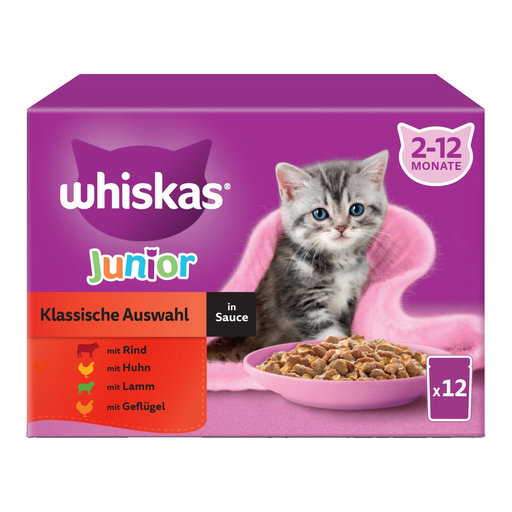
Why it's a match: Offers balanced, complete nutrition for kittens at an accessible price point. Ideal for first-time owners looking for a reliable and widely available option specifically tailored to the needs of young cats.
Although it lacks the open declaration of premium brands, it is explicitly formulated as junior cat food and contains added calcium for bone development, avoiding the hidden deficiencies of all-purpose foods.
Balanced nutrient profile for kittens, convenient single-serving pouches, and high acceptance among young cats.
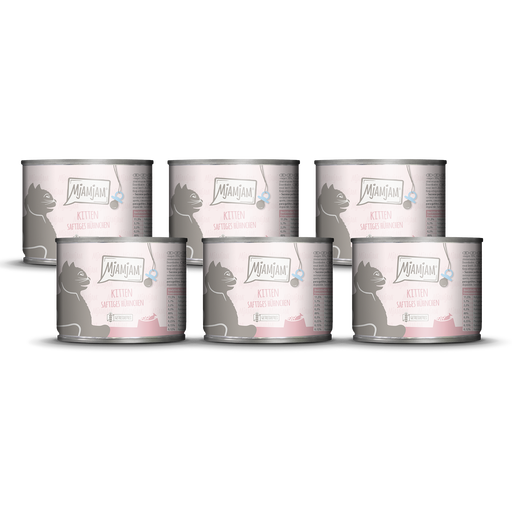
Why it's a match: Perfect for owners who value a transparent, species-appropriate diet with a very high meat content and are willing to invest more for it.
With 70% meat content and an open declaration (chicken meat, heart, liver, gizzard), it bypasses the "animal by-products" trap. It is consistently grain-free and has no added sugar.
Extremely high, clearly declared meat content; contains salmon oil as a source of valuable Omega-3 fatty acids to support skin and coat.

Why it's a match: An excellent choice for owners who prefer a strictly grain-free diet without compromising on the essential nutrients for growth.
The recipe is guaranteed grain-free and contains no sugar or soy, eliminating the most common fillers and additives. The fine p?té texture is ideal for cat food from 2 months.
Consistently grain-free recipe with high meat content; fine p?té texture that is easy for very young kittens to eat.
We've compiled a complete, up-to-date list of products that fully meet these strict selection criteria and UK regulations.
Kittens typically begin to eat solid food at around four weeks of age while still nursing from their mother. Special cat food from 2 months is ideal, as it is tailored to the high energy and nutrient demands of this intense growth phase. The complete transition from mother's milk to solid food is usually finished by eight to ten weeks.
It is recommended to feed junior cat food until about 12 months of age. During this time, cats go through their main growth phase. After their first year, they are considered adults, and their nutritional needs change. You can then gradually switch to an adult cat food. For large breeds like Maine Coons, it may be beneficial to feed kitten food for longer.
A grain-free diet is not mandatory for every kitten. Healthy cats can metabolise easily digestible carbohydrate sources in moderation. It becomes problematic when grain is used as a cheap filler, displacing high-quality animal protein. However, for kittens with known intolerances or very sensitive digestion, grain-free kitten food can be an excellent choice. The overall quality of the recipe is always the deciding factor.