If you’re making several glasses of kiwi smoothie for friends, a jug blender with enough usable capacity is likely to be the better choice. If you mostly make small portions day to day, a compact smoothie maker may be more practical. Next, check which functions are approved for your ingredients, how to clean the parts that come into contact with food, and how much space the appliance will take up. Wattage alone won’t tell you which one to choose.
Which type of blender is right for you?
Hosting friends and serving several glasses
If you want to make smoothies for guests in one go and serve them from a jug, compare its usable capacity with the number of portions you’re planning. Philips Germany lists a 2-litre jug for the HR3030/00, while Bosch Home Appliances lists a 1.5-litre jug for the MMB6177S.
Fans of versatile smoothies
If you sometimes want to use frozen fruit or firmer ingredients as well as fresh kiwi, check the approved uses and functions of the exact model. Philips describes the HR3030/00 as suitable for processing frozen ingredients; this doesn’t mean that other blenders are suitable for the same task.
Everyday users short on space
If you mostly blend small portions, weigh up the smaller footprint of a compact appliance against the possibility of needing extra blending rounds when you have guests. WMF lists a 0.6-litre container for the Kult X Mix & Go, which also serves as a drinking bottle.
What should you look for when buying?
Jug blender with a larger jug
A good fit if: you want to make several glasses in one go and serve them from a jug.
The trade-off: A larger jug takes up more worktop and storage space. Its stated capacity isn’t necessarily the permitted fill level for every recipe.
Compact smoothie maker
A good fit if: you mostly make one small portion and don’t mind the occasional extra blending round when you have guests.
The trade-off: A small blending container limits how much you can make at once. Its compact design doesn’t mean it can handle every firm or frozen ingredient.
| Buying priority |
What to check |
Who is this important to? |
| Enough portions for everyone |
Compare the total amount you plan to make with the stated container capacity and the permitted fill level for your recipe. Philips Germany lists 2 litres for the HR3030/00, while Bosch Home Appliances lists 1.5 litres for the MMB6177S. |
When I’m hosting several friends, I want to blend everything in one go if possible. Around 36% of consumers put portion capacity at the top of their list. |
| Handling different ingredients |
If you plan to use frozen ingredients, check the details and instructions for the exact model. Philips describes this use for the HR3030/00; wattage alone doesn’t prove that a blender can handle them. |
If I want to use other ingredients, including frozen ones, as well as fresh kiwi, I look for functions that are clearly specified. Around 29% of consumers prioritise ingredient versatility. |
| Cleaning |
Check each part individually to see whether the manufacturer says it is dishwasher-safe or removable. Bosch Home Appliances lists dishwasher-safe parts for the MMB6177S; Philips lists a cleaning setting for the HR3030/00. |
After serving, I want to be able to clean the jug, lid and any other containers thoroughly. Around 21% of consumers say cleaning is their main concern. |
| Compact everyday use |
Compare the dimensions, storage requirements and container capacity of the specific model with your usual portion sizes. WMF lists a 0.6-litre blending bottle for the Kult X Mix & Go. |
If I usually make small amounts, I want to set aside as little space as possible for the appliance and its accessories. Around 14% of consumers prioritise a compact appliance for everyday use. |
Avoid common buying mistakes
-
Assuming the container capacity is the same as the usable amount for a recipe
The stated container capacities vary between models. They don’t guarantee a fixed number of portions, or mean that you can fill a container right to the brim.
Plan how many glasses you need and check the fill markings and instructions for the model you choose.
If your planned portions won’t fit in one go, you may need to blend another batch.
-
Choosing based on wattage or promises of a smooth blend alone
The manufacturer information cited here isn’t based on a shared, independent comparison of these models for making kiwi smoothies.
First, check the amount you need to make and the functions intended for your ingredients. If you’re using frozen fruit, the details for the exact model are what matter.
-
Assuming more accessories automatically mean less cleaning
An extra cup can be handy for different portion sizes, but it also means more parts to clean and store.
Compare what’s included and check the cleaning instructions for every container and attachment.
Extra parts take up space and can mean more work after blending.
Key brands at a glance
Philips
According to Philips Germany, the 5000 Series includes the HR3030/00, a jug blender with a 2-litre glass jug.
- Philips lists 1,200 W, a cleaning setting and the ability to process frozen ingredients for this model.
- The larger jug needs more storage space and may not be the most practical choice for a small, single portion.
Bosch
According to Bosch Home Appliances, the VitaPower Series 4 MMB6177S combines a 1.5-litre jug with a 0.6-litre to-go cup.
- Bosch lists dishwasher-safe parts and a universal chopper as included with this model.
- Extra containers and attachments need to be stored and cleaned. The accessories don’t prove that it performs better when making kiwi smoothies.
WMF
According to WMF, the Kult X Mix & Go is a compact smoothie maker with a 0.6-litre container that also serves as a drinking bottle.
- WMF lists 300 W and a safety cut-off that activates if the container isn’t fitted correctly.
- The small container may mean extra blending rounds when you’re making smoothies for several guests.
Braun
According to Braun, the PowerBlend 3 JB 3150 is a jug blender with a working capacity of 1.5 litres for liquids.
- Braun lists an 800 W motor, variable speed, a pulse function and a removable blade.
- The manufacturer’s claims about blending and noise levels aren’t an independent comparison with the other models.
Blenders at Joybuy
The Joybuy options below include smoothie blenders, with models that have a larger jug and others that come with an additional drinking bottle. Features and stated capacities vary by model.
 No image available
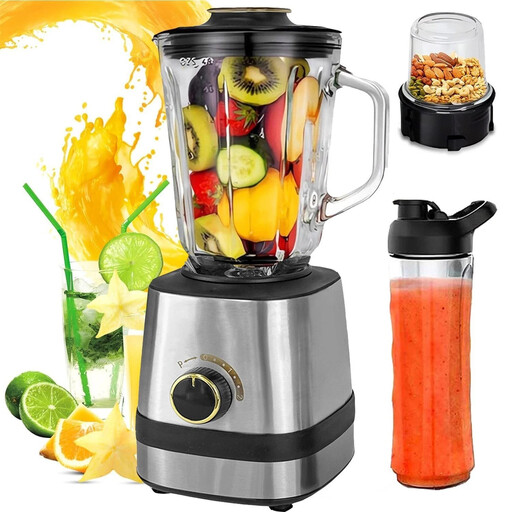
3-in-1 blender, 800 W, 1,500 ml jug
The jug is designed for larger quantities, while the extra travel bottle gives you another container option for taking drinks on the go.
Product details: 800 W, 1,500 ml blending jug, 600 ml travel bottle and 300 ml chopper.
View at Joybuy
 No image available
3-in-1 blender, 800 W, 1.5 l
The blending container holds more than a single drinking portion, while the bottle gives you an option for a smaller serving.
Product details: 800 W, 1.5 l container, 600 ml bottle and 6 blades.
View at Joybuy
 No image available
ochama multifunction blender, 600 W, 1.5 l
The stated 1.5 l container capacity is worth considering when planning several portions. Check the permitted fill level against your recipe.
Product details: 600 W, 1.5 l container and 3 speed settings.
View at Joybuy
 No image available
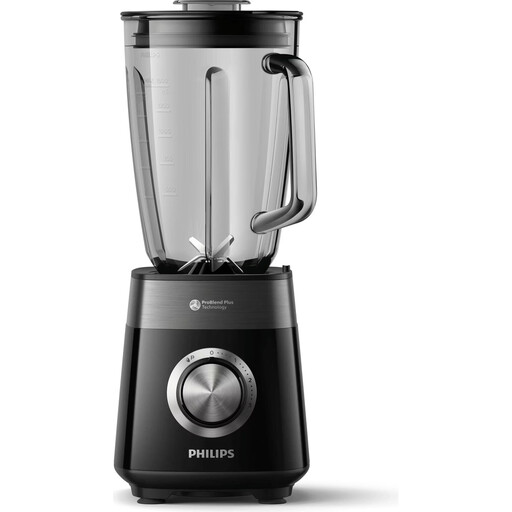
Philips HR3030/00 jug blender, 1,200 W
The 2 l glass jug may suit your plans if you’re making several glasses. Keep the fill limit and the permitted amount for your recipe in mind.
Product details: 1,200 W, 2 l glass jug, pulse and ice-crush functions.
The product information advises not to exceed the jug’s fill limit.
View at Joybuy
 No image available
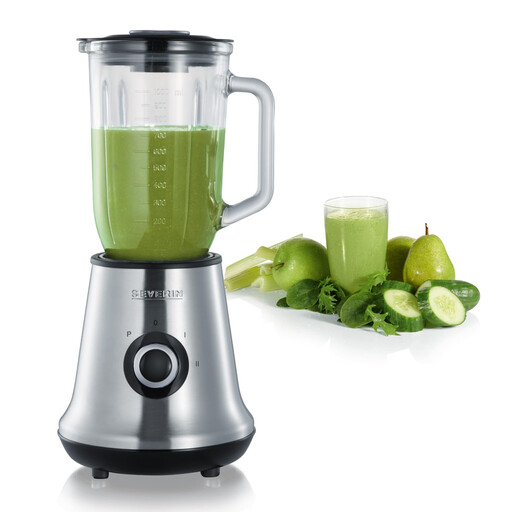
Severin SM 3734, 2-in-1 blender, 1.0 l
The glass jug is worth considering when planning individual batches. If you’re making smoothies for several guests, check your planned amount against the permitted fill level.
Product details: 1.0 l glass jug, 500 W, 2 speed settings and pulse function.
According to the product information, the jug and lid are not dishwasher-safe.
View at Joybuy
Frequently asked questions
What size container do I need to make smoothies for friends?
First, add up the portions you plan to serve and compare the total with the permitted fill level for your recipe. Philips lists a 2-litre container for the HR3030/00, Bosch Home Appliances lists a 1.5-litre jug for the MMB6177S, and WMF lists a 0.6-litre bottle for the Kult X Mix & Go. Without planning your portions, these capacities don’t tell you exactly how many guests you can serve.
How do I clean my blender after making a kiwi smoothie?
Follow the instructions for the jug, lid and blades on your specific model. Bosch Home Appliances lists dishwasher-safe parts for the MMB6177S; Philips lists a cleaning setting and dishwasher-safe parts for the HR3030/00. Don’t rely on a cleaning function alone: wash all the parts that come into contact with food thoroughly.
What happens if a product develops a fault in Germany?
Your statutory rights against the seller if goods are faulty are separate from any voluntary manufacturer’s or retailer’s guarantee. Section 438 of the German Civil Code (BGB) generally sets a two-year limitation period from delivery for ordinary movable goods; specific legal exceptions may apply in individual cases. The statutory time limit is set out on the Gesetze im Internet website.
What safety and food-contact rules apply to blenders?
Electrical appliances must meet the relevant EU product requirements. Where EU rules require CE marking, the manufacturer uses it to declare that the product complies; as the European Union explains, it isn’t a central product approval issued by a government authority. The responsible German federal ministry explains that materials that come into contact with food must not release quantities of substances into food that could endanger health.


