What to consider when buying
One blending and drinking cup
A good choice if: you usually blend one serving at a time and want to take it with you in the same cup.
The trade-off: You may need to blend several batches to serve multiple glasses at breakfast.
Several blending and drinking cups
A good choice if: you want separate servings ready in their own cups, either for different people or to drink later.
The trade-off: Having more cups doesn’t mean the appliance can blend several servings at once.
Jug blender
A good choice if: you want to pour a larger quantity from one container.
The trade-off: The jug and accessories need space, and the stated capacity isn’t the same as the maximum fill level.
Electric blenders sold in Germany must meet the applicable requirements for CE marking. Your Europe explains that CE marking is the manufacturer’s declaration that a product complies with the relevant regulations; it is not an independent quality mark.
| Priority |
What to check when buying |
Who it matters most to |
| Capacity |
Compare the amount in your recipe with the maximum fill level. Severin lists a 1,5-l jug for the SM 3724. |
If I want to fill all the glasses in one go, capacity is key; around 36 % of consumers put family-sized capacity first. |
| Cleaning |
Check the instructions for each cup, lid and blade unit to see which parts can be taken apart and are dishwasher-safe. The Association for Consumer Information highlights that some areas can be hard to reach. |
If there’s little time for washing up in the morning, cleaning each part matters to me; around 29 % of consumers prioritise it. |
| Other ingredients |
Check whether the specific model is approved for frozen or fibrous ingredients, as well as its operating time and required breaks. Manufacturer claims are not an independent test of how it handles kiwi. |
If you might also want to blend frozen fruit or fibrous ingredients later, check what the model is approved for first; around 21 % of consumers place the most importance on handling different ingredients. |
| Taking it with you |
Check how many cups are included, their size and whether they come with suitable lids. Two cups let you prepare separate servings, but not blend two batches at once. |
If you want to take individual servings with you or drink them later, a sealable cup is useful; around 14 % of consumers put this need first. |
Blenders at Joybuy
This selection includes portable blenders for individual servings and jug blenders for smoothies. Check your planned recipe quantity against the maximum fill level, and follow the operating and care instructions for the model you choose.
 No image available
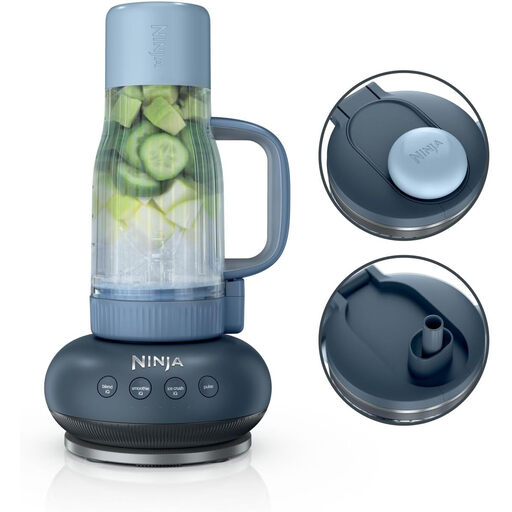
Ninja BlendBoss, Cyberspace
The travel cup is a good choice for a single smoothie portion to take with you.
Travel cup: 710 ml. The description lists removable, dishwasher-safe parts.
You’ll need to blend another batch for additional servings.
View at Joybuy
 No image available
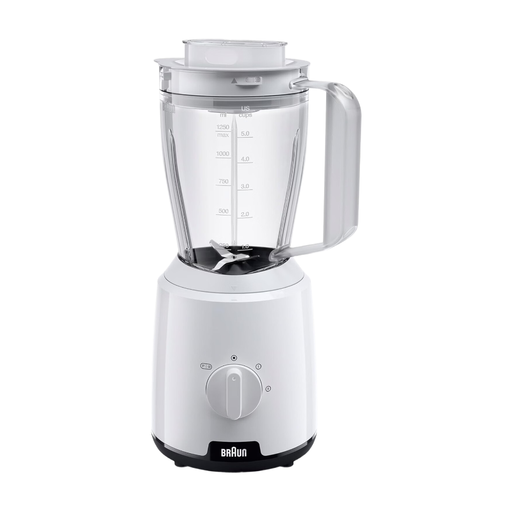
Braun PowerBlend 1 JB1000WH
A jug is a good option if you want to pour several glasses from one container.
Blending jug: 1,5 l; 600 W; two speeds and an ice-crush function.
According to the description, run for no more than two minutes at a time and allow the motor to cool between cycles.
View at Joybuy
 No image available
ochama Multifunction Blender, 1,5 l
The jug may suit you if you want to make a larger quantity of smoothie in one container.
600 W; 1,5-l jug; three speed settings.
Check the stated capacity against the maximum fill level for your recipe.
View at Joybuy
 No image available
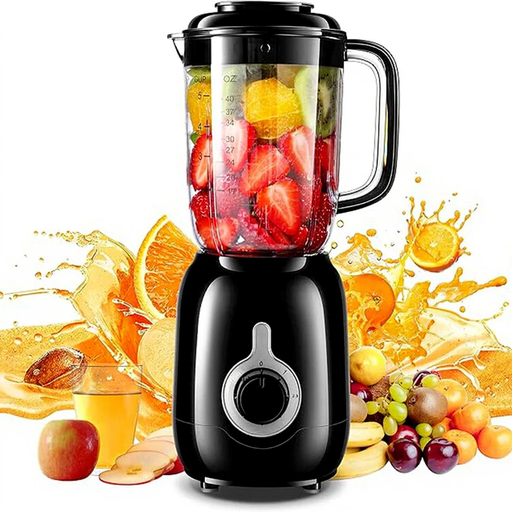
Bear LLJ-B12K1 countertop blender
The jug is designed for larger quantities; check that its maximum fill level suits the amount you need for breakfast.
1,2-l jug; 500 W; two speeds and a pulse function; four stainless steel blades.
According to the description, add at least 300 ml of liquid when blending.
View at Joybuy
 No image available
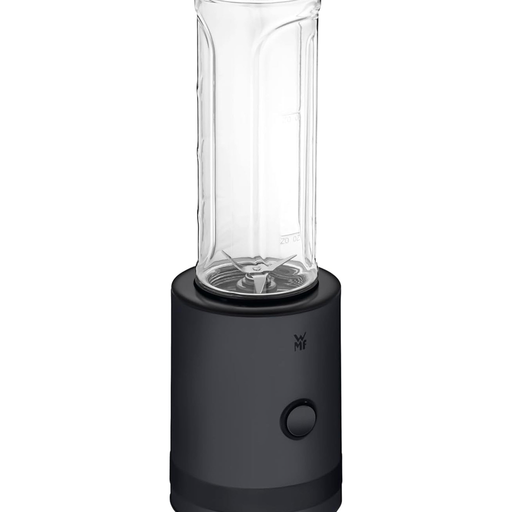
WMF Küchenminis Smoothie-to-Go
Two cups are handy for separate servings to drink, blended one after the other.
Two blending and drinking cups, each with a 0,6-l capacity; 300 W; pulse function.
According to the description, the maximum fill is 600 ml per cup, and continuous operation is limited to one minute at most.
View at Joybuy
Frequently asked questions
How do I choose between a cup and a jug?
First, estimate the finished quantity you’ll need for all the glasses and compare it with the maximum fill level of the specific container. A stated 0,6-l cup and a 1,5-l jug are two different container designs; neither capacity figure replaces checking it against your recipe.
Can I put ice or nuts in any personal blender?
No, this depends on the model. According to its product FAQ, the Severin SM 3743 can handle ice cubes, but not nuts or almonds on their own without liquid. Also follow the operating time and cooling break specified for the model.
Are all parts of a smoothie maker dishwasher-safe?
Not necessarily; check the care instructions for each part individually. The Association for Consumer Information points out that the blade unit can’t always go in the dishwasher with the other components.
How should I prepare the ingredients hygienically?
The German Federal Institute for Risk Assessment recommends using fresh ingredients with no signs of spoilage, and washing fruit and vegetables thoroughly. If you’re adding other plant-based ingredients, only use parts that are commonly eaten raw.
Is CE an independent quality mark for blenders?
No. Your Europe describes CE marking as the manufacturer’s declaration that the relevant EU product regulations have been met; it is not an independent quality mark. The applicable requirements of Germany’s Electrical and Electronic Equipment Substances Ordinance (ElektroStoffV) must also be observed when marking electrical appliances.


