
Same-day & Next-day Delivery

Quality Guaranteed

Unlock Your Welcome Offers: FREE Delivery | Up to 80% OFF | Free 30-day JoyPlus trial
Download the APP
No-drill roller blinds are a practical choice for rented homes, children’s bedrooms and flexible room layouts. They are usually fitted by clipping them to the window sash, sticking them in place or attaching them with suction cups. This helps keep walls and window frames largely undamaged. However, fitting methods, fabric width and light control can vary considerably. If you focus only on colour or price, you could end up with a blind that doesn’t fit, slips out of place or fails to provide the level of blackout you need.
As a Joybuy Product Recommendation Officer, I’ll explain the key factors to consider and show you which options suit different everyday needs.
With many clip-fit roller blinds, the stated width includes the brackets, so the fabric itself is narrower. According to the product description, the fabric on the WOLTU Blackout Roller Blind is approximately 4 cm narrower than the overall width. The supplier states that the fabric on the Floordirekt Fashion Roller Blind is around 5 cm narrower than the mounting rail.
So always measure:
For better privacy and protection from the sun at the sides, the blind should cover the pane sufficiently. For a no-drill day and night blind, the recommended stated width is often a few centimetres wider than the glass. However, always follow the relevant manufacturer’s guidance.
A light-filtering pleated blind without drilling reduces brightness and direct sunlight, but still lets daylight through. A blackout blind, on the other hand, has opaque fabric or a coated backing. Even so, side gaps can let light in when blinds are fitted inside the frame.
Check the exact product description:
Clip-on brackets need a compatible frame. Depending on the product, they may be designed for frame thicknesses such as 10–23 mm, 13–23 mm or 16–22 mm. Clip-on fitting may not be suitable for wooden windows, roof windows, rough surfaces or frames with pronounced curves.
Before buying, also check whether:
For a bedroom, an opaque blackout blind or a honeycomb pleated blind in a suitable fabric is a good choice. In a living room, a privacy blind or light-filtering pleated blind may feel more comfortable, as daylight can still enter.
A thermal blind with a coated backing can offer an additional benefit. Claims such as ‘100% blackout’ or ‘99% sun protection’ should be treated as manufacturer’s claims. The actual effect depends on the fabric, window size, side gaps and direct sunlight.
Chain-operated blinds offer continuous adjustment, but the cords can pose a strangulation risk in homes with young children. Cordless blinds, operating handles or tested safety solutions are therefore preferable for families. Secure chains with a suitable device, keeping them out of children’s reach.
Refer to the product information and check for details on EN 13120 or the applicable safety requirements for internal blinds. A safety label does not replace correct installation and supervision.
Polyester is commonly used for roller and pleated blinds. Coated fabrics may be opaque, water-repellent or designed to reduce light. Wipe-clean surfaces are practical in kitchens and bathrooms. Harsh cleaning products, vigorous rubbing and high humidity can damage the fabric and coating.
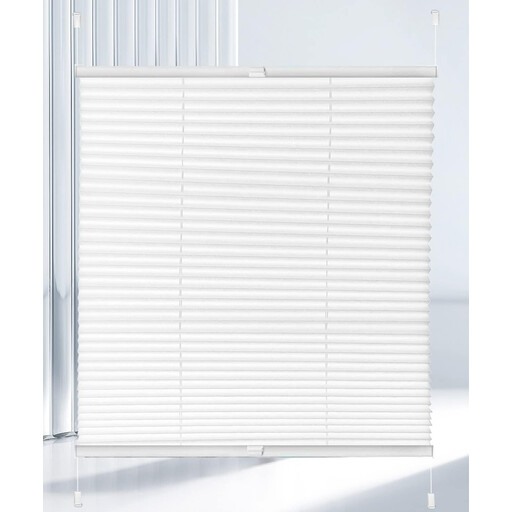
Why this product suits this profile: The light-filtering fabric provides privacy without completely darkening the room. Clip-fit installation is designed for windows and doors.
The product description distinguishes between light filtering and complete blackout, helping you set realistic expectations for light control.
Clip-on installation without drilling; suitable for windows and doors; height-adjustable operation.

Why this product suits this profile: This blind combines clip-fit and drill-mounted installation options with a silver-coated backing and cordless operation.
The compatible frame thickness of 16–22 mm is clearly stated. According to the description, the fabric is around 4 cm narrower than the overall width.
200-g/m² polyester, according to the product information; wipe-clean, water-repellent surface; cordless operation using the bottom aluminium rail.
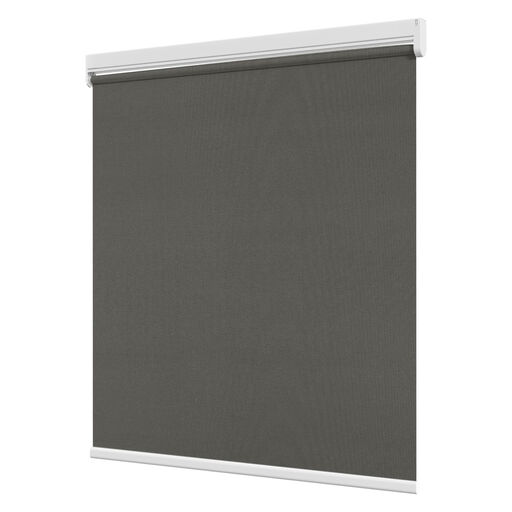
Why this product suits this profile: The built-in rechargeable battery, remote control and stated compatibility with Alexa and Google Assistant make it a good fit for smart home users.
The operating method and power supply are clearly described: a rechargeable battery, 3-m cable and pre-paired single-channel remote control. Check that the available width of 60 cm suits your window before buying.
Electric operation without a pull chain; clip-on brackets for frame thicknesses of 10–23 mm, according to the product description.
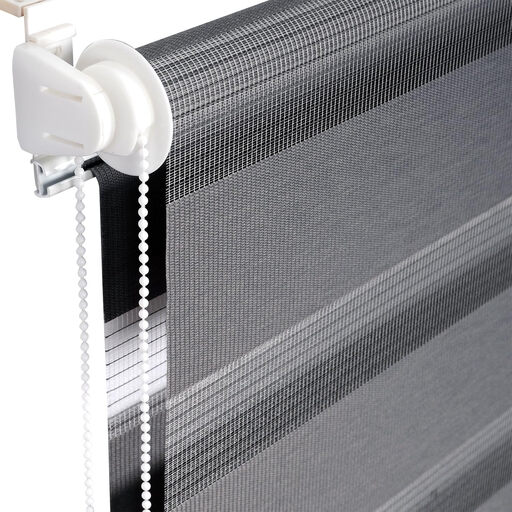
Why this product suits this profile: This no-drill day and night blind combines sheer and opaque fabric stripes, letting you adjust the amount of light entering the room.
The product description specifies a frame thickness of 13–23 mm and notes that the fabric is around 4–5 cm narrower than the overall width.
Chain can be fitted on the left or right; semi-transparent and opaque stripes; suitable for humid rooms, according to the product description.
Depending on your installation, you could also consider a pleated blind without drilling, fitted with suction cups, an outdoor blind for a balcony or patio, or a traditional privacy blind. Suction cups need a smooth surface and should be checked regularly to make sure they are secure. For doors, make sure the blind won’t catch on the handle, seals or nearby surfaces when the door is opened.
The most common option is to fit clip-on brackets over the top of the window sash. Alternatively, you can use adhesive brackets or suction cups. The right choice depends on the frame shape, surface, weight of the blind and compatible frame thickness.
There’s no single answer. It depends on the materials, how often the blind is used, exposure to sunlight and how it is fitted. Secure brackets, careful operation and cleaning with a soft, damp cloth can help extend its lifespan.
Electric roller blinds with rechargeable batteries or replaceable batteries use power when operated. Actual consumption depends on the motor, how often the blind is used and how frequently it needs charging. Before buying, check whether the rechargeable battery, batteries, charger or a separate smart home bridge is included.