
Lieferung heute & morgen

Qualitätsgarantie

Willkommens-Angebote freischalten: KOSTENLOSE Lieferung | Bis zu 80 % RABATT | Kostenlose 30-Tage-JoyPlus-Testphase
App herunterladen
A clip-on roller blind without drilling is a practical choice for rented homes, offices and family households. It attaches to the window sash without drilling into walls or frames. However, easy installation doesn’t automatically mean you’ll choose the right product. Common reasons for buying the wrong blind include inaccurate measurements, misjudging how much light it lets through and choosing unsuitable clip-on brackets.
For many roller blinds, the stated width includes the entire assembly, including the brackets. The actual fabric can be several centimetres narrower. For reliable privacy, measure not only the glass but also the space beside the handles and frame.
A blind that blocks views can still let light in at the sides or through the fabric. A blackout blind with a coated backing can reduce the amount of light more effectively. Even so, fitting a blind inside the window frame can leave gaps at the sides.
The clip-on brackets require a frame of a certain thickness. Depending on the model, the permitted measurements may be 1–10 mm, 13–23 mm, 15–23 mm or 16–22 mm. Some products are also unsuitable for roof windows, wooden windows, sliding windows and fixed windows. Before buying, compare the product specifications with your existing window.
Start by measuring:
For day and night double roller blinds, several product descriptions state that the fabric is about 4–5 cm narrower than the overall width. To improve coverage, it’s often recommended that you order a blind around 4 cm wider than the glass. For a blind fitted to a window or door, however, the fabric mustn’t rub against the handle.
A clip-on roller blind should sit securely on the window sash and operate smoothly without catching on the handle or seal. Keep chain pulls out of children’s reach and secure them as instructed. For families, cordless models with a bottom rail can be easier to operate. Electric versions, on the other hand, need regular charging or a battery change.
For humid rooms, moisture-resistant materials that can be cleaned with a soft, damp cloth are a practical choice. Harsh cleaning products, machine washing and pulling hard on the chains can damage the fabric and mechanism.
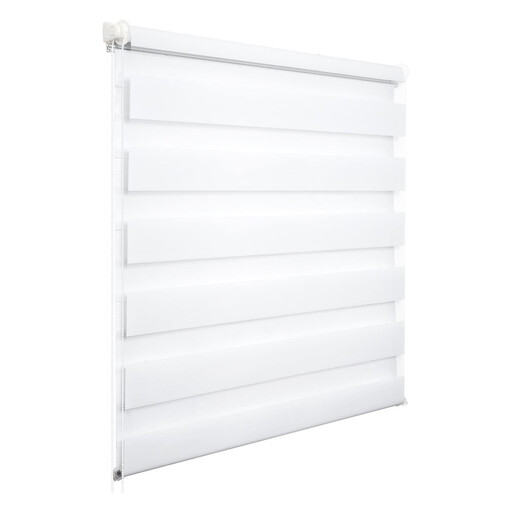
Why this product suits this profile: This model combines clip-on fitting with smooth adjustment between light-filtering and opaque stripes.
The product description specifies the difference between the overall and fabric widths, as well as a suitable frame thickness of 13–23 mm.
Clip-on fitting with no drilling, a chain that can be fitted on the left or right, and cleaning with a soft cloth or brush.
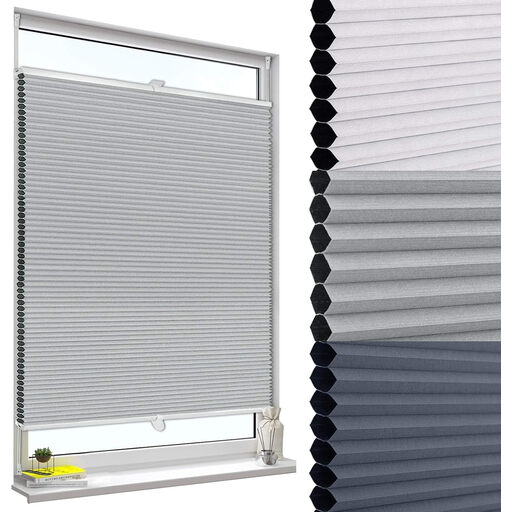
Why this product suits this profile: Its honeycomb structure, polyester fabric and metal frame are designed to provide blackout coverage, privacy and flexible positioning.
The suitable frame thickness of 10–23 mm is specified. The description also states that it’s suitable for vertical windows and doors, but not roof windows.
Top and bottom operating rails, moisture-resistant polyester fabric and cleaning with a damp cloth.
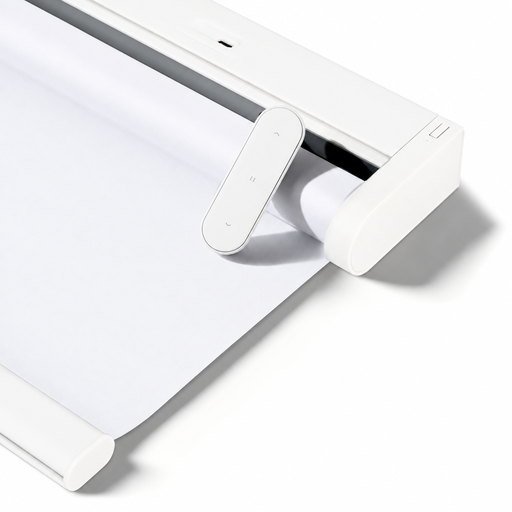
Why this product suits this profile: Electric operation is useful for hard-to-reach windows or if you want to operate the blind regularly from different positions.
It can be fitted using clip-on brackets or screws. For clip-on fitting, the product description specifies a frame thickness of 1.5–2.3 cm.
Remote control, rechargeable lithium battery and freely selectable intermediate positions.
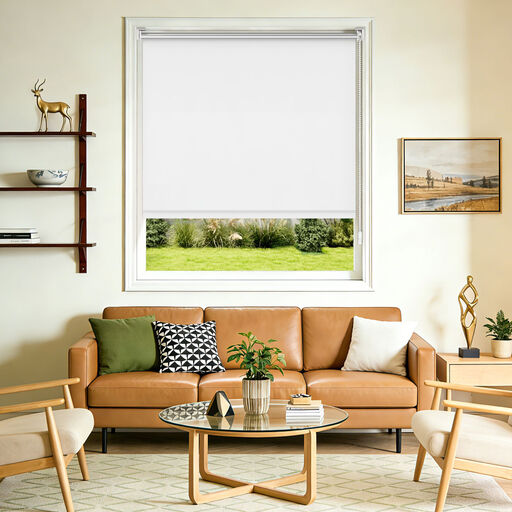
Why this product suits this profile: This model is designed for rooms where blackout coverage, privacy and a coated backing are important.
The frame thickness of 15–23 mm and the narrower fabric width are clearly stated. This makes it easier to check whether the blind will fit before ordering.
Thermal coating according to the product description, side-chain operation and a child safety device included.
We’ve put together a complete, regularly updated list of products that meet these strict selection criteria and fully comply with the safety regulations in force in the EU.
How long it lasts depends on the fabric, brackets, frequency of use and fitting. Opening it gently, using the correct frame thickness and cleaning it with a soft cloth all help reduce wear. Check regularly that the clip-on brackets are secure.
A blackout blind with a dense or coated backing can significantly reduce the amount of light coming in. However, light may still get through gaps between the fabric and frame. For greater light reduction, choose an overall width that suits the glass without obstructing handles or seals.
Electric blinds powered by a rechargeable battery or disposable batteries don’t need a permanent power connection at the window. Depending on the model, you’ll need to recharge the battery or replace the batteries from time to time. Before buying, check the remote control, charging method and whether app or voice control is available.