
Lieferung heute & morgen

Qualitätsgarantie

Willkommens-Angebote freischalten: KOSTENLOSE Lieferung | Bis zu 80 % RABATT | Kostenlose 30-Tage-JoyPlus-Testphase
App herunterladen
By Joybuy Product Recommendation Officer, July 05, 2026
Knife-cut noodles, also known as Dao Xiao Mian (刀削面), are a specialty from the Chinese province of Shanxi, celebrated for their unique shape and texture. Unlike pulled or machine-pressed noodles, they are traditionally shaved from a large block of dough directly into boiling water. The result is irregularly shaped noodles that are thick in the middle and thin on the edges, making them perfect for absorbing sauces and broths.
For lovers of authentic Asian cuisine, finding high-quality Shanxi noodles can be a challenge. This article serves as your guide. It introduces different varieties, provides preparation tips, and helps you find the right noodles for your dishes, whether you're planning a classic noodle soup or a spicy stir-fry.
The selection of dried Asian noodles is vast. To find the right knife-cut noodles for your needs, the following criteria can be helpful.
The signature characteristic of Dao Xiao Mian is their uneven thickness. This creates a varied bite—soft on the thin edges and al dente in the thicker centre. Look for product descriptions that highlight this shape. Wide wheat noodles with this specific texture are particularly well-suited for robust sauces, as the sauce clings well to their rough surface.
The traditional recipe for these handmade noodles is very simple, usually consisting of just wheat flour, water, and salt. This minimalist composition ensures a pure wheat flavour. Some manufacturers enrich their noodles with other ingredients, such as:
When you buy Chinese noodles, you should consider how you plan to use them. For regular use in families or restaurants, bulk packages of 1 kg or more are often an economical choice. If you are trying the noodle variety for the first time, smaller packs of around 400g to 800g are better for getting to know the texture and taste.
Here is a selection of products that exhibit the characteristic features of knife-cut noodles. Each product has its own specific qualities that make it suitable for different preferences and dishes.
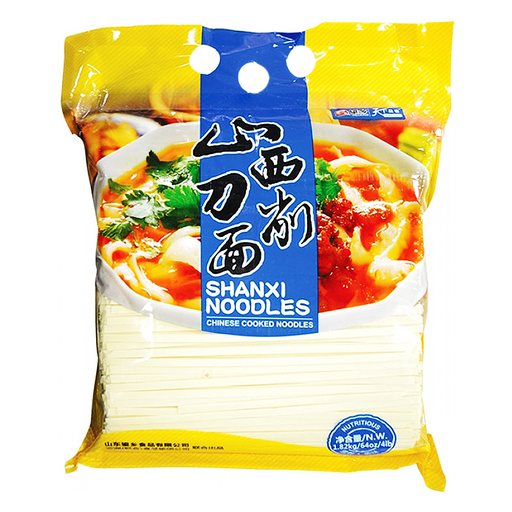
Why It Stands Out: This product closely follows the traditional production of Shanxi noodles. The ingredient list is reduced to the essentials: wheat flour, water, and salt. The bulk packaging makes it a practical option for stocking your pantry.
Pros:
Who It's For: Ideal for purists seeking the authentic taste and texture of Dao Xiao Mian. Also a great choice for families and restaurants that need large quantities on a regular basis.
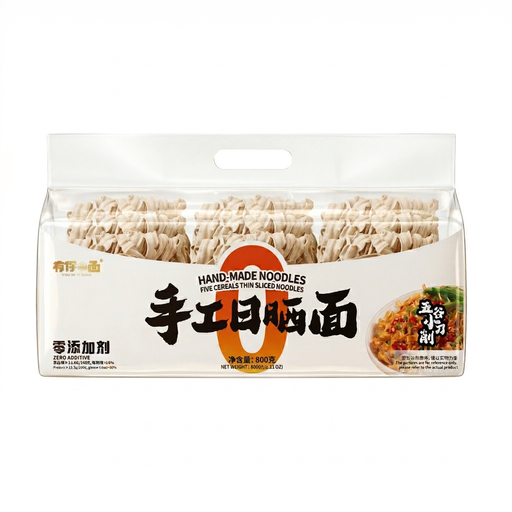
Why It Stands Out: These noodles combine the traditional shape with a multi-grain blend. According to the manufacturer, Huiji Food, the noodles are sun-dried to preserve the nutrients of the ingredients. The mix of wheat, buckwheat, corn, sorghum, and soybean flour creates a more complex flavour profile.
Pros:
Who It's For: For health-conscious foodies and home cooks looking for a version with a richer nutritional profile and a deeper flavour. The 800g pack is well-suited for households that cook regularly.
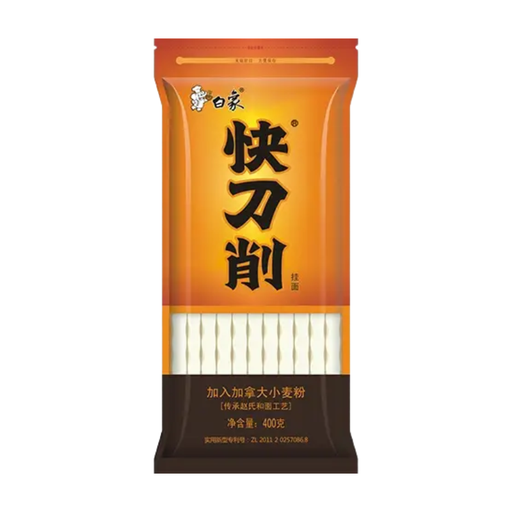
Why It Stands Out: Bai Xiang precisely defines the shape of its noodles: a width of 8 mm with a thick centre and thin edges. The addition of konjac flour to the wheat flour base aims to create an especially chewy and satisfying texture.
Pros:
Who It's For: Perfect for noodle lovers who place a special emphasis on a distinctly chewy texture. The smaller package makes it easy to test this specific variety.
The world of knife-cut noodles is diverse. Each variety offers a slightly different taste experience. If the products presented here don't quite meet your expectations, or if you're simply curious about other alternatives, we have a wider selection available.
? Explore Our Entire Range of Knife-Cut Noodles
Add the noodles to a large pot of boiling water. Stir them gently at the beginning to prevent them from sticking to the bottom of the pot. The cooking time varies depending on the thickness of the noodles but is typically between 5 and 8 minutes. Taste a noodle to check for your desired al dente texture. After cooking, drain and serve immediately with your favourite sauce or in a soup.
The main difference lies in the production method and the resulting shape. While many noodles like Lamian are hand-pulled or machine-extruded, resulting in a uniform thickness, Dao Xiao Mian are shaved from a block of dough. This creates their characteristic irregular shape—thick in the middle, thin on the edges—which provides a unique mouthfeel.
Their robust structure and ability to absorb sauce make them extremely versatile. Classic applications include: