
Lieferung heute & morgen

Qualitätsgarantie

Willkommens-Angebote freischalten: KOSTENLOSE Lieferung | Bis zu 80 % RABATT | Kostenlose 30-Tage-JoyPlus-Testphase
App herunterladen
The search for the right knife set can quickly become overwhelming. Countless options, grandiose advertising claims, and seemingly professional sets make the decision difficult. However, behind these glossy facades often lie pitfalls that lead to buyer's remorse. As your Joybuy Product Recommendation Officer, I'll help you navigate these marketing traps and make an informed choice that fits your actual needs in the kitchen.
Before we dive into the important features, let's shed light on the typical problems that often only become apparent after the purchase.
To make a good purchasing decision, focus on three objective criteria that determine a knife's performance and longevity.
The blade material is the heart of every knife and significantly determines its sharpness, edge retention, and maintenance requirements.
The way the blade and handle are connected is a crucial quality feature.
Instead of an overloaded set, three to four basic knives are sufficient for most households:
Here are some recommendations tailored to different needs and budgets, taking the aforementioned quality features into account.
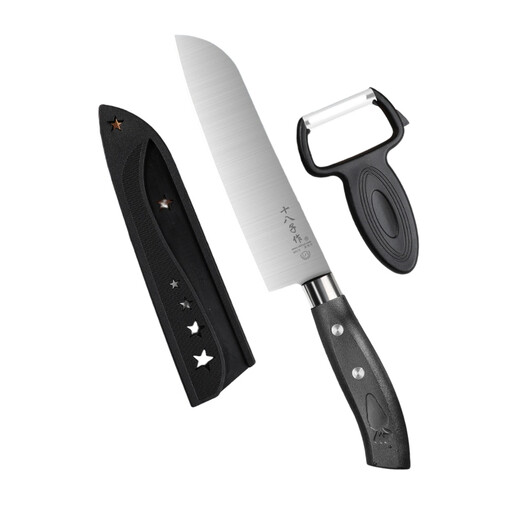
Why this set is a great fit: Ideal for a first kitchen or for users looking for a simple, functional basic setup. It covers the most fundamental cutting and peeling tasks with a versatile knife and a peeler, without breaking the bank.
This set avoids the trap of the overloaded knife block. It focuses on two useful tools and forgoes unnecessary filler knives. The product description is factual and avoids empty "pro" promises.
A very cost-effective entry point into the world of kitchen knives. The included knife sheath ensures safe storage.
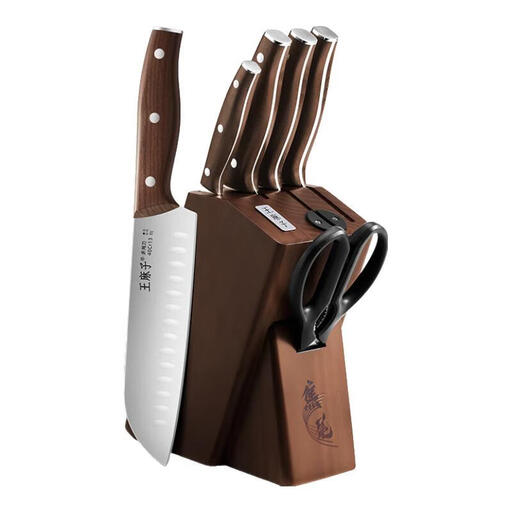
Why this set is a great fit: For anyone who takes their cooking equipment seriously. This set offers a comprehensive selection of knives, including a cleaver, and emphasizes solid construction and high-quality materials for long-lasting performance.
Instead of vague promises, this set delivers facts: The blades are made from 40Cr13 stainless steel and the knives feature a full tang construction. These are verifiable quality features that go beyond empty marketing terms.
The full tang construction ensures excellent balance and durability. The beechwood handle provides a comfortable and secure grip.

Why this knife is a great fit: Perfect for anyone looking to supplement their core set with a high-quality, specialised tool for fine tasks. Ideal for peeling, cutting, and garnishing fruits and vegetables with maximum control.
This knife doesn't try to be an all-rounder. It's a specialist. Its quality is based on verifiable specifications from the manufacturer, Zwilling, such as the use of special formula stainless steel and precise V-Edge sharpening technology.
The blade, made from ZWILLING's special formula steel, is robust and corrosion-resistant, according to the manufacturer. Its light weight and ergonomic handle allow for fatigue-free work.
We've compiled a complete, up-to-date list of products that fully meet these strict selection criteria and safety standards.
1. How often should you sharpen a good kitchen knife? The frequency depends on usage, blade steel, and the cutting surface. A general rule for home cooks is to maintain a stainless steel knife with a honing steel every few months and to have it professionally sharpened or use a whetstone once or twice a year, depending on sharpness loss. According to manufacturers, ceramic knives need sharpening less often but require special diamond sharpeners.
2. Is a knife set with a block always the better choice? Not necessarily. A knife set with a block offers safe and readily accessible storage and protects the blades. However, blocks take up a lot of counter space and often include knives you'll rarely use. An alternative is to buy individual knives tailored to your specific needs and store them in a drawer with blade guards or on a magnetic strip.
3. What is the difference between a chef's knife and a Santoku knife? The main difference lies in the blade shape and cutting technique. The classic European chef's knife has a curved blade that allows for a rocking cutting motion. The Japanese Santoku knife has a straighter edge and a rounded, downward-sloping tip. It is particularly well-suited for push and pull cuts and is ideal for fine dicing and slicing.