
Lieferung heute & morgen

Qualitätsgarantie

Willkommens-Angebote freischalten: KOSTENLOSE Lieferung | Bis zu 80 % RABATT | Kostenlose 30-Tage-JoyPlus-Testphase
App herunterladen
A functional knife set is the foundation of any well-equipped kitchen. But the sheer number of options can be overwhelming: countless materials, blade shapes, and marketing promises make it difficult to make an informed decision. Poor choices often lead to frustration when knives quickly become dull, are unwieldy, or are unsuitable for their intended purpose. This guide will help you avoid the typical pitfalls and identify the right kitchen knives for your needs.
Before you invest, it's important to be aware of common issues that can compromise the value and usability of kitchen knives.
To avoid a bad purchase, you should focus on objective and verifiable features. These three parameters are central to a knife's performance and longevity.
The choice of material has a direct impact on sharpness, durability, and maintenance.
The tang is the extension of the blade that reaches into the knife handle. The type of tang is an indicator of the knife's stability and balance.
A single knife cannot perform all tasks optimally. A basic understanding of the most common types will help you choose.
Here are some recommendations tailored to different needs and applications.
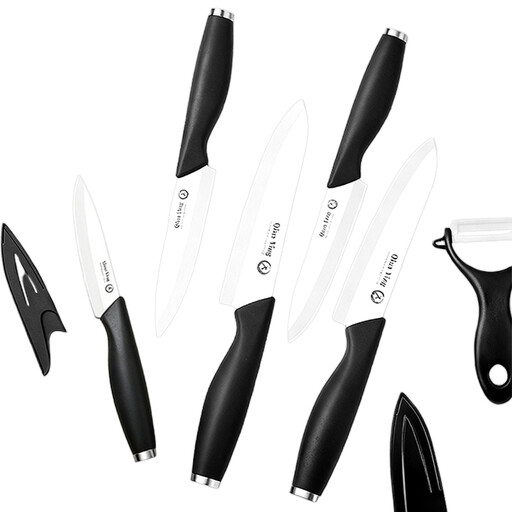
Why This Fits Their Persona: Ideal for students or those setting up their first home who are looking for a versatile starter set for everyday cutting tasks without having to worry about regular sharpening. With various sizes, the set covers most common kitchen jobs.
This set bypasses the 'wrong tool' pitfall by providing specific knives for different tasks (cutting, peeling) and focusing on low-maintenance ceramic blades.
The ceramic blades stay sharp for a long time and are rust-proof. The light weight of the knives allows for fatigue-free work.
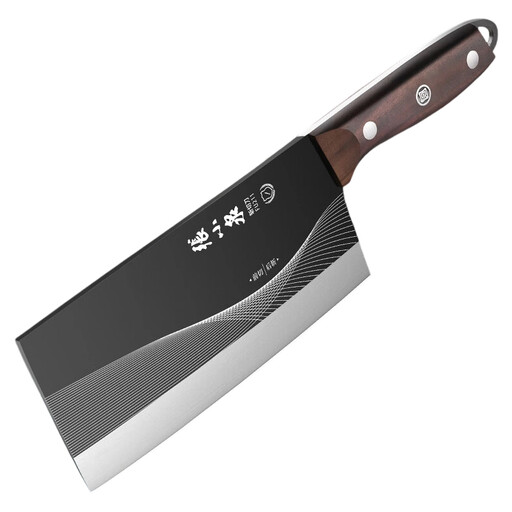
Why This Fits Their Persona: Perfect for home cooks who regularly break down whole chickens, portion ribs, or tackle other jobs that require a robust tool. This knife is a specialized addition to an existing knife set.
This knife solves the problem of using an unsuitable knife for heavy-duty jobs. Its thick, heavy blade is explicitly designed for chopping through bone, thus preventing damage to more delicate knives.
The thickened stainless steel blade provides the necessary stability and weight to cut through bone cleanly. Its robust construction ensures high durability when used correctly.

Why This Fits Their Persona: Suitable for pragmatic home cooks who prefer a single, reliable knife for the majority of daily kitchen tasks—from slicing vegetables to portioning boneless meat.
This knife avoids the ergonomics pitfall with its balanced design. The shape, reminiscent of a Chinese chef's knife, offers good balance and allows for versatile cutting techniques without causing rapid fatigue.
The wide steel blade is versatile and robust. It combines the functions of a chef's knife and a vegetable knife in one tool.
We have compiled a complete, up-to-date list of products that fully meet these strict selection criteria and all applicable safety regulations.
The frequency depends on usage and the quality of the blade steel. A simple rule for stainless steel knives in home use is: as soon as you notice you need to apply more pressure when cutting (e.g., with a tomato), it's time to sharpen the knife. Regular maintenance with a honing steel can delay the need for a full resharpening. A manual knife sharpener like the Wangmazi Knife Sharpener is a practical addition for regular upkeep.
There is no "better," only "different." Ceramic knives are ideal for precise, clean cuts on soft to medium-firm foods and require almost no maintenance in terms of sharpness. Stainless steel knives are more versatile, more resistant to impact, and can be easily resharpened. For a kitchen where a wide variety of tasks are performed, a combination of both materials is often a great solution.
A German chef's knife has a curved blade that allows for a rocking cutting motion. It is a versatile all-rounder. A Chinese chef's knife has a wide, rectangular blade. It is used with a top-down chopping motion and is excellent for quickly mincing vegetables. Despite its shape, it is generally not intended for chopping bones—there are special, heavier cleavers for that.