
Lieferung heute & morgen

Qualitätsgarantie

Willkommens-Angebote freischalten: KOSTENLOSE Lieferung | Bis zu 80 % RABATT | Kostenlose 30-Tage-JoyPlus-Testphase
App herunterladen
A knife set can be a practical addition to your kitchen equipment – provided the knives included are suited to the tasks you actually carry out. Home cooks, beginners and more ambitious cooks often look first at the number of pieces or the brand name. However, blade lengths, knife shapes, handle design and care instructions are more meaningful indicators.
A 5-piece knife set sounds more comprehensive than a 2-piece knife set. What matters, however, is whether all the components will be used regularly. A set with a chef’s knife, utility knife and paring knife is often more useful for everyday cooking than a selection containing several similar blades.
Before buying, check:
Terms such as ‘extra sharp’, ‘long-lasting sharpness’ or special hardening processes are difficult to compare without further information. A sharp blade also requires a suitable cutting surface and regular care. Hard foods, bones and frozen ingredients may be unsuitable and can damage the edge.
With branded products such as a Zwilling knife set, Victorinox knife set or Tefal knife set, you should therefore read the specific details about the steel, manufacturing process, cutting angle and care requirements – not just the marketing copy.
A knife set with a knife block can make safe storage easier. Nevertheless, check whether the block actually contains all the accessories shown. According to the product information, the Zwilling PRO Series 5-Piece Knife Block Set includes four knives and a bamboo block; kitchen scissors are not included, even though a corresponding slot is provided.
For an average kitchen, three different knife shapes are often a sensible starting point:
A 3-piece knife set can cover these basic tasks. A 2-piece knife set is suitable if you already have a chef’s knife or initially only need two additional knives. A 5-piece knife set offers greater specialisation, but also requires more storage space.
Stainless steel is widely used in kitchens because it can be corrosion-resistant when properly cared for. Terms such as ‘FRIODUR-ice-hardened’ or ‘SIGMAFORGE’ are specific designations from the respective product data and should not be taken as a blanket promise of performance.
Look out for:
A Japanese knife set with a Santoku knife and Nakiri knife is particularly suited to people who slice vegetables and fish or prepare fine slices. The Santoku is versatile, while the Nakiri has a straight edge designed for vegetable preparation.
An ergonomic handle should sit securely and comfortably in your hand, which should be dry. Plastic handles are easy to clean, while wooden handles usually require more care. Three rivets, a full tang or a finger guard may be design features, but they do not replace safe cutting technique.
Use a stable chopping board, cut away from your body and store sharp knives out of children’s reach. If you are unsure, follow the care recommendations provided by the manufacturer. ‘Dishwasher-safe’ does not automatically mean that using a dishwasher is the preferred way to clean the knives if you want to maintain long-term blade sharpness.
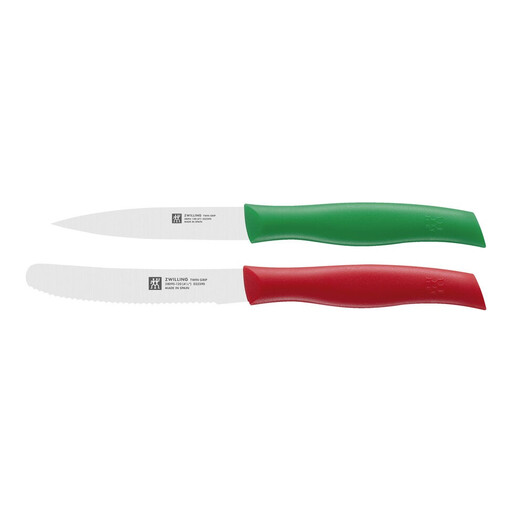
Why this product suits this profile: The compact set contains a 9-cm paring knife and a 12-cm utility knife. It is suitable for cooking beginners or as an addition to a chef’s knife you already own.
The small number of pieces prevents unused specialist knives from artificially inflating the size of the set.
FRIODUR-ice-hardened stainless-steel blades and ergonomic plastic handles, according to the product information.
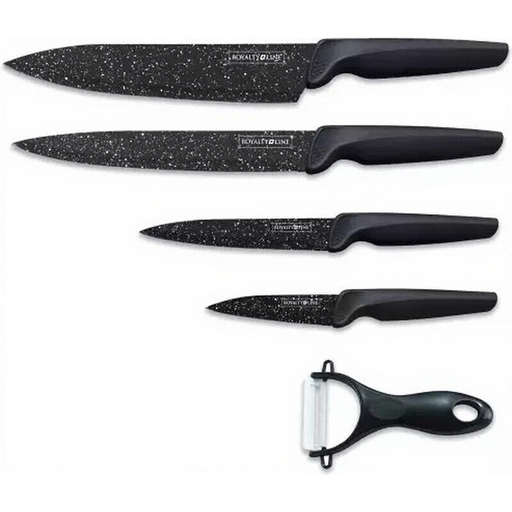
Why this product suits this profile: This kitchen knife set combines a 20-cm chef’s knife, a 20-cm carving knife, an 11-cm knife and two peelers for a range of preparation tasks.
The product description lists the individual functions and blade lengths, so you can check the contents before buying.
20-cm chef’s knife for chopping and dicing, plus a separate carving knife for larger foods.
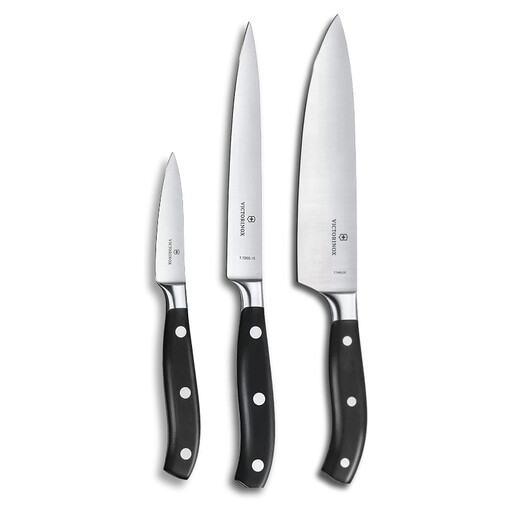
Why this product suits this profile: The 3-piece set includes an 8-cm paring knife, a 20-cm chef’s knife and a 20-cm cleaver for versatile tasks.
The three different knives cover clearly defined cutting tasks instead of offering multiple similar blades.
Forged stainless-steel blades, a well-balanced handle design and a stated set weight of 714 g.
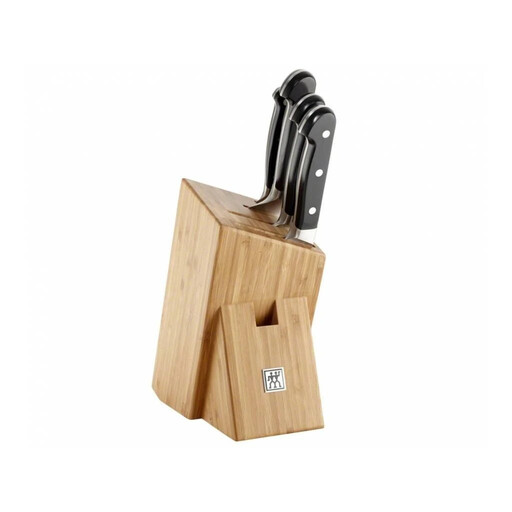
Why this product suits this profile: This set is aimed at frequent users who favour Asian cutting techniques and includes four knives and a bamboo block.
The contents and the five designated slots are listed separately in the product data.
Includes a Santoku knife, Chinese chef’s knife, paring knife and chopping knife; according to the product information, the blades are FRIODUR-hardened and SIGMAFORGE-forged.
Clean kitchen knives as soon as possible after use with warm water and mild washing-up liquid. Dry the blade completely before placing it in a knife block, protective sheath or on a magnetic strip. Avoid using glass or stone surfaces as chopping boards, as they can put considerable strain on the edge.
Depending on the blade shape, a honing steel, whetstone or suitable sharpening system may be appropriate for sharpening. Read the manufacturer’s care instructions beforehand. Knives with damaged, chipped or bent blades should no longer be used.
If you often prepare meat, fish or larger cuts, you may also want to consider a suitable butcher’s knife set. These sets are designed for different cutting tasks from a classic kitchen knife set.
We have put together a complete, regularly updated list of products that fully meet these strict selection criteria and the safety regulations applicable in the EU.
For getting started, a 2-piece or 3-piece knife set with a paring knife, utility knife and chef’s knife is often sufficient. The important thing is that the knives perform different tasks and feel comfortable in your hand. A more comprehensive set is worthwhile if you regularly prepare meat, fish and vegetables with the appropriate blades for each.
The lifespan of an edge depends on the cutting surface, frequency of use, food being prepared and care. There is therefore no universally applicable timeframe. Hand washing, drying the knives immediately and sharpening them regularly can help maintain their performance. Frozen foods and bones should only be handled with knives specifically designed for these tasks.
This depends on the individual product. Some sets, including certain Tefal models, are described as dishwasher-safe in the product information. For other knives, hand washing is recommended or explicitly required. The manufacturer’s instructions should take priority, as heat, detergents and contact with other items can put strain on the blade and handle.