
Lieferung heute & morgen

Qualitätsgarantie
App herunterladen
Kategorien
A high-performance knife set is the cornerstone of precision and efficiency in any kitchen. The selection of the right set depends on objective criteria such as blade material, the assortment of knives included, and the ergonomic design of the handles. This guide analyses the technical specifications relevant to home cooks and beginners to enable an informed decision.
A knife set's performance is defined by the combination of its technical features. Two key factors are the blade material and the functional assortment of the set.
The choice of material directly impacts the sharpness, durability, and maintenance requirements of the knives.
A versatile kitchen knife set should cover the most essential cutting tasks. A typical basic set includes:
The following product recommendations are based on an analysis of technical specifications and functional assortment for everyday use in the home kitchen.
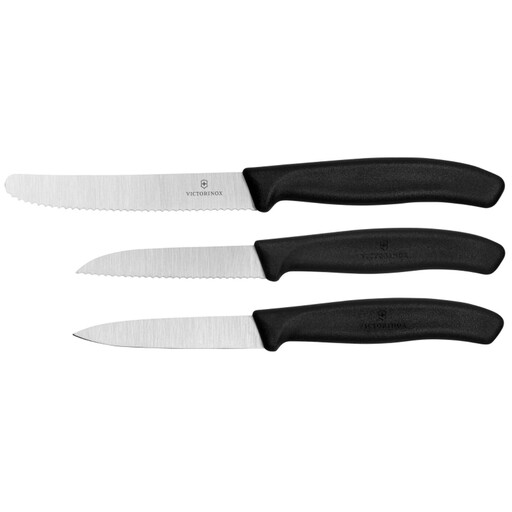
Why We Recommend This Product This set focuses on the fundamental, precise cutting tasks in the kitchen. It consists of three specialized stainless steel knives optimized for peeling and slicing fruits and vegetables. The Victorinox brand is renowned for the manufacturing quality of its steel blades.
Advantages (Pros)
Who It's For This set is a smart addition for users who already own a high-quality chef's knife and want to expand their collection with specialized, sharp knives for daily fruit and vegetable preparation.

Why We Recommend This Product This kitchen knife set offers a comprehensive starter collection, covering everything from major cutting tasks to fine peeling jobs. The combination of a 20 cm chef's knife and a 20 cm carving knife covers the essential requirements for cooking. The inclusion of two different peelers adds to its versatility.
Advantages (Pros)
Who It's For Ideal for novice cooks and home chefs looking for a complete starter set that covers a wide range of kitchen tasks, eliminating the need to purchase additional knives right away.
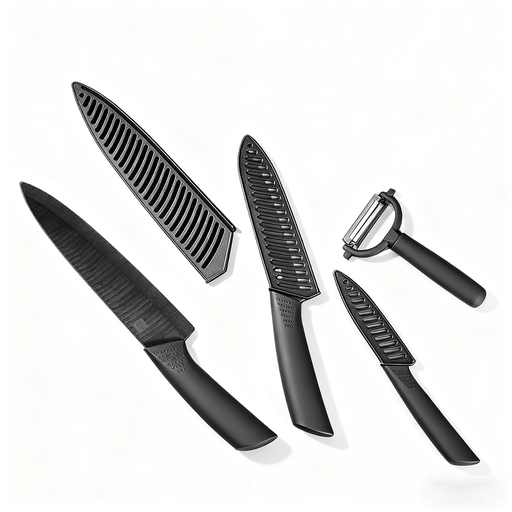
Why We Recommend This Product This set capitalizes on the technological advantages of ceramic blades. According to the manufacturer, the blades are crafted from high-density zirconium oxide, which is compacted using a special sintering process and a vacuum carbon infusion. The result is an extremely hard and sharp blade with an edge of ≤0.04 mm.
Advantages (Pros)
Who It's For For users who place the highest value on a lastingly sharp blade and low weight. It is primarily suitable for slicing fruits, vegetables, and boneless meat. Due to its material properties, contact with hard surfaces and bones should be avoided.
While the featured sets cover a broad range of general kitchen tasks, certain preparations require specialized tools. For example, preparing cheese benefits from blades designed to minimise food from sticking. You can find a selection of such specialized tools in our Cheese Knives category.
1. What should a good starter knife set include? A functional starter set for beginners should include at least one versatile chef's knife (approx. 20 cm blade length) for slicing and chopping, and a smaller paring knife or peeling knife (approx. 8-10 cm blade length) for precision peeling and cutting smaller items.
2. Which material is better: stainless steel or ceramic? There is no single "better" material; the choice depends on the user's priorities. Stainless steel knives are robust, flexible, easy to maintain, and universally applicable. Ceramic knives offer superior, long-lasting sharpness, are lighter, and more hygienic, but they are also more brittle and not suitable for all cutting tasks (e.g., bones).
3. How do you properly care for sharp knives? To maintain the sharpness and lifespan of high-quality knives, hand washing with mild detergent and warm water immediately after use is recommended. Avoid aggressive or abrasive cleaning agents. Use cutting boards made of wood or plastic, as hard materials like glass, stone, or ceramic can damage the blade. Store them safely in a knife block, on a magnetic strip, or with a blade guard to protect the cutting edge.