Craft sellers photographing their products
You want the colour, outline and knit of your gloves to remain clear in your photos. Adobe identifies size, silhouette and colour as details product photos can show.


If you don’t already have a suitable light and want to photograph independently of daylight, a compact continuous-light softbox kit is a natural starting point. If you already have a suitable light, a single light modifier may be all you need. You can check how light positioned to one side brings out the knit, shadows and colour in a test shot: Rollei explains how diffusion softens and spreads light, while Adobe highlights recognisable details such as colour and silhouette in product photography. A photo box is a different type of setup, with limited shooting openings, so it doesn’t offer the same freedom of positioning as a standalone light modifier.
You want the colour, outline and knit of your gloves to remain clear in your photos. Adobe identifies size, silhouette and colour as details product photos can show.
You need to fit your camera, gloves and lighting on a small table. So compare the complete setup, not just the front of the light modifier.
You’re looking for a suitable light modifier and checking the connection, light compatibility, dimensions and contents of your existing kit.
A good fit if: You don’t already have a suitable light and want to take photos without relying on dependable window light.
The trade-off: The lamp and stand are part of the setup and take up space; check exactly what’s included.
A good fit if: You already have a suitable light and a secure way to attach it.
The trade-off: A light modifier doesn’t produce light on its own; the connection and compatibility must match the specific light you’re using.
A good fit if: There’s enough daylight at your table and you’d like to start with a test shot.
The trade-off: Daylight and shadows change. Canon notes that different lighting conditions affect colour reproduction.
A good fit if: Your gloves, background and preferred angle all fit inside the shooting area.
The trade-off: The openings limit where you can position the camera; a photo box isn’t the same as a freely positionable standalone light modifier.
When photographing knitted gloves on a small table, the most important things to check depend on whether you prioritise texture, space, yarn colour or a complete setup that’s ready to use.
| What matters | What to check before buying | Who is this important to? |
|---|---|---|
| Knit texture and shadows | Check whether you can vary the diffusion and light position, then assess the yarn in a test shot. | If I want the knit to remain visible while avoiding harsh shadows, I check the angle and diffusion of the light on the subject. Around 31% of consumers prioritise visible knit texture and controlled shadows. |
| Space for lighting and setup | Measure your table and the clear space beside it; compare the assembled dimensions and depth, and check the stand against your camera position. | On a small photography table, there still needs to be room for the lighting alongside the camera and gloves. Around 25% of consumers put the space needed for the setup first. |
| True-to-life yarn colour | Check the specifications for the specific light and set the white balance using a neutral reference subject. | If the glove colour needs to look consistent across several photos, I look for consistent lighting and check the white balance. Around 25% of consumers prioritise reliable yarn colour reproduction. |
| Completeness and compatibility | Compare what’s included and the connection on the specific version with the light and mount you already own. | If you want to start shooting straight away or reuse existing equipment, you need to distinguish between a kit and a standalone light modifier. Around 19% of consumers first look for a complete or compatible setup. |
The parts list for the amaran Light Box 45x45 includes diffusers, a grid and a carry bag, but no light. A light modifier on its own won’t provide any light.
Compare the full parts list and connection with the equipment you already have.
Depending on your existing setup, you may also need a suitable light, stand or mount.
According to the manufacturer, the amaran Light Box 45x45 is 34,5 cm deep when assembled. A stand or the position of the light may take up extra space.
Allow for the entire setup outside the camera’s frame, not just the illuminated front.
The space needed to position or mount it may extend beyond the table.
A photo box such as NEEWER’s LP40 has an interior space and set openings; a standalone light modifier can be positioned differently.
Check that your gloves, background and preferred overhead angle will fit inside the photo box.
The SF40 is a compact continuous-light softbox kit, while the LP40 is a photo box with built-in lighting.
The Light Box 45x45 is a light modifier for use with a compatible light.
The RA-R4545 mini is a softbox designed for the RC-60 and RC-100 lights specified by the manufacturer.
The 45-cm Quick-Fold softbox with a Bowens mount is a light modifier option for compatible lights.
The SB-FW6060 is a 60 × 60 cm Bowens softbox for use with a suitable light.
The Joybuy products below are LED photo boxes for tabletop photography. They differ from standalone softbox light modifiers, which can be positioned freely.
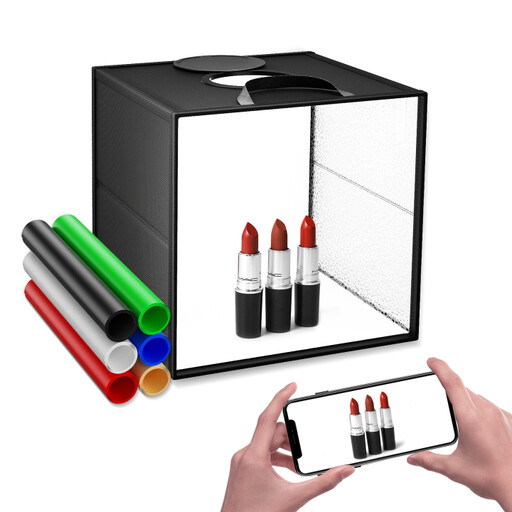 No image available
This compact photo box is an option if your gloves and preferred angle fit within the shooting area.
30 × 30 cm; foldable design; dimmable light; diffuser system; six coloured backgrounds; front and top openings.
Shooting is limited to the provided openings; the box isn’t a freely positionable standalone softbox light modifier.
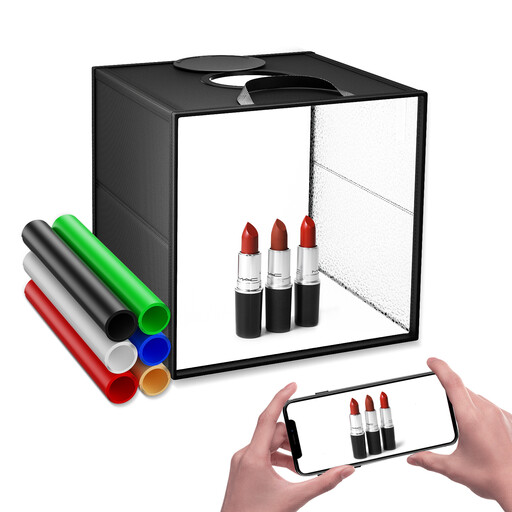 No image available
This foldable photo box is worth considering if you’re looking for a mini studio with built-in lighting for tabletop photography.
120 LED lights; adjustable colour temperature; dimmable light; six backgrounds; front and top shooting openings.
Shooting positions are limited to the openings described; the photo box isn’t a replacement for a freely positionable standalone light modifier.
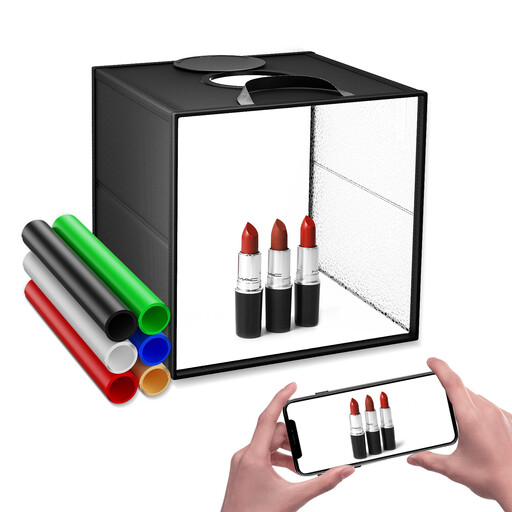 No image available
The built-in lighting and shooting openings are designed for tabletop photography, provided the 40 cm box fits in your available space.
40 cm; 120 LEDs; adjustable colour temperature and brightness; six backgrounds; built-in diffuser cloths; front and top shooting openings.
The photo box needs space for its 40 cm setup and limits camera positioning to the openings provided.
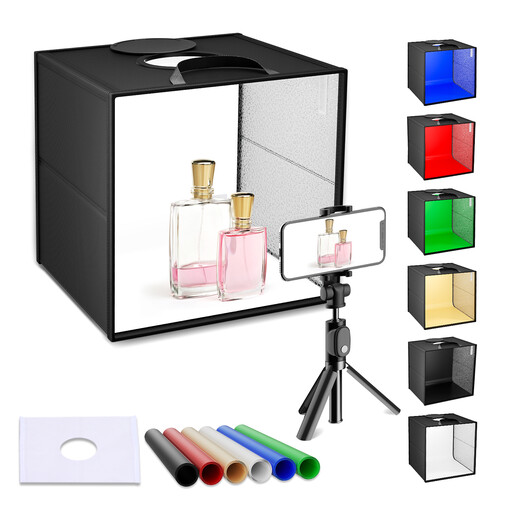 No image available
This is an option for tabletop photography if you’re looking for a photo box with several lighting settings.
Six backgrounds; three light colours; nine brightness levels per mode; built-in LEDs and diffuser cloth; horizontal and top shooting openings.
Shooting is limited to the horizontal and top openings; the box isn’t a freely positionable standalone softbox light modifier.
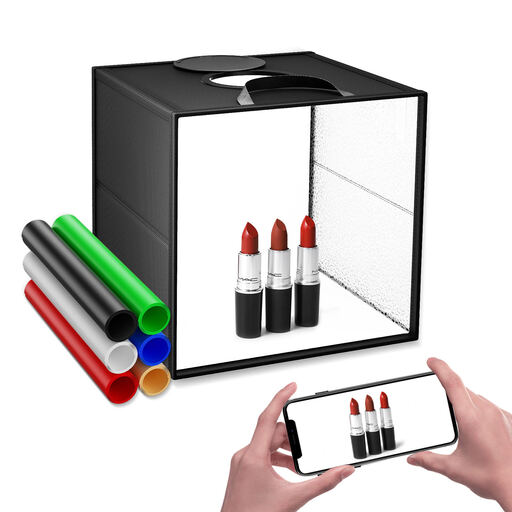 No image available
This foldable mini photo studio is worth considering if its dimensions and shooting angles suit your table.
40 cm; 5600K; 120 dimmable LEDs; three colour temperature modes, each with nine brightness levels; six backgrounds; diffusion cloth; front and top shooting openings.
The 40 cm setup needs sufficient space and offers the shooting openings described, rather than the freedom to position a standalone light modifier.
Start with the light positioned to one side and check the knit in a test shot. If the shadows are too harsh, adjust the diffusion or fill light. If the texture disappears, try a less frontal angle or reduce the fill. This applies general lighting principles; it isn’t a guaranteed result for every type of yarn.
A standalone light modifier only works with a suitable light source and mount. The parts list for the amaran Light Box 45x45 includes diffusers, a grid and a carry bag, but no light. So check that the connection and setup work with the components you already have.
Keep the lighting as consistent as possible and check the white balance using a neutral reference subject. Canon explains that different light sources and daylight conditions can affect the colours captured.
Consumers generally have a 14-day right of withdrawal for online contracts, although there are exceptions and you should check exactly when the withdrawal period starts. Verbraucherzentrale distinguishes this right from the statutory warranty for faulty goods and a voluntary guarantee.
A CE mark is required when EU rules that apply to a specific product call for one. For the Low Voltage Directive, the European Commission lists electrical equipment rated at 50 to 1.000 V AC or 75 to 1.500 V DC. This doesn’t automatically mean every non-electrical softbox light modifier needs a CE mark. A manufacturer’s CE marking declaration is not an independent quality mark.