What should you look for when buying?
For full-glove shots, start by trying your existing device or a standard zoom lens. A suitable macro lens becomes especially useful only when you want individual stitches to take up much more of the frame.
| What you need |
What to check before buying |
Who is it important to? |
| Yarn colour and a white background |
Check whether you can set the white balance for the lighting you use, and review a test shot taken under even lighting. |
If I want to show different yarn colours against a white background that looks neutral, I pay particular attention to the lighting and colour balance. Around 31% of consumers prioritise colour accuracy. |
| Visible stitches and seams |
Compare the magnification ratio, close-focusing capability and mount of the specific lens. Also allow enough room for the lighting. |
If I want individual stitches or seams to look large and clear in the image, the lens matters more to me than a ‘macro’ label on the camera body. Around 31% of consumers prioritise stitch detail. |
| Repeatable shots |
Check that the camera and lens will fit at your planned shooting position, and that you can keep the lighting and white balance consistent across a series. |
If I’m photographing lots of gloves or colour options, I want to be able to repeat the framing and angle from one image to the next. Around 23% of consumers prioritise consistency across a series. |
| An easy start |
Before choosing more equipment, try using your existing device to take both a full-glove shot and a close-up of the detail you want to show. |
If I only photograph full gloves occasionally, I want to find out first whether my existing equipment can achieve the framing I need. Around 15% of consumers prioritise a straightforward set-up. |
Joybuy camera deals
The Joybuy offers below include a digital camera and a mini action camera. For glove details, check whether the specific lens can achieve the framing you want.
 No image available
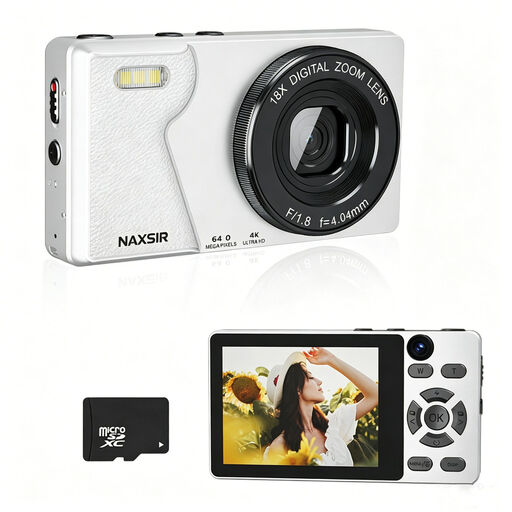
NAXSIR 4K Ultra HD digital camera, 64 MP, 18x digital zoom
If you’re looking for a compact digital camera, you can start by using its stated autofocus to check full-glove shots and your preferred framing.
The product title lists 64 MP photo resolution, 18x digital zoom, autofocus and a 32 GB memory card.
Joybuy
 No image available
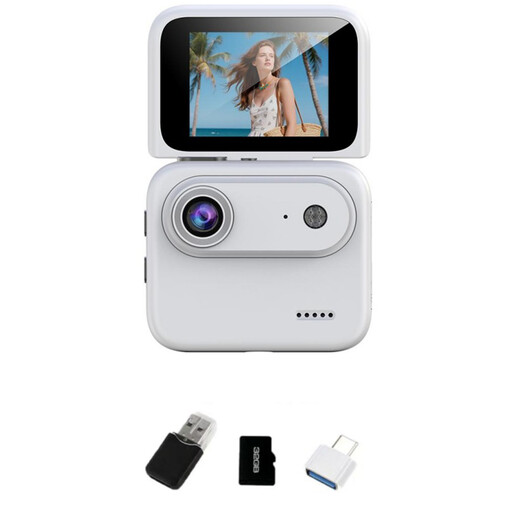
NAXSIR 4K mini action camera, white
If you’re considering a mini camera, first check whether its stated wide-angle lens will suit the framing you want for your gloves.
The product title lists a 32 GB TF card, a 2.0-inch flip screen, a 143° wide-angle lens and built-in image stabilisation.
Joybuy
Frequently asked questions
Do I need a 1:1 macro lens to photograph a whole knitted glove?
Not necessarily. It depends on whether you want the whole glove or a single stitch to fill the frame. First, check what framing your existing lens can achieve. Nikon and Sony’s 1:1 specifications apply to their respective, separately sold macro lenses.
How can I prevent a colour cast when photographing gloves against white?
Use lighting that is as even as possible and check the white balance using a test shot. Nikon recommends setting it before shooting and checking it again if the lighting conditions change. A white surface alone won’t guarantee neutral-looking colours.
What extra equipment costs should I check before buying a camera?
First, check exactly what’s included in the kit and whether you’ll need a separate macro lens for the details you want to capture. The zoom kits described by Canon, Nikon and Sony are not the same as their separately sold macro lenses.
What are my rights if an item is faulty or I want to return it after buying in Germany?
For a typical online distance purchase, Your Europe says you generally have 14 days from delivery to withdraw from the contract; exceptions and possible return costs should be taken into account. This is separate from your statutory rights for faulty goods: the Verbraucherzentrale explains that sellers are generally liable for faults that were present when new goods were delivered for two years. For business purchases, check separately whether consumer purchase rules apply.


