Knitters who want to show the details
If you want to show stitches, needle tips and hand movements from a consistent tabletop angle, focus distance, framing and space for your hands are the key things to consider.


If you mainly want to show your hands and needles, and you’ll have a computer running while you record, a positionable USB document camera is a good place to start. A tilting webcam could also work if you want to switch between your face and the table. If you’d rather record without a computer, consider a camera that records independently, provided its mount and storage suit your setup. What matters is whether the focus and framing work from the distance you can actually manage, and whether your voice is recorded clearly — not just the resolution on the spec sheet.
If you want to show stitches, needle tips and hand movements from a consistent tabletop angle, focus distance, framing and space for your hands are the key things to consider.
When desk space is limited, check whether you can mount the camera without restricting your hands. If you want to switch between your face and your knitting, check the tabletop view from where you’ll be sitting.
If you want to record without relying on a computer, plan the recording method, storage and a secure camera position together.
A good fit if: You mainly want to show your hands and knitting from above, with a suitable computer running. IPEVO says the V4K PRO has an adjustable setup and autofocus from 10 cm.
Consider: The camera and arm need desk space, and the computer is part of the recording setup. IPEVO’s stated maximum capture area doesn’t, on its own, tell you whether every stitch will be clear.
A good fit if: You’re recording on a computer and want to switch between talking to the camera and showing your work. Logitech describes a Show Mode for the Brio 500 and MX Brio.
Consider: The tabletop view you can achieve depends on your monitor position and how the camera is mounted. A clear view of your face doesn’t mean small stitches will be in focus.
A good fit if: You can set up a fixed view of your table on a computer and mount the camera within its focus range. Elgato says the Facecam MK.2 has a 1/4-inch thread and a fixed focus range of 30–120 cm.
Consider: Below 30 cm, your subject is outside the stated focus range. Elgato’s model comparison lists no built-in microphone for the Facecam MK.2.
A good fit if: You don’t want to run a computer during your lesson and can set up a stable position at your table. Sony gives the ZV-1F’s focus range as starting at around 5 cm from the front of the lens.
Consider: The ZV-1F has no optical zoom. Check that the framing, mount, power supply and storage suit your setup.
A good fit if: You want moving shots as well as a fixed view of your knitting. DJI says the Osmo Pocket 3 has a mechanical gimbal and a focus range starting at 0.2 m.
Consider: A gimbal isn’t a substitute for a secure mount for a permanent overhead view. You’ll also need a suitable microSD card for recording.
| What you need | What to check before buying | Who is this important for? |
|---|---|---|
| Showing stitches and hand movements | Check the focus range and framing from your planned camera height; make sure both hands stay in shot. | If I want to show stitches and needle movements at the same time, I look for good focus and a frame that includes everything. Around 36% of consumers put a detailed view first. |
| Positioning a camera in a small space | Check the space available and how you can mount the camera on your own desk; preview the view from your seat. | At a small desk, I want to position the camera so it doesn’t get in the way of my hands or block my view of my knitting. Around 29% of consumers prioritise a space-saving setup. |
| Recording without a computer | Check that the recording method, storage requirements and mount will work for the whole lesson. | If I don’t want a PC running during the lesson, I want to be able to plan the recording and a secure position without one. Around 21% of consumers prioritise recording without a PC. |
| Taking your voice and room lighting into account | Record a short test using your usual speaking voice and lighting; check that your work surface is clearly visible. | When I’m explaining something, I want my voice to be clear from the camera’s position and the yarn to show up in the available light. Around 14% of consumers put voice and lighting first. |
High resolution alone won’t tell you whether the needle tips will be in focus or whether both hands will stay in shot.
Compare the focus range and framing you can achieve from the camera’s actual position.
Show Mode can display objects on a table, but the angle depends on how far you can tilt the monitor and camera.
Check the preview to make sure you can see your knitting and both hands from that position.
You may need an additional suitable mount to get the view you want.
Elgato’s model comparison lists no built-in microphone for the Facecam MK.2. For the IPEVO V4K PRO, the manufacturer gives a recommended speaking distance for its built-in microphone.
Check the audio features of the exact model and test your voice from the camera’s planned position.
If the model has no microphone, you may need to plan for a separate audio solution.
USB document cameras for a positionable view of your work surface.
Webcams for computer-based presentations, with the option to switch to a tabletop view.
Compact camera for recording independently.
Computer-based webcam for a dedicated recording setup.
Compact camera for recording independently and capturing additional moving shots.
The Joybuy products below are USB webcams or conference cameras designed to work with a computer. For knitting lessons, check whether you can position the camera where you plan to use it, and whether the focus, framing and audio will work for your lesson.
 No image available
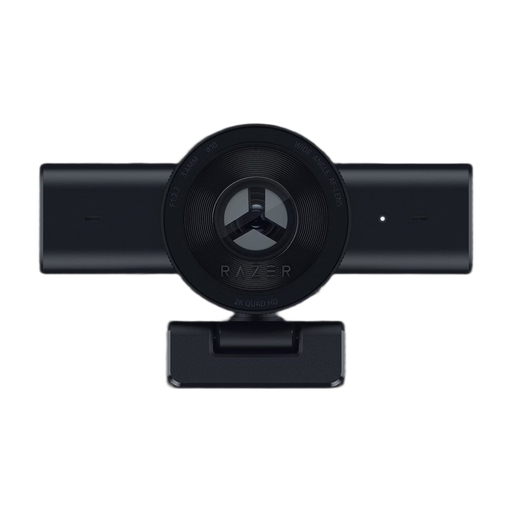
For computer-based recording when an adjustable angle is useful.
1080p at 30 fps, USB connection and flexible built-in stand.
 No image available
For computer-based video recording when you need autofocus and a built-in microphone.
1080p at 60 fps, autofocus, wide-angle lens, privacy shutter and built-in microphone.
As described, it connects to a computer via USB.
 No image available
For PC recording if you’re considering a webcam with autofocus and two built-in microphones.
Sony IMX363 sensor, PDAF autofocus, 75° field of view, two microphones, and USB-A and USB-C.
The product title lists PC use.
 No image available
For computer-based video recording when an adjustable desk stand is useful.
1080p at 30 fps, autofocus, stereo microphone and an included stand that extends to 18,5 cm.
It connects to a compatible computer and records via USB.
 No image available
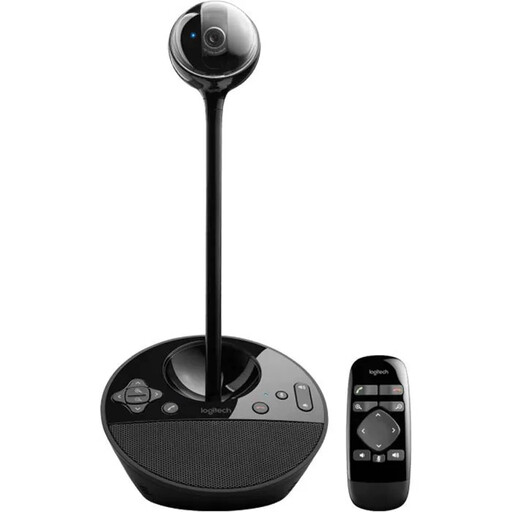
For computer-based recording when you need to adjust the camera angle.
1080p, autofocus, pan, tilt and zoom functions, plus a speaker with microphone; the stated microphone range is up to 2,4 m.
The product is described as a conference camera and connects to a computer via USB.
No, there’s no general requirement to use 4K. First, check whether stitches and hand movements are clear in the finished video at your actual camera distance and in your usual lighting. Focus range and capture area are separate things to consider.
Mark where you’ll place your knitting, position the camera so both hands stay in shot, then test the focus and audio with a short recording before your lesson. A document camera can be positioned for this purpose; with a webcam, the angle you can achieve depends on the mount and monitor position.
Depending on how you record, you may need a mount, a suitable microphone or a memory card. For a consumer purchase, the statutory rights you have against the seller are distinct from a voluntary guarantee, as explained by the Verbraucherzentrale. For distance purchases from traders, EU rules generally provide a 14-day withdrawal period from delivery, although exceptions and conditions apply, as explained by the European Union’s Your Europe website.
You can’t assume that you have blanket permission to record other people who can be recognised or heard. If personal data is being processed, you need an appropriate legal basis; the Federal Commissioner for Data Protection and Freedom of Information lists valid consent as one possible basis. Where possible, frame the picture and sound to capture only your lesson, and check the details of recording and publishing before including anyone else.