If you want to count and check your rows directly on the device, a programmable keypad or a microcomputer with a display is a good starting point. For writing code and project notes on a PC, a standard keyboard is a better fit. Either way, you’ll need to implement the memory logic yourself and test whether the count is restored after a power interruption: flash memory or a card slot alone won’t do that for you.
Who are the different set-ups suitable for?
Makers building a standalone counter
You want to record rows using keys on the device, check the count there and retrieve it after switching off. Memory and a display give you the basis for this, but they don’t provide a ready-made counting function. Adafruit and M5Stack describe components for this kind of device.
Makers using a separate display
You want to use a small keypad and add your own display, or use a connected computer for this. Check what’s included and factor in the extra components you’ll need. Pimoroni describes the Keybow 2040 as a programmable keypad.
PC developers
You need a keyboard for code and project notes, while the programme, display and counter data are handled by a computer or other hardware. Akko offers, among other options, keyboards with an ISO-DE layout.
What should you consider when choosing?
Macro pad with display
A good fit if: You want to use your own counting keys and check the count directly on the device. According to Adafruit, the MacroPad RP2040 provides twelve switch positions, an OLED and flash memory as a basis for development.
Bear in mind: You’ll need to add the programme and memory logic yourself. For a file-based CircuitPython solution, you’ll need to configure write access.
Microcomputer with keyboard and screen
A good fit if: You want to enter text or project updates directly on the device, as well as count rows. M5Stack describes the original Cardputer as having a keyboard, screen, battery and microSD slot.
Bear in mind: It doesn’t come with a counter app already set up. You’ll need to programme and test how data is saved to a card and restored.
Keypad with separate display
A good fit if: You want to build the display yourself or use a computer as the screen. Pimoroni describes the Keybow 2040 as a programmable 16-key keypad with USB-C.
Bear in mind: The product specification referenced doesn’t mention an integrated counter display. The barebones version doesn’t include switches or keycaps.
Standard PC keyboard
A good fit if: You mainly write code and project notes on your computer. Akko lists an ISO-DE/Nordic version of the Black & Gold 3084B Plus.
Bear in mind: A PC keyboard is no substitute for a standalone counter, its display or its local memory logic.
| What you need |
What to look for when buying |
Who is it important to? |
| Counter value retained after a power interruption |
Check how your set-up saves the count and reloads it on restart; test both using a known count. |
If you want the count to remain after switching off, check the entire data storage process. For around 38% of consumers, keeping data stored locally is the top priority. |
| Entering and viewing the count on the device |
Check where the count is displayed, and inspect the keys, display and power supply for the specific model. |
If you want to count and check rows while knitting without a PC, you’ll need both on the device. For around 31% of consumers, this direct control is the main priority. |
| Code and project notes on a PC |
Check that the keyboard has the layout you want; plan the counting function, display and data storage separately. |
If you mainly write code and notes on a computer, the keyboard is an input device for development. For around 16% of consumers, using it with a PC takes priority. |
| Extra parts and assembly |
Compare what’s included in the exact version with the switches, keycaps, cables and planned display you’ll need. |
If you want to source and assemble as few parts as possible, check the kit carefully before buying. For around 15% of consumers, keeping assembly to a minimum is most important. |
Which mistakes should you avoid?
-
Assuming flash memory automatically saves your data
Having memory available doesn’t mean the counter app actually saves the count and reloads it next time you start the device.
Test a real power interruption using a known count, then check that the count is restored.
-
Treating dynamic macros as permanent counter data
QMK documents that dynamic macros can be lost when the keyboard is disconnected or restarted.
Plan for a specifically persistent storage solution instead of keeping the count only in a macro assignment.
-
Assuming barebones and complete versions are the same
According to Pimoroni, the barebones Keybow 2040 doesn’t include switches or keycaps.
Check the exact version before buying and make sure its contents suit your set-up.
Which brands are relevant to your set-up?
Adafruit
Adafruit describes the MacroPad RP2040 as a basis for a compact keypad with a custom display and flash memory.
- According to the manufacturer, it has twelve switch positions, a rotary encoder and CircuitPython support.
- The counting programme and reliable data saving aren’t provided out of the box. For file-based CircuitPython storage, you’ll need to configure write access to the file system.
M5Stack
M5Stack describes the original Cardputer as a portable microcomputer with a keyboard, screen, battery and microSD slot.
- According to the manufacturer, 56 keys and a 1.14-inch screen let you enter and view information on the device.
- The card slot alone won’t save a counter value; other Cardputer versions may have different components.
Pimoroni
Pimoroni describes the Keybow 2040 as a programmable keypad for set-ups where the display is separate.
- The manufacturer lists USB-C, hot-swap functionality and versions supplied with switches.
- The barebones version is sold without switches or keycaps; the referenced specification doesn’t mention an integrated display.
Akko
Akko lists the Black & Gold 3084B Plus ISO DE/Nordic as a keyboard for working on a PC.
- According to the manufacturer, the documented version has an ISO layout and several connection options.
- A PC keyboard won’t provide its own counter display or memory logic. Check the layout and switch version of the specific listing.
Keyboards for PC development
The following Joybuy products are keyboards for writing code and project notes on a PC. They aren’t standalone row counters; the counting programme, display and local storage need to be set up on the PC or with other hardware.
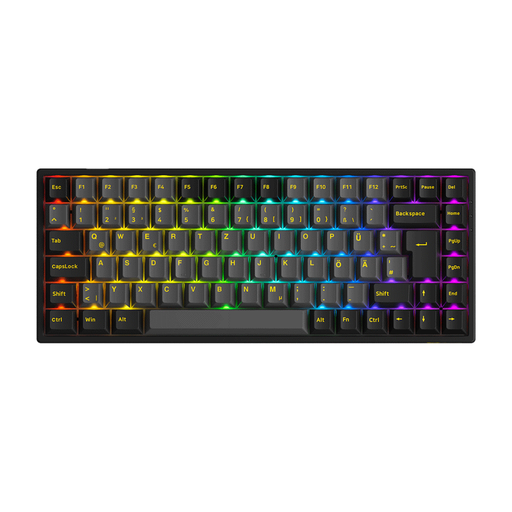 Image unavailable
Akko 3084B Plus, 75%, ISO-DE, V3 Pro Cream Blue
For writing code and project notes on a PC with an ISO-DE layout; not a standalone row counter.
Tri-mode connection: Bluetooth, 2.4G or USB-C; hot-swap and RGB, according to the product title.
View at Joybuy
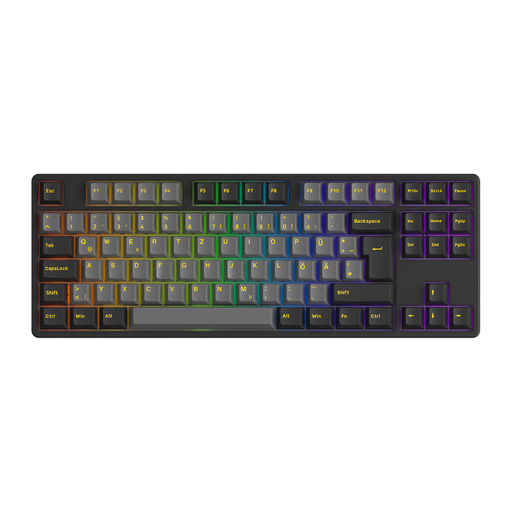 Image unavailable
Akko 5087S V1 TKL, ISO-DE QWERTZ, V3 Pro Cream Yellow
For PC development with an ISO-DE QWERTZ layout; you’ll need to plan a separate display and local memory logic for the counter.
Wired; hot-swap and RGB, according to the product title.
View at Joybuy
 Image unavailable
Ticktype EVO75 Custom, ISO-DE, Tri-Mode, Creamy Rye
For writing code and project notes on a PC with an ISO-DE layout; not listed as a standalone row counter.
According to the product title, it has an aluminium case, hot-swap functionality, VIA compatibility and an 8000-mAh battery.
View at Joybuy
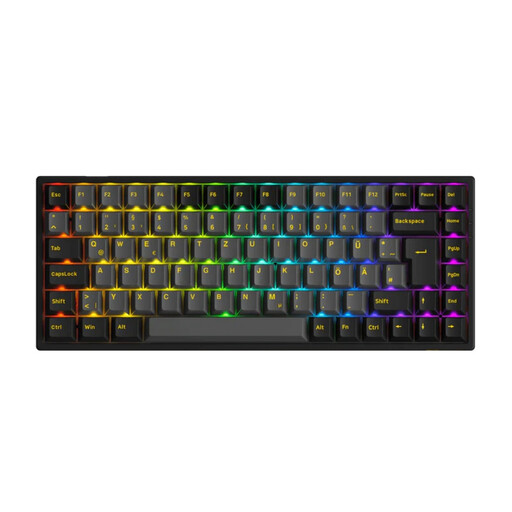 Image unavailable
Akko 3084B Plus, 75%, ISO-DE, V3 Pro Cream Yellow
For PC use with an ISO-DE layout; you’ll need a separate solution for the counting programme, display and local storage.
Tri-mode connection: Bluetooth, 2.4G or USB-C; hot-swap and RGB, according to the product title.
View at Joybuy
Frequently asked questions
Does a programmable keyboard automatically save the row count?
No. Programmable keys and non-volatile memory on their own won’t automatically save your row count. Your programme needs to store the count and reload it when the device starts. QMK distinguishes persistent EEPROM settings from dynamic macros, which can be lost after a restart.
What should I know about using a CircuitPython file to store the count?
Adafruit describes a boot.py configuration that allows CircuitPython to write data. A computer and the device can’t both write to the CIRCUITPY file system at the same time. Test your specific implementation and back up important project data separately.
What additional costs and rights should I consider when buying in Germany?
A barebones keypad may require you to buy switches and keycaps separately; you’ll need a compatible card for a microSD solution. According to Your Europe, purchases from a trader in the EU generally come with at least two years of legal protection against faulty goods. This is separate from any voluntary manufacturer’s warranty. Online distance purchases generally come with a 14-day right to cancel, subject to legal exceptions.
What should I check when buying electrical or wireless hardware?
The German Federal Network Agency recommends checking details such as the product identity, manufacturer information, CE marking, required German-language information and the declaration of conformity. This guidance doesn’t confirm that any specific model mentioned here complies with the requirements.


