
Lieferung heute & morgen

Qualitätsgarantie

Willkommens-Angebote freischalten: KOSTENLOSE Lieferung | Bis zu 80 % RABATT | Kostenlose 30-Tage-JoyPlus-Testphase
App herunterladen
Konjac jelly has established itself as a popular, light snack, often promoted as a low-calorie alternative to traditional sweets. But not every product lives up to its promise. Many consumers find after purchasing that their supposedly healthy snack is full of hidden sugars or lacks the expected, unique texture.
As your Joybuy Product Recommendation Officer, I'll help you identify the typical pitfalls of buying these products. This guide will show you which objective criteria to look for to find a high-quality konjac jelly or grass jelly that meets your expectations.
Before you decide on a product, you should be aware of these common issues that often lead to disappointment:
To avoid these pitfalls, focus on the following verifiable parameters. These will help you objectively assess a product's quality.
A crucial quality indicator for an authentic fruit jelly snack is the percentage of real fruit pulp and juice. Look for products that clearly declare this value. A fruit content of ≥40% is a good indicator that the flavour comes primarily from the fruit itself and not from artificial flavours. The ingredients list should show fruit purée or pulp near the top.
The nutrition facts panel is your most important tool. Compare the total calorie content per 100 grams. A truly low-calorie snack should be significantly below the value of conventional sweets. Also, check which sweeteners are used. Products that avoid sugar or fructose-glucose syrup and instead use low-calorie alternatives like erythritol are often the better choice for a health-conscious diet. This is also an important point if you are looking for a vegan jelly, as the formula here often relies on simple ingredients from the start.
The basis for the unique texture is konjac flour. A sufficient amount ensures the desired firm bite. The packaging also provides clues about its intended use. Resealable squeeze pouches are ideal as an on-the-go snack. Firm cups, on the other hand, are better as a base for a dessert you prepare at home, as is the case with many Asian sweets. If you are specifically looking to buy grass jelly, you will usually find it in cups, as it is traditionally eaten with a spoon as a dessert.
Here are some recommendations tailored to different preferences and use cases, taking the above criteria into account.
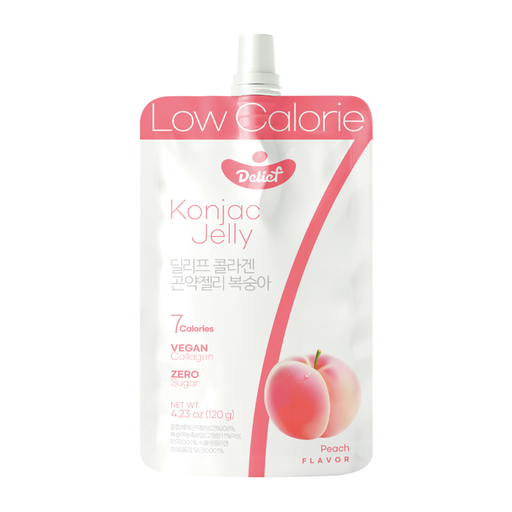
Why This Fits Their Persona: Ideal for anyone looking for an extremely low-calorie snack. The convenient squeeze tube fits in any bag and is perfect for a small craving at the office or after a workout, without burdening your calorie count.
This jelly consistently bypasses the sugar trap by using sweeteners like erythritol (E968) and sucralose (E955). The result is just 5 kcal per 100 g.
Extremely low-calorie (5 kcal/100g). Vegan formula. Convenient on-the-go packaging.
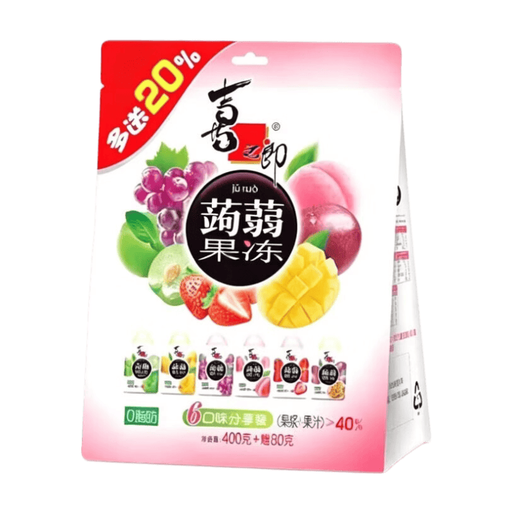
Why This Fits Their Persona: Perfect for those who value authentic taste and variety. The large pack with six different flavours is ideal for sharing with family and friends or for discovering a new taste yourself.
This product tackles the pitfall of artificial flavour with a clearly declared fruit content of ≥40%, consisting of real fruit pulp and juice.
High, verifiable fruit content. Six different flavours in one pack (Peach, Grape, Mango, Strawberry, Passion Fruit, Green Plum).
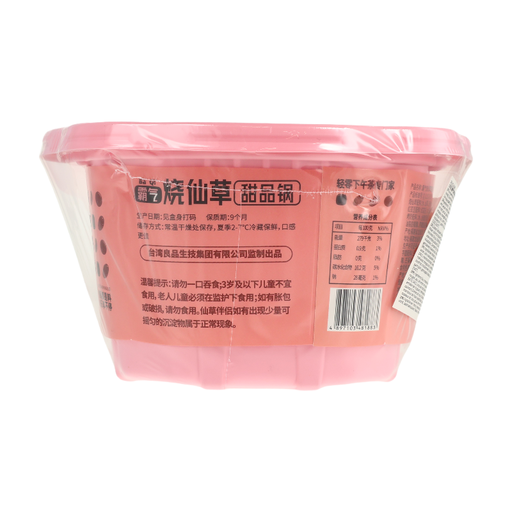
Why This Fits Their Persona: For anyone who wants to look beyond fruity konjac jellies and try an authentic Asian dessert. This grass jelly is a versatile base for your own dessert creations.
This product offers a clear alternative to often overly sweetened fruit jellies. It delivers an authentic, slightly herbal taste based on real grass jelly powder (Mesona Chinensis).
Traditional Chinese dessert, ready to eat. Versatile for combining with fruit, syrup, or condensed milk. Refreshing and light.
We have compiled a complete, up-to-date list of products that meet these strict selection criteria.
The main difference lies in the gelling agent and the resulting texture. Konjac jelly is made from the flour of the konjac root, which gives it a characteristic firm, elastic, and chewy consistency. Conventional fruit jelly from the supermarket is usually based on gelatine (animal-based) or pectin (plant-based) and has a softer, often wobbly structure.
Unopened packages should be stored in a cool, dry place away from direct sunlight. After opening, especially with larger packs or cups, it is advisable to store the product in the refrigerator and consume it within a short period, often within 24 hours. Always follow the instructions on the packaging. For the best taste, refrigerated storage is often recommended.
In most cases, yes. The konjac flour itself is purely plant-based. Therefore, a vegan jelly made from konjac is a common option. However, it is essential to check the ingredients list carefully. Some products might contain other, non-vegan gelling agents or additives like dairy products in certain flavours. Products explicitly labelled as "vegan" offer the most certainty here.