
Lieferung heute & morgen

Qualitätsgarantie

Willkommens-Angebote freischalten: KOSTENLOSE Lieferung | Bis zu 80 % RABATT | Kostenlose 30-Tage-JoyPlus-Testphase
App herunterladen
Konjac jelly, often sold in convenient squeeze pouches, has evolved from a niche product into a mainstream snack. Whether you're looking for a low-calorie treat, a Korean dessert, or a Japanese snack, the selection is constantly expanding. However, this growing variety can also lead to confusion, as not every product delivers on its promises.
This guide will help you identify the key features and avoid common purchasing mistakes. We'll show you what to look for when making your selection to find a product that meets your expectations for taste, ingredients, and nutritional value.
Before making a decision, it's important to question common marketing claims. Many consumers buy products that later turn out to be unsuitable for their needs.
To make the right choice, you should focus on objective and verifiable product characteristics. The following three parameters are crucial for the quality and suitability of a jelly snack.
The composition is the most important indicator of quality. Pay close attention to the order of the ingredients.
The characteristic texture of Asian jelly is achieved using various gelling agents.
Always analyse the nutrition table in the context of the serving size. A low-calorie snack should ideally be under 20 kcal per serving. Compare the energy content (in kJ and kcal) and the carbohydrate and sugar content for the entire package to make an informed decision.
Instead of making a one-size-fits-all recommendation, we have selected products for different needs and preferences.
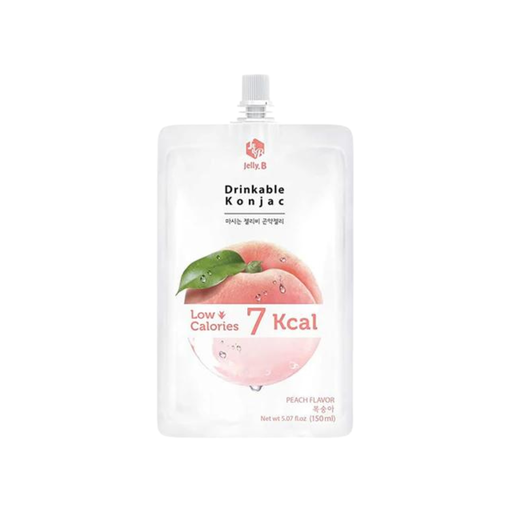
Why This Fits Their Persona: Ideal for anyone looking for a sweet, guilt-free snack. This Korean dessert in a squeeze pouch is perfect for your handbag or as a light reward after a workout.
This product consistently avoids the "sugar-free" trap. According to the manufacturer, it contains only 7 calories per 150 ml serving and is sweetened with erythritol, meaning it has no added sugar.
Extremely low in calories; convenient, resealable pouch; no added sugar.
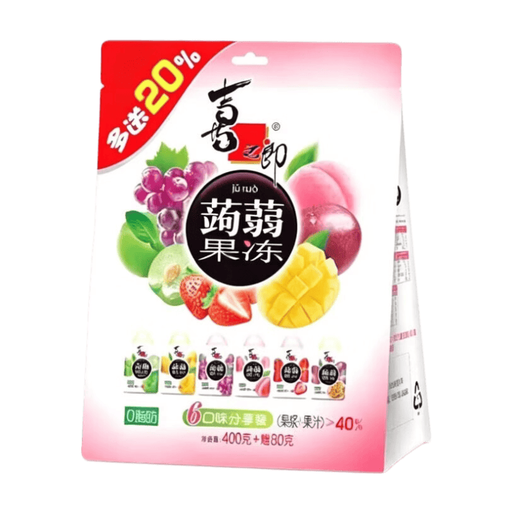
Why This Fits Their Persona: For those who prioritise an authentic and intense fruit flavour over the lowest possible calorie count. This pack offers a variety of flavours to try and share.
This product avoids the misleading fruit content trap with a clear declaration: according to the manufacturer, the fruit juice content is ≥40%, which ensures a natural and full-bodied taste.
High fruit content for authentic flavour; contains real fruit pulp; variety pack with six different flavours.
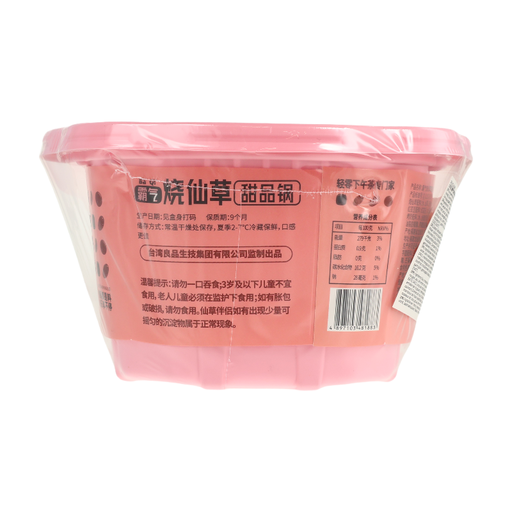
Why This Fits Their Persona: For anyone seeking authentic Asian jelly and wanting to look beyond standard fruit jellies. This grass jelly is a versatile base for your own dessert creations.
This product clearly positions itself as a traditional dessert, not a low-calorie fruit snack. It bypasses the typical traps by focusing on an authentic, slightly bitter taste rather than artificial sweetness.
Authentic, traditional flavour; versatile as an ingredient for desserts and drinks (e.g., bubble tea); ready to eat.
We have compiled a complete, up-to-date list of products that fully meet these strict selection criteria.
Most konjac jellies in squeeze pouches are ready to eat. It is recommended to knead the pouch slightly before opening to loosen the jelly. Due to its firm consistency, it can be a choking hazard, especially for children. Chew each bite carefully and do not swallow it whole. Jellies from cups, like grass jelly or nata de coco, can be diced and added to desserts, salads, or drinks.
Konjac flour is purely plant-based, so most konjac jellies are vegan by default. However, it is important to check the entire ingredient list. Some products may contain non-vegan additives, such as the colouring carmine (E120), which is derived from insects. Many manufacturers, such as Jelly.B or Delief, explicitly label their products as vegan.
While some large supermarkets carry a limited selection, specialised online retailers like Joybuy offer a much wider variety. There, you can specifically search for konjac jelly, grass jelly, or nata de coco and find products from Japan, Korea, and other Asian countries delivered directly to your door. This makes it easier to compare brands like Jelly B and Shimonita.