
Lieferung heute & morgen

Qualitätsgarantie

Willkommens-Angebote freischalten: KOSTENLOSE Lieferung | Bis zu 80 % RABATT | Kostenlose 30-Tage-JoyPlus-Testphase
App herunterladen
Konjac jelly can be a practical alternative to traditional sweets: it is ready to eat, easy to take with you on the go and has an elastic, slightly chewy texture. At the same time, products vary considerably in terms of their recipe, energy content, fruit content, origin and packaging.
Anyone who focuses only on terms such as “low calorie”, “vegan” or “Japanese” may overlook important details. The following criteria will help you choose the right konjac jelly snack for the office, travelling, everyday life or a little dessert.
Nutritional values should always be considered per 100 grams, rather than per serving alone. A product can be fat-free and still contain comparatively high levels of carbohydrates or sugar. According to the product information, for example, TARAMI Oishii Konjac Jelly Muscat contains 54 kcal and 11.5 g of sugar per 100 g. TARAMI Oishii Konjac Jelly Grape contains 66 kcal and 14.1 g of sugar per 100 g.
Other products use sweeteners: Delief Vegan Collagen Konjac Jelly Lychee and the Delief varieties with mango, peach or green grape are listed in the product description as containing 5 kcal per 100 g. Their recipes include E955 and E968, among other ingredients. If you want to reduce your sugar intake, you should therefore check the full ingredients list and nutritional table.
An Asian jelly snack may come from Japan, China, Korea or another country of production. This is not a quality judgement, but verifiable information about its origin. According to the product data, the TARAMI and Shimonita products in this selection come from Japan. The Cool Strong varieties list China as their country of origin, while the Delief products are associated with Korea.
Fruit content also varies. Depending on the variety, Cool Strong Mango, Red Grape, Strawberry and Peach specify a fruit or juice content of at least 25 or 40 per cent. In other products, the concentrate content is significantly lower. Checking the quantitative ingredient declaration helps prevent unrealistic expectations about the flavour.
Konjac jelly should not be consumed like a drink. Several product descriptions include a warning about the risk of choking. The jelly should be eaten slowly and chewed carefully; it should not be swallowed whole. Depending on the packaging and the manufacturer’s instructions, the product may not be suitable for small children. The lid should not be put in the mouth either.
For a calorie-conscious snack, at least three values are relevant:
“Fat-free snack” and “low-calorie snack” are therefore not complete descriptions of a recipe. Anyone wanting to assess the sweetness more accurately should consider sugar, carbohydrates and ingredients together.
Konjac powder provides the distinctive elastic texture. However, the proportion is not the same in every product. Cool Strong specifies at least 0.16 per cent konjac powder, while TARAMI Oishii lists 0.04 or 0.05 per cent in its ingredients. The gel structure is also created with substances such as xanthan gum or carrageenan.
For fans of chewy jelly, the texture description is important: terms such as “elastic”, “soft”, “smooth” or “chewable” provide an initial guide. The way the texture is experienced also depends on the temperature and the shape of the packaging. Some varieties are particularly refreshing when chilled.
“Vegan” should refer to the declaration for the specific product. The Delief varieties are labelled as vegan and, according to the product information, contain plant-based “collagen” from carrots. TARAMI Oishii does not list any of the 14 major EU allergens in its recipe; at the same time, the product information warns that unintended traces may be present.
If you have specific dietary requirements, you should therefore:
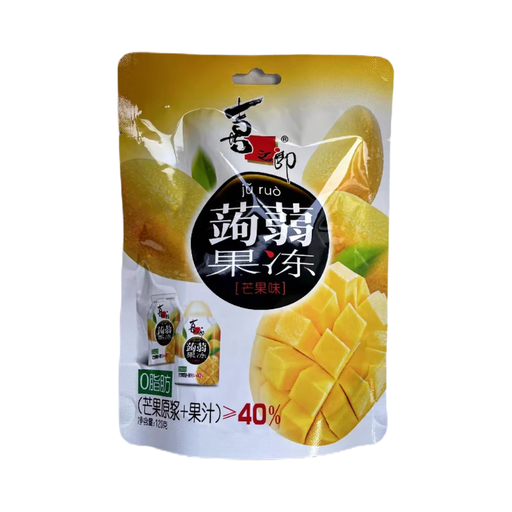
Why this product suits this profile: The 120 g pack is a manageable size for trying konjac jelly for the first time. According to the product information, mango pulp and apple juice are combined with at least 40 per cent fruit juice.
The fruit content is clearly specified, rather than the product simply being promoted with a general fruit flavour. Energy and fat are stated per 100 g: 111 kcal and 0 g of fat.
At least 40 per cent fruit or juice content according to the product data; ready to eat and suitable for immediate consumption after opening.
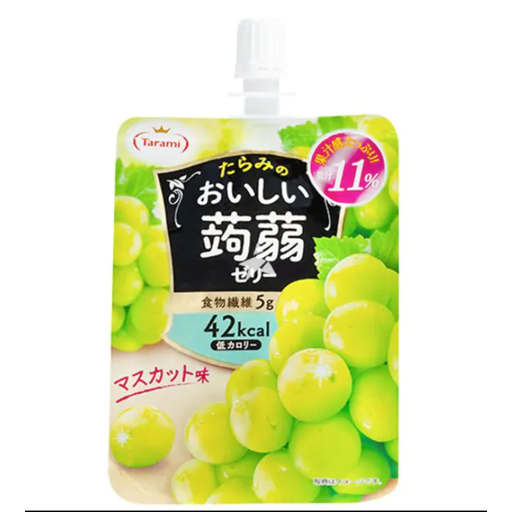
Why this product suits this profile: Its Japanese origin, 150 g pack and detailed ingredients and nutritional declaration make an objective comparison easier.
The “Made in Japan” statement is supported by specific product data. Sugar, fibre, fruit juice concentrate and konjac powder are clearly listed in the ingredients.
54 kcal, 0 g of fat and 1.2 g of fibre per 100 g according to the product information; muscat flavour and a lightly elastic texture.
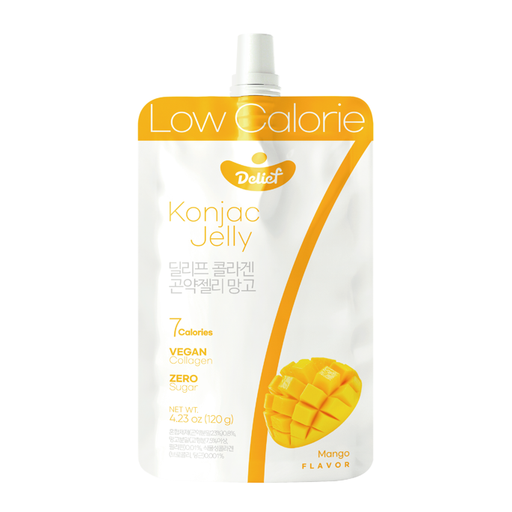
Why this product suits this profile: Its vegan labelling and stated energy content of 5 kcal per 100 g make this variety appealing to people who want to compare ingredients and nutritional values carefully.
The “vegan” label is supported by an ingredients list and a named responsible company. Mango concentrate and sweeteners are listed separately.
Vegan according to the product declaration, with 0 g of fat and 5 kcal per 100 g according to the nutritional information; ready to eat straight from the packaging.
We have put together a complete, regularly updated list of products that fully meet these strict selection criteria and the safety regulations applicable in the EU.
The selection extends beyond mango jelly. For fruity varieties, you can choose from strawberry jelly, grape jelly and peach jelly, among others. TARAMI Oishii is available, for example, in muscat, grape and strawberry flavours. Shimonita also offers matcha, mango, peach and muscat. If you prefer a sweet and tart flavour profile, matcha jelly or muscat jelly may be worth considering.
For enjoying on the go, individual packs weighing between 106 and 150 g are convenient. A 200 g pack such as WANT WANT Konjac Jelly Apple or Strawberry is more suitable for enjoying over a longer period or sharing. Once opened, follow the relevant storage instructions; for products that require refrigeration, consume the remainder promptly.
Some varieties are explicitly labelled as vegan, including several Delief products. Other products are free from the 14 major EU allergens according to their ingredients list, but do not necessarily carry the same vegan labelling. The current packaging is always the deciding source of information.
The best-before date is shown on the packaging. TARAMI Oishii and some Shimonita products are described as having a total shelf life of around twelve months from production. Depending on the product, they should be stored in a cool, dry place or at room temperature, protected from sunlight and heat.
The jelly is generally ready to eat straight away. Open the packaging, eat slowly and chew thoroughly. The product should not be swallowed whole; the lid and sealing film should not be put in the mouth. The instructions on the individual pack take precedence.