
Lieferung heute & morgen

Qualitätsgarantie

Willkommens-Angebote freischalten: KOSTENLOSE Lieferung | Bis zu 80 % RABATT | Kostenlose 30-Tage-JoyPlus-Testphase
App herunterladen
Pasta is a staple in many diets, but it often seems unsuitable for those following a carb-conscious or calorie-reduced eating plan. Anyone adhering to a low-carb or keto diet, seeking options for weight management, or needing gluten-free pasta faces a challenge. Konjac noodles, also known as shirataki noodles, offer a compelling alternative.
This article serves as a guide. It explains the key features of konjac noodles and introduces various types to provide you with an objective basis for your purchasing decision.
The range of konjac products is growing. To make the right choice, three criteria are particularly important: composition, nutritional information, and preparation instructions.
The foundation of konjac noodles is flour from the konjac root, which is rich in the dietary fibre glucomannan. However, there are differences in the recipes that affect texture and taste.
The main advantage of carb-free noodles lies in their nutritional profile. Pay close attention to the values per 100 grams.
Traditional shirataki noodles are packaged in a liquid that can have a slight fishy odour. This smell comes from the preservation process and is harmless. It can be completely removed with proper preparation:
Some newer products, especially blends, are already more odour-neutral and require less intensive rinsing.
Based on objective product characteristics, we have compiled a selection of different konjac noodle varieties.
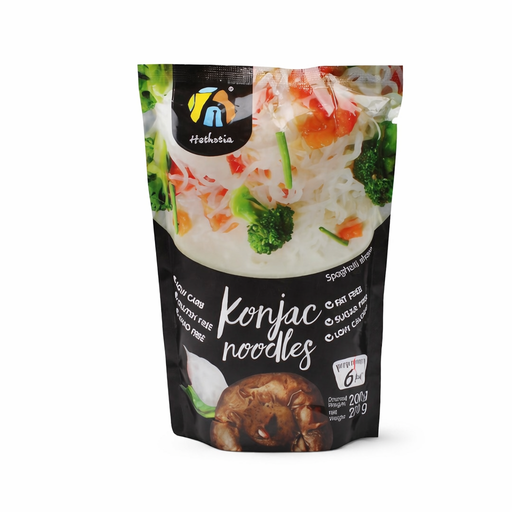
What makes this product stand out This spaghetti variant from Hethstia uses a purist recipe of water, konjac powder, and citric acid. With only 6 kcal and 0 g of net carbs per 100 g (cooked), it is one of the lowest-calorie options on the market. The noodles are fat-free, sugar-free, and vegan.
Advantages:
Who is it for? This product is perfect for individuals looking for the purest and most calorie-free pasta alternative possible. It is excellently suited for strict diet plans where every calorie counts.
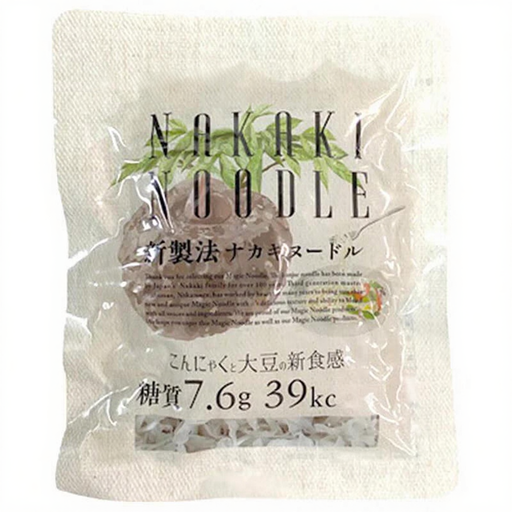
What makes this product stand out Nakaki's noodles combine konjac flour with soy powder. According to the manufacturer, this blend results in a texture closer to wheat noodles and reduces the typical konjac odour. Although marketed as "0 kcal," the nutrition label indicates a small amount of carbohydrates (0.8 g / 100 g), which is energetically negligible.
Advantages:
Who is it for? These noodles are a great choice for beginners or those sensitive to the smell or texture of pure konjac noodles. Note: Contains soy and is therefore unsuitable for those with allergies.
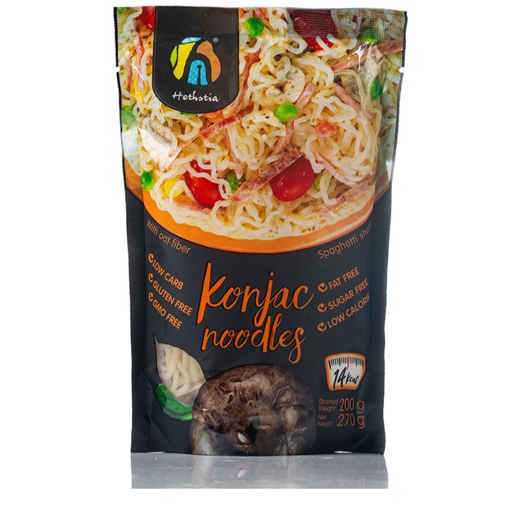
What makes this product stand out This variant from Hethstia adds oat powder to the konjac base. The result is a noodle with a slightly softer consistency. At 14 kcal per 100 g, it is still extremely low in calories but offers a different mouthfeel due to the oat component.
Advantages:
Who is it for? Ideal for anyone who prefers a vegan noodle with a softer, less firm texture. It represents a good compromise between the properties of pure konjac noodles and the familiar feel of pasta.
If the products presented here don't exactly match what you're looking for, or if you're seeking other noodle shapes like penne, fettuccine, or rice alternatives, you can find a wider selection in our main category.
Discover All Carb-Free Noodles
Konjac noodles are naturally flavour-neutral. Their strength lies in their ability to absorb the flavours of sauces, spices, and other ingredients they are combined with. Their texture is their most distinctive feature: depending on the product, it is firm, elastic, and slightly gelatinous.
Konjac noodles can be a useful part of a balanced diet, especially when the goal is to reduce calories or carbohydrates. They are virtually free of fat, sugar, and net carbs. Their high content of the soluble fibre glucomannan can contribute to satiety. However, they provide few vitamins or minerals and should therefore always be combined with nutrient-rich foods like vegetables, lean protein, or healthy fats.
Proper preparation is simple and crucial for the best eating experience. The standard process involves three steps: