
Lieferung heute & morgen

Qualitätsgarantie

Willkommens-Angebote freischalten: KOSTENLOSE Lieferung | Bis zu 80 % RABATT | Kostenlose 30-Tage-JoyPlus-Testphase
App herunterladen
Korean face masks have become part of many German skincare routines. However, sheet masks, hydrogel face masks and gel masks differ considerably in material, application time, ingredients and cost per use. If you focus only on terms such as “Glow”, “Collagen” or “Pore Care”, you can quickly end up buying a product that does not suit your skin or your daily routine.
A sheet mask should not dry on your skin. If the liquid evaporates completely, your skin may feel uncomfortably tight. The application time stated on the packaging is therefore an important factor. Depending on the product, around 5 to 20 minutes is typical. Hydrogel masks with a special backing layer may be designed for significantly longer use.
Niacinamide, hyaluronic acid, Cica, collagen and glutathione initially describe the formulation. On their own, they do not indicate how your skin will react. A niacinamide face mask may be worth considering for an uneven complexion, while a Cica face mask often contains Centella asiatica ingredients. If you have sensitive skin, you should also check the INCI list for alcohol, fragrances and essential oils.
A pack containing 21 or 30 sheet masks may seem inexpensive at first glance. However, shelf life after opening, packaging and intended use are also important. With a resealable pouch or tub, the packaging must be closed carefully after every use. Individual sachets, on the other hand, reduce the risk of the masks drying out, but may create more packaging waste.
Formulations containing glycerin, betaine, panthenol and hyaluronic acid are suitable for dry skin. A face mask for dry skin does not replace moisturiser, but it can be used as an additional hydration step. If you prefer a simple daily skincare routine, look for daily mask concepts with a short application time.
If you have sensitive skin, it is worth checking the complete ingredients list. Cica, madecassoside and allantoin are common ingredients in soothing formulations. Fragrances, alcohol and essential oils, however, can be problematic for some people. Test the product on a small area of skin before applying it fully for the first time.
A sheet mask should lie as evenly as possible across your forehead, cheeks, nose and chin. Thin cellulose or bamboo fibres often adapt well to the contours of the face, while thicker materials may hold more liquid. With a hydrogel face mask, adhesion is particularly important: if it slips while you are talking or walking, using it becomes impractical.
Divide the pack price by the number of masks. This makes it easier to compare packs of 4, 10, 18, 21 and 30 on a like-for-like basis. You should also take the recommended frequency of use into account: some Korean sheet masks are designed for use once or twice a week, while others are suitable for daily use.
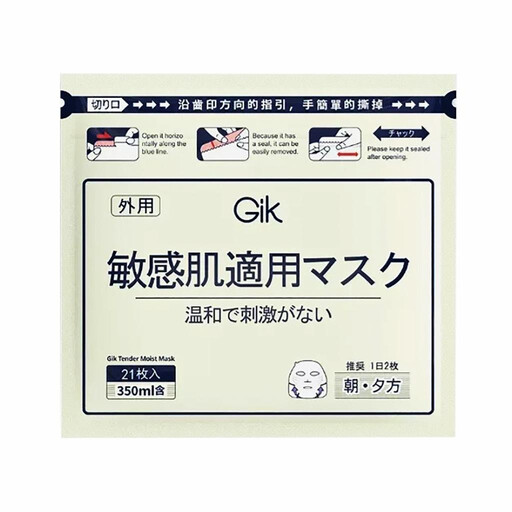
Why this product suits the profile: This larger pack is ideal for anyone looking to establish a regular moisturising routine at a predictable cost per use. The stated application time is 5 to 10 minutes.
The short application time limits the risk of leaving the mask on your skin for too long. The pouch should be closed securely after every use.
21 individual masks; glycerin, betaine, panthenol and sodium hyaluronate are included in the stated INCI list.
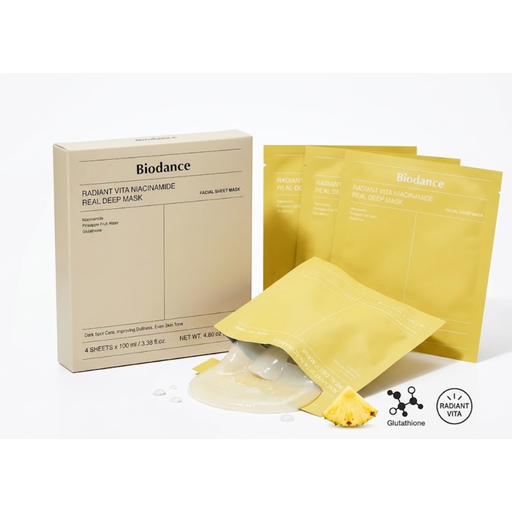
Why this product suits the profile: This hydrogel face mask is designed for people looking for a contoured fit and a selection of active ingredients including niacinamide, panthenol and Centella asiatica.
The application time is clearly stated as 15 to 20 minutes. According to the manufacturer, the product should be removed once the mask becomes transparent; the packaging recommends using it two to three times a week.
4 masks weighing 34 g each; niacinamide, glycerin, panthenol, allantoin and Centella asiatica extract are listed.
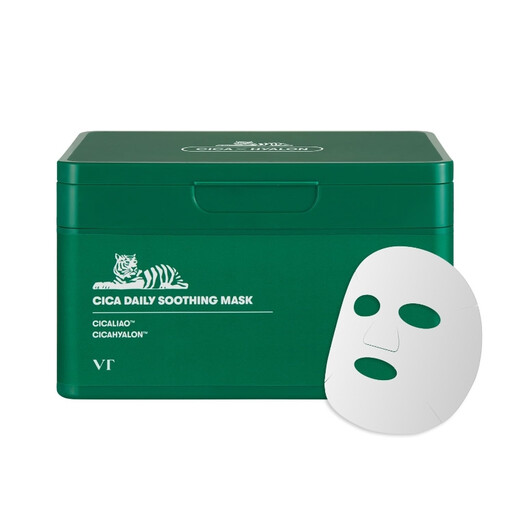
Why this product suits the profile: 30 masks in one pack and an application time of 10 to 20 minutes make this a good fit for a regular daily skincare routine.
Using the enclosed tweezers reduces direct contact with the contents of the pack. The short routine is easy to incorporate into a consistent skincare ritual.
30 sheets; ultra-thin 0.2-mm material plus Centella asiatica, panthenol and sodium hyaluronate according to the product information.
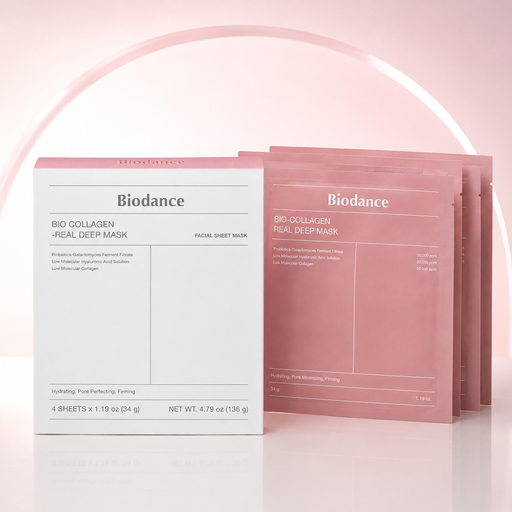
Why this product suits the profile: This hydrogel mask is designed for extended use of three to four hours or overnight. That could make it a good choice for a relaxed evening routine.
The unusually long application time is clearly stated and should not be confused with that of a conventional sheet mask. Do not use the product on sensitive or irritated skin.
4 hydrogel masks with collagen extract, niacinamide, hydrolysed hyaluronic acid and several fermented ingredients.
We have put together a complete, regularly updated list of products that fully meet these strict selection criteria and the safety regulations applicable in the EU.
If you are using a face mask for sensitive skin, a patch test is advisable. Stop using the product if you experience redness, burning, swelling or itching. Cosmetic masks are not intended to treat skin conditions.
This depends on the product and how well your skin tolerates it. Many masks are designed for use once to three times a week. According to the packaging, daily mask products can be used more frequently. The manufacturer's specific recommendation always takes priority.
Around 5 to 20 minutes is usual. A longer application time is not automatically better. Hydrogel or peel-off masks may have different instructions, which should be followed carefully.
Look for moisturising ingredients such as glycerin, panthenol, betaine or hyaluronic acid, while also checking the fragrance and alcohol information. With sensitive skin, a short INCI list is not essential, but careful checking and a compatibility test are advisable.