
Lieferung heute & morgen

Qualitätsgarantie

Willkommens-Angebote freischalten: KOSTENLOSE Lieferung | Bis zu 80 % RABATT | Kostenlose 30-Tage-JoyPlus-Testphase
App herunterladen
A Korean facial cleanser can be a useful addition to your daily skincare routine. But with so many options available, it can be hard to choose: gels, foams, mousses and low-pH cleansers all differ in how they feel on your skin, their ingredients and how you use them. If you choose based only on terms such as ‘pore cleansing’, ‘glow’ or ‘extra gentle’, you could easily end up with a product that isn’t right for your skin.
A Korean foaming cleanser may feel very soft on your skin and still contain fragrance, essential oils or strong surfactants. If your skin is sensitive or dry, it’s worth checking the full INCI list. If you know you react to certain ingredients, check specifically for fragrance and fragrance allergens that must be declared.
A low-pH facial cleanser is often slightly acidic and can work well as part of a simple skincare routine. However, pH doesn’t tell you everything about how well a product will suit your skin. The surfactants, fragrance, acids and your individual skin response also matter.
A cleanser removes sweat, excess sebum, sunscreen residue and surface dirt. Claims that it will permanently minimise pores or treat blemishes should be viewed with caution. A product containing salicylic acid may be worth considering for blemish-prone or oily skin, but use it according to the manufacturer’s instructions and stop if irritation occurs.
A product labelled facial cleanser for sensitive skin isn’t guaranteed to suit you. Check the ingredients too, and start with a small amount when trying a new product.
Surfactants cleanse by binding oil- and water-soluble dirt. Amino acid-based or mild cleansing agents are often presented as skin-friendly options. What matters, though, is the whole formula. A gentle facial cleanser shouldn’t leave your skin feeling tight for a prolonged time after rinsing.
Several Korean products specifically state a pH of around 5 to 6. For example, the Etude SoonJung Foam Cleanser and the AXIS-Y Sunday Morning Refreshing Cleansing Foam are listed as having a pH of 5.5. Check these claims against the packaging, as formulas can change.
Look out for:
Stop using the product if you experience severe stinging, redness or itching. A facial cleanser is also no substitute for a dermatologist’s advice if you have ongoing skin problems.
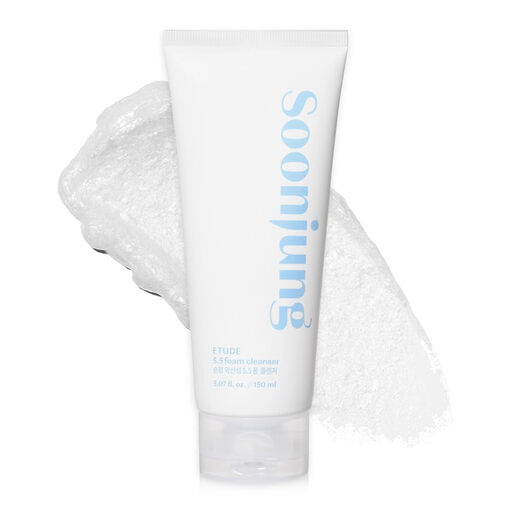
Why it suits this profile: The product description states a pH of 5.5 and lists panthenol and madecassoside. The 150 ml pack is designed for a regular morning and evening routine.
The clear pH information and the product description’s statement that it is fragrance-free make it easier to choose than relying on vague marketing terms such as ‘gentle’.
150 ml size, pH 5.5 and a formula containing panthenol and madecassoside, according to the manufacturer.
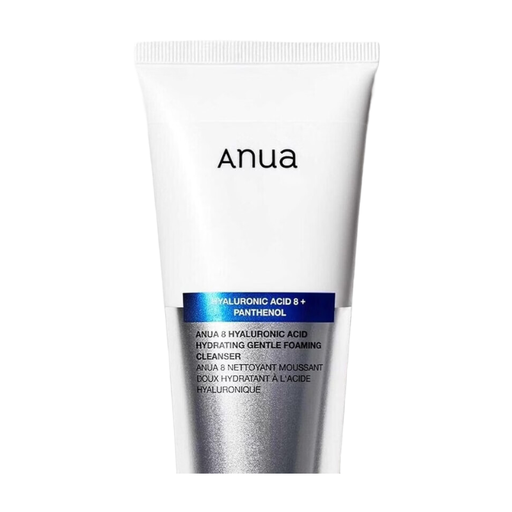
Why it suits this profile: The formula lists eight hyaluronic acid complexes, panthenol and betaine. It may appeal if you prefer your skin to feel less dry after cleansing.
This pick is based on specifically named humectants rather than relying solely on general terms such as ‘hydration’. You should still check whether the fragrance and surfactants suit your skin.
150 ml size, hyaluronic acid complexes, panthenol, betaine and zinc PCA according to the product description.
We’ve put together a complete, regularly updated list of products that meet these strict selection criteria and fully comply with the safety regulations in force in the EU.
A Korean facial cleanser is usually used in the morning and evening. If your skin is dry, a gentle water-only cleanse in the morning may be enough, as long as your skin feels comfortable. In the evening, if you’re wearing sunscreen or make-up, you can double cleanse: start with an oil or balm cleanser, then follow with a water-based cleanser.
Shelf life depends on the best-before date printed on the packaging or the symbol indicating how long the product can be used after opening. Store it somewhere cool and dry, away from direct sunlight. If its smell, colour or consistency changes, stop using it.
Mild, fragrance-free or lightly fragranced formulas with a slightly acidic pH can be a good starting point. Still, check the INCI list and test the product on a small area of skin first. If you have recurring problems, seek advice from a dermatologist.
Many low-pH products are designed for daily cleansing. However, whether one is right for you depends on the full formula and your individual skin. If you experience tightness, stinging or redness, reduce how often you use it or stop altogether.
That depends on the pack size, packaging and how much you use. A 25 or 50 ml pack is mainly suited to trying a product or taking it on the go. For daily use, 120 to 200 ml is usually more practical. With many foaming cleansers, a small, pea-sized amount is enough.