
Lieferung heute & morgen

Qualitätsgarantie

Willkommens-Angebote freischalten: KOSTENLOSE Lieferung | Bis zu 80 % RABATT | Kostenlose 30-Tage-JoyPlus-Testphase
App herunterladen
A Korean facial toner can complement your skincare routine after cleansing. The range extends from watery hydrating toners to gel-like or milky textures. What matters is not eye-catching packaging or an impressive-sounding ingredient name, but whether skin type, ingredients and application are a good match.
Dry, sensitive, oily and blemish-prone skin each have different needs. Our 2026 selection explains what to look for when buying a Korean toner and which products in the range may suit different usage profiles.
Claims such as “77% plant extract” or “80% ginseng water” may sound precise, but they say little on their own about individual skin compatibility. Plant extracts can also trigger unwanted reactions in some people. Always check the complete INCI list on the packaging and look out for known allergens.
A Korean toner may have a very fluid texture, while an essence is often formulated more like a lightweight serum or lotion. The product is therefore not necessarily intended to provide deep pore cleansing. Claims such as “minimises pores” or “regenerates the skin” should not be interpreted literally as medical effects. The key factors are the specific cosmetic properties listed, such as hydration, a pleasant skin feel or a mild exfoliating effect.
An alcohol-free toner may be appealing for sensitive skin. Nevertheless, check the current ingredient list, as formulations can change. “Alcohol-free” also does not automatically mean that every skin type will tolerate the product without issues. If your skin is sensitive or prone to redness, test the product on a small area before using it regularly.
A hyaluronic acid toner helps support a hydrated skin feel, but it does not replace moisturiser. In everyday use, humectants generally work more effectively when followed by a suitable moisturising product.
Niacinamide is found, for example, in toners for oily skin or in formulas designed to care for an uneven-looking complexion. The concentration is not stated for every product. Avoid drawing conclusions based solely on an ingredient’s position in the ingredient list.
When using salicylic acid, follow the manufacturer’s instructions. This is particularly important during pregnancy and breastfeeding, as well as when undergoing medical treatment. Cosmetic products are not intended to treat skin conditions.
Do not compare only the unit price; also consider the fill volume and the expected daily usage. 150 ml is convenient for everyday facial care, while 200 to 300 ml may be more practical for frequent use or use by several people. The best-before date, batch number and period-after-opening symbol can be found on the packaging.
The product information below is based on the retailer and manufacturer details provided. The current packaging and INCI list take precedence, as formulations and labelling may change.
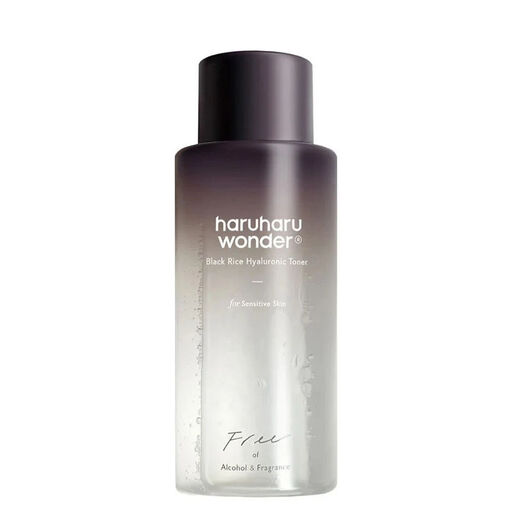
Why does it suit this profile? Its lightweight, watery texture and stated combination of black rice and hyaluronic acid make it an uncomplicated introduction to a daily K-beauty routine.
The product description highlights a gentle, fragrance-free formulation. Nevertheless, check the complete INCI list before buying.
150 ml content, quick absorption and use in the morning and evening after cleansing.
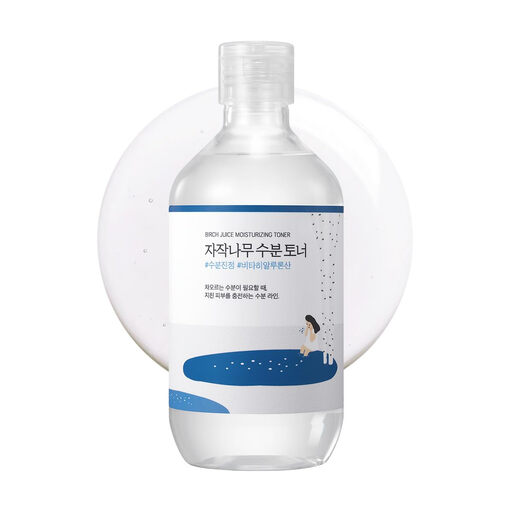
Why does it suit this profile? The generous 300 ml format and stated combination of birch sap, multiple forms of hyaluronic acid, panthenol and allantoin will appeal to those who prefer intensive hydration.
The description states that it has a lightweight texture without synthetic fragrances. If you know that your skin is sensitive to birch or plant extracts, exercise particular caution.
300 ml content, several humectants and application with either your hands or a cotton pad.
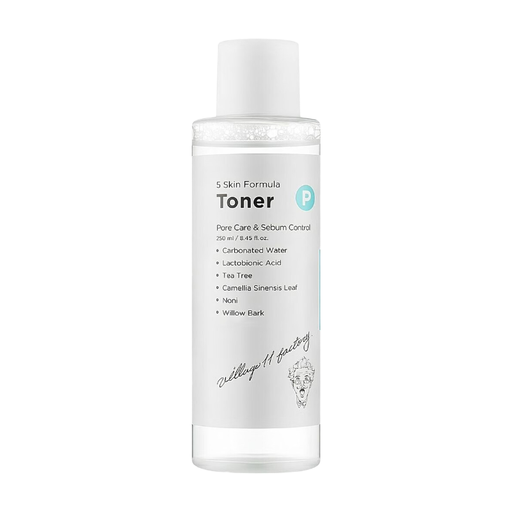
Why does it suit this profile? According to the product description, this clarifying toner is intended for oily, combination and blemish-prone skin.
Salicylic acid and niacinamide are specifically listed. Start gradually and reduce use if dryness or irritation occurs.
250 ml content plus panthenol, sodium hyaluronate and Centella Asiatica extract in the stated formulation.
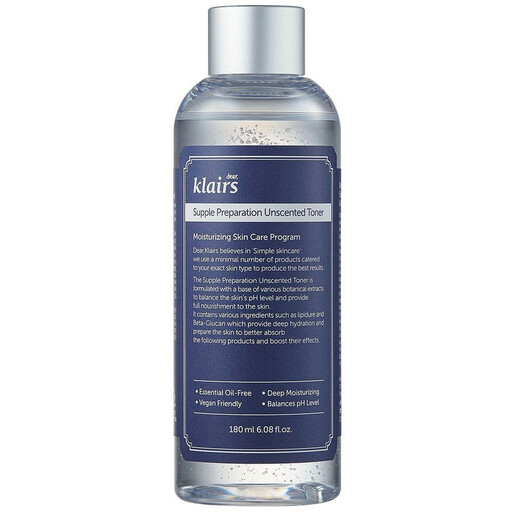
Why does it suit this profile? This fragrance-free version with hyaluronic acid and beta-glucan is aimed at those seeking versatile care for dry, oily, combination and sensitive skin.
The product description states that it contains no fragrances, essential oils or alcohol. Individual compatibility should nevertheless be checked on a small area first.
180 ml content, a pH value of 5 stated in the product description and use on the face and décolleté.
Explore a continuously updated selection of hydrating toners for different skin types and skincare routines.
Apply the facial toner to dry or slightly damp skin after cleansing. Depending on the texture, you can use a cotton pad or your palms. Do not rub vigorously; distribute the product gently instead. Follow with serum and moisturiser. If using a toner containing salicylic acid or PHA, avoid combining it with several highly exfoliating products without monitoring how your skin responds.
A mild hydrating toner can generally be used morning and evening, in line with the application instructions for many products. When using salicylic acid or PHA, it is best to introduce the product gradually. If you experience stinging, persistent redness or pronounced dryness, pause use.
That depends on the individual formulation. Look for a manageable INCI list and claims such as fragrance-free or alcohol-free. Even a toner for sensitive skin should first be tested on a small area.
As a rule, toner is not a complete substitute for moisturiser. Hydrating toners primarily provide lightweight, water-based care. Applying a moisturiser afterwards can help preserve the comfortable skin feel for longer.