
Same-day & Next-day Delivery

Quality Guaranteed

Unlock Your Welcome Offers: FREE Delivery | Up to 80% OFF | Free 30-day JoyPlus trial
Download the APP
Anyone looking to buy Korean gochujang chilli paste will find numerous products in German online shops with similar packaging but different ingredients, heat levels and pack sizes. For bibimbap, tteokbokki, marinades or soups, price is not the only deciding factor. A small 170-g tin may be enough for occasional dishes, while households that use it regularly or catering businesses may prefer 500 g, 1 kg or larger packs.
The following criteria will help you avoid common purchasing mistakes and choose a Korean chilli paste that suits the way you cook.
Products sold under names such as “chilli sauce”, “hot sauce” or “red pepper paste” can vary considerably. Classic gochujang paste is typically made with ingredients such as red chilli powder, rice or glutinous rice, soya beans and salt. Depending on the recipe, it may also contain ingredients such as corn syrup, garlic, onions, vinegar or other seasonings.
A fermented chilli paste usually has a thick, spreadable consistency and combines heat, sweetness, saltiness and umami. By contrast, a Korean sauce with a strong vinegar profile tends to be more fluid and is particularly suitable as a dip or ready-made seasoning sauce.
Many packs describe the flavour as “hot” or “spicy” without giving a standardised heat scale. The amount of red chilli powder alone also does not reliably indicate how hot the paste will taste in a finished dish. Sweeteners, rice ingredients and the recipe used all affect the overall impression.
If you are new to gochujang, start by stirring a small amount into the sauce and balance it with stock, sesame oil, soy sauce or rice vinegar. This makes it easier to adjust Korean hot chilli paste to your personal taste.
Gochujang often contains soya and wheat or gluten. Depending on the product, it may also contain barley ingredients, sesame or mustard. If you need to take an intolerance into account, check the ingredients list and allergen information both on the product page and on the packaging.
Before opening, gochujang is often stored in a cool, dry place. Once opened, many products should be kept in the refrigerator. Always follow the storage instructions provided by the relevant manufacturer.
The following ingredients are particularly relevant for classic Korean dishes:
If you want to use a chilli paste for Asian dishes in a variety of ways, look for a thick paste with a well-balanced sweet, hot and savoury flavour profile. For salads, fried foods or cold dumplings, however, a sauce already seasoned with vinegar and other ingredients may be more convenient.
The right quantity depends on how you plan to use it:
Alongside the price per kilo, consider how quickly you will use the paste after opening. A large pack is only economical if storage, hygiene and consumption levels are all suitable.
Some products are made in South Korea, while others come from Asian production facilities outside Korea. The country of origin is stated on the product page or packaging and should be taken into account when choosing.
For shoppers with specific dietary requirements, the labelling is crucial. The CHUNG JUNG ONE O'FOOD Hot Sauce Gochujang for Bibimbap 300 g HALAL is listed in the product information as halal-certified. At the same time, the labelling states that it contains gluten, soya, mustard and sesame. This information does not replace checking the ingredients list yourself.
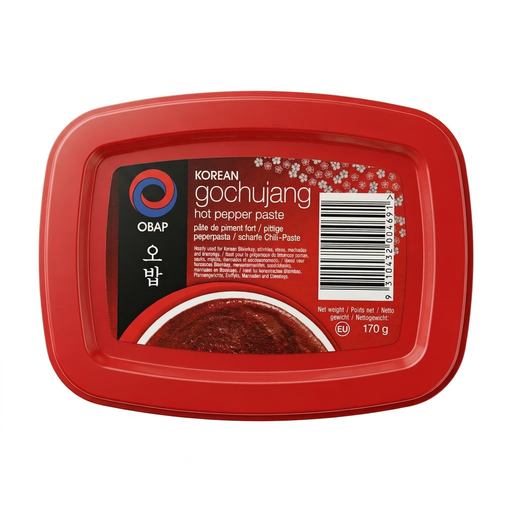
Why this product suits this profile: The 170-g pack offers an easy way to try gochujang in bibimbap, marinades or dips without committing to a large quantity.
The small quantity reduces the risk of being unable to use up a large pack in time after opening. It also gives you a practical way to get to know the flavour and heat level.
170 g contents; according to the product information, made with glutinous rice, soya bean powder, chilli powder and salt.
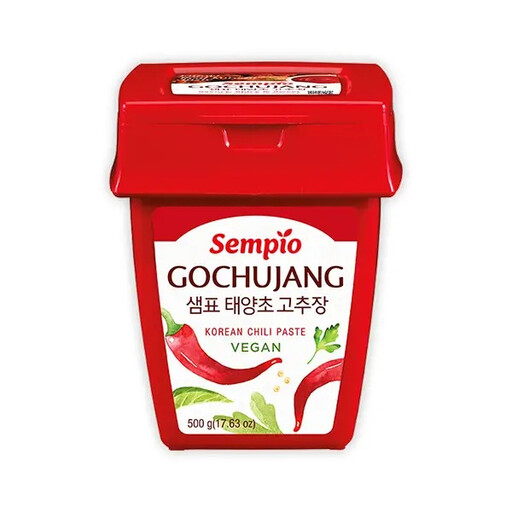
Why this product suits this profile: The stated ingredient proportions and 500-g size make it easier to assess for regular Korean cooking.
The product information specifies, among other things, 46.7% fermented rice paste and 11.3% chilli powder. This makes the recipe easier to understand than choosing based solely on the colour of the packaging.
500 g contents; according to the product information, made in South Korea and suitable for storage at room temperature before opening.
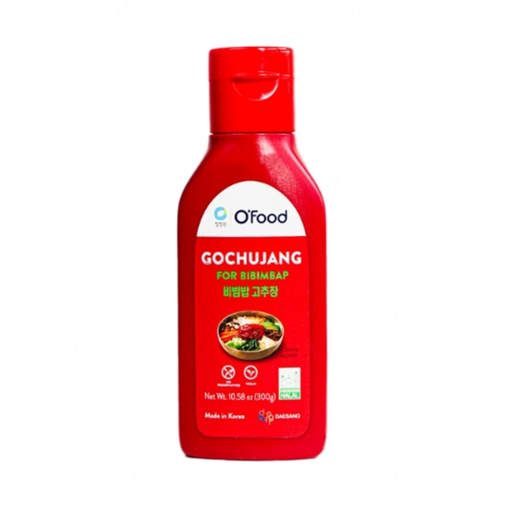
Why this product suits this profile: The 300-g sauce is listed as halal-certified and can be used for bibimbap, stir-fries, marinades and dips.
The specific certification makes it easier to narrow down your options. However, as it contains allergens such as gluten, soya, mustard and sesame, you still need to check the ingredients.
300 g contents; can be stored without refrigeration before opening, then at 2–8 °C after opening.
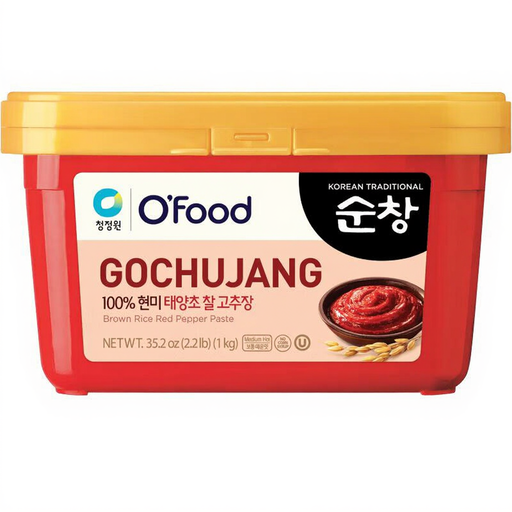
Why this product suits this profile: The 1-kg pack is aimed at frequent users, caterers and kitchens where gochujang is regularly used as a Korean marinade or sauce base.
The large quantity only makes sense if you use it regularly. Accurately assessing your requirements and refrigerating it after opening helps you avoid unnecessary stockpiling.
1 kg contents; according to the product information, made in South Korea and intended for bibimbap, tteokbokki and spicy stews.
For gochujang for tteokbokki, the paste is usually mixed with water or stock, garlic, sugar and other ingredients. For bibimbap, a small spoonful combined with sesame oil and rice may be all you need. For a Korean marinade, gochujang can be combined with soy sauce, sesame oil and garlic.
The paste should not automatically be used neat. Products with a high salt content can quickly overpower a dish. It is better to increase the quantity gradually, then balance the sauce with liquid, sweetness or acidity.
We have put together a complete, regularly updated list of products that fully meet these strict selection criteria and the safety regulations applicable in the EU.
This depends on the product, packaging and storage conditions. Refrigeration is often recommended after opening. Use clean kitchen utensils, seal the container properly and observe the best-before date and the instructions on the packaging.
The level of heat varies depending on the recipe and product. Sweeteners, rice ingredients and other components can affect how hot it tastes. With a new product, it is best to try a small amount before stirring the paste fully into the dish.
For occasional dishes, 170 g or 200 to 300 g are generally manageable sizes. If you cook Korean food several times a week, you could choose a 500-g pack of gochujang. One kilogram is mainly worthwhile for regular use, shared consumption or commercial food preparation.